


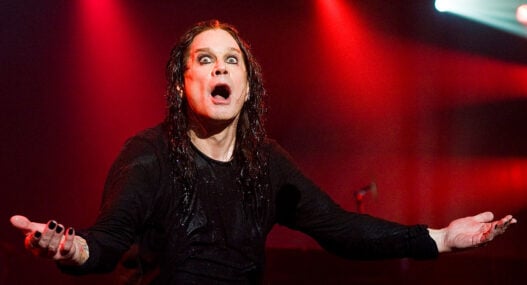
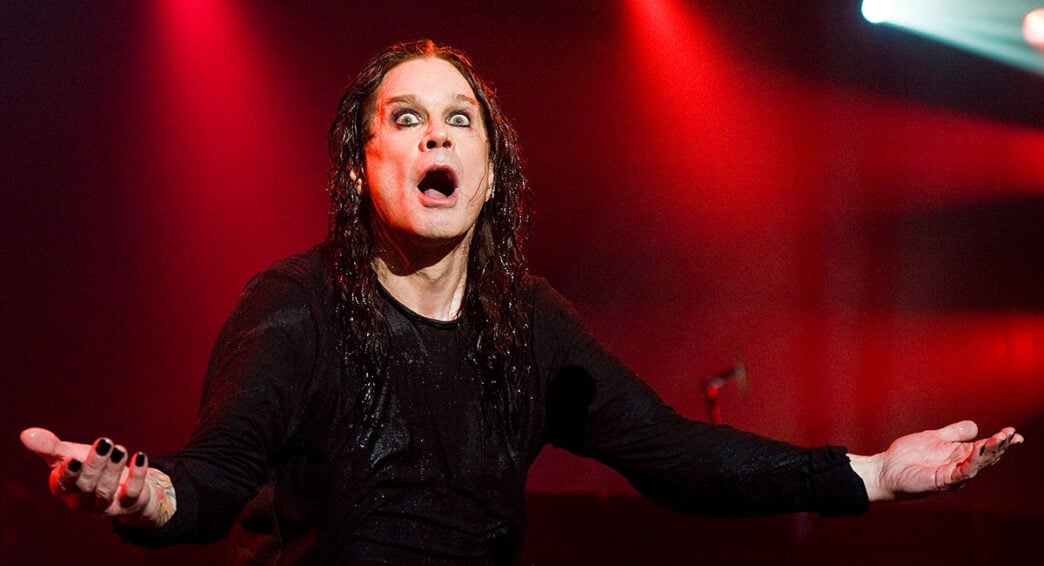
Ozzy Osbourne, the late great Prince of Darkness and frontman of legendary heavy metal band Black Sabbath, passed away less than a year ago – and already it looks like he’s getting an AI revival. Technology companies Hyperreal and Proto Hologram are leading the charge in recreating a full-blown Ozzy avatar, and the technology behind it is just a little bit mind-blowing.
Confirmed at Licensing Expo 2026, Sharon and Jack Osbourne announced that the digital Ozzy will capture the rock star’s voice, image, and movement. The goal is to enable fans to actually interact with the man himself. According to Proto Hologram’s founder, David Nussbaum, both companies adhere to strict ethics when recreating legendary artists. Hyperreal, for its part, works exclusively from authenticated source material curated and approved by those closest to Ozzy.
But just who are the companies that have been entrusted with his legacy?
Hyperreal
Hyperreal was founded by digital human performance veterans with decades of experience on Academy Award-winning VFX films. These are the people who built digital humans from Gollum to billion-dollar gaming franchises. The company specialises in creating ultra-realistic digital avatars of A-list musicians and celebrities for entertainment, branding, and interactive experiences.
Their core technology is called Digital DNA, and it works by capturing three essential components of human performance: 3D image, motion, and voice. The subject is recorded inside a custom HyperScan system, which is an array of high-fidelity cameras and lights operating in perfect sync, while performing a customised template of facial muscle actions. This is so that each individual muscle in the face can be uniquely mapped and controlled via the company’s HyperDrive system. The company can even record facial shape in motion at up to several hundred samples per second, making the capture sessions faster and more precise than ever.
The output of all this is called a HyperModel which is Hyperreal’s proprietary digital human platform. This platform not only captures how someone looks, but also how they move, speak, and express emotion. It’s ability to capture this information so accurately is because the platform is underpinned by integrated platforms – HyperModel, HyperDrive, HyperVault, HyperExchange, HyperPresence, HyperSpace, and HyperStudio. HyperVault stores and protects Digital DNA assets on the blockchain, making HyperModels the only talent-approved, interoperable digital humans across digital ecosystems. Rights holders retain full copyright and monetisation control over how their likeness is used in AI training.
Hyperreal has previously created near-perfect likenesses of a young Paul McCartney and TikTok star Madison Beer, among others. Their most recent project is bringing Ozzy Osbourne back to life in partnership with Proto Hologram.
Proto Hologram
Where Hyperreal creates the digital human, Proto Hologram is the platform that puts it in the room with you. The company combines patented holographic hardware, a proprietary OS, AI avatars, and spatial computing to deploy realistic, interactive AI-driven experiences at enterprise scale in any physical space.
What makes Proto stand out is that it’s entirely wearable-free. No VR headsets, no AR glasses, nothing for the audience to put on. The hologram appears. It can “see” and respond to what’s around it. It can interact with people as naturally as if they were having a conversation with someone standing in front of them. This is enabled because of the company’s unified stack of hardware, AI models, and developer tools that ensure seamless operation with flexible deployment, whether that is on-premises or in the Cloud.
Amazon and AWS use Proto devices in executive briefing centres to beam leaders into meetings as if they’re physically present, and they’ve worked with celebrities including Ellen DeGeneres, Usain Bolt, Lewis Hamilton, and William Shatner. Their reach is impressive and already extends across sports, retail, healthcare, education, and hospitality.
How the two companies work together
Hyperreal and Proto’s expertise complement each other nicely. Hyperreal handles the content and IP creation side. It captures the essence of a person – their appearance, voice, movement, personality – and produces an authenticated, legally-protected digital human asset. Proto handles the hardware and deployment. It handles the devices and infrastructure that project content into a physical space and enable real-time interaction. For the Ozzy project, that means Hyperreal builds the digital Ozzy, and Proto makes him appear in the room – capable of moving, speaking, and responding to fans just as the real Ozzy would have done.
Why revive Ozzy – and should some things be left to legend?
It seems that as technology has advanced, so has our need to hold on to those we’ve lost. Whether that’s comforting or unsettling probably depends on who you ask – and not all Ozzy fans are on board. But Sharon and Jack are firm believers in the project, and the technology itself is undeniable in its uncanny capabilities.
Although the bigger question, perhaps, is where it ends. If you can reconstruct a person this faithfully, how long before licence holders start using that capability to create entirely new music, new performances, new versions of an artist that never really existed whilst they were alive? The line between honouring a legacy and rewriting it is a fine one – and right now, the technology is moving a lot faster than the conversation about how to use it.