


Across the globe, manufacturers are exploring the concept of reshoring production, bringing manufacturing closer to their end markets to reduce geopolitical risk, shorten supply lines for finished goods, and improve responsiveness to customer demand.
Yet reshoring alone does not address all the challenges of the electronics supply chain. For engineers and buyers working on embedded and wider electronics systems, distributing production across multiple sites can introduce complexity. Each additional manufacturing footprint adds interaction points, complicating sourcing, slowing design cycles, and risking delays – underlining the need for distributors to adopt a centralised approach that ensures engineers have consistent, reliable access to the parts they require.
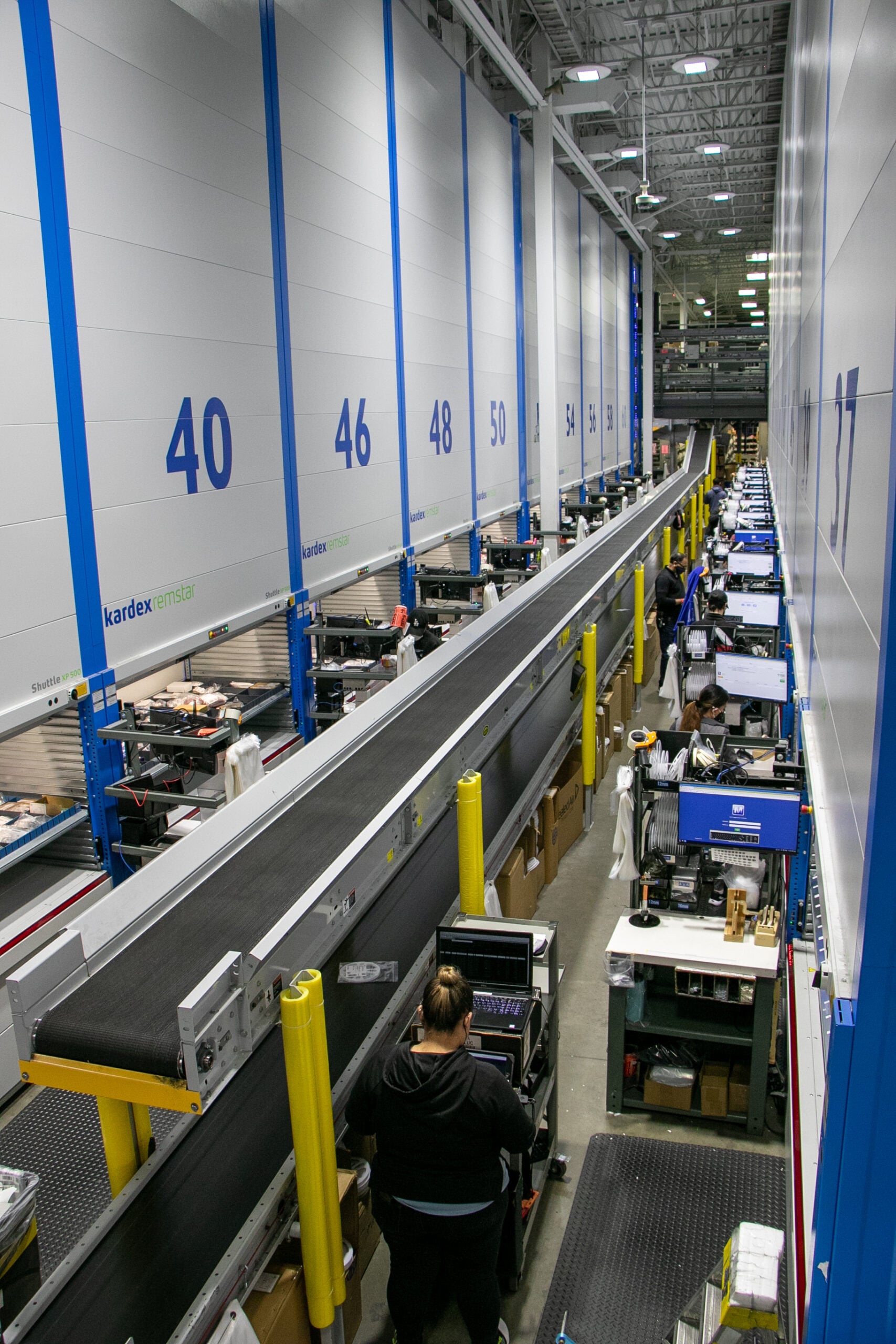
Mansfield, Texas. (Source: Mouser Electronics)
Understanding the push to reshore
Over the past five years, the economic and geopolitical landscape surrounding offshore manufacturing has undergone a significant transformation, prompting many electronic component suppliers to re-evaluate their production footprints in response.
Rising offshore costs
Rising labour costs in traditional manufacturing hubs, extended shipping routes, and the added weight of tariffs and compliance have steadily eroded the cost advantage once enjoyed by offshore production. The total landed cost for electronics manufacturing in Asia has risen significantly in the past decade, and what once appeared cost-efficient now often carries hidden expenses, including freight surcharges and duties, as well as higher inventory carrying costs as companies buffer against uncertainty.
IP control and sensitive designs
Beyond economic considerations, compliance and intellectual property (IP) protection are becoming increasingly important, particularly for complex semiconductor fabrication and embedded processing platforms. For manufacturers, maintaining oversight, ensuring regulatory compliance, and protecting proprietary technology in distant facilities or across multi-tiered supply chains can be challenging. Reshoring production can solve these challenges while providing clearer audit trails and assurance of ethical and sustainable sourcing. These factors are often critical in high-reliability or regulated industries such as aerospace, medical technology, defence, and automotive electronics, where embedded systems must operate safely and predictably over long lifetimes.
Global redundancy and resilience
Reshoring also supports supply chain resilience through distributed regional manufacturing. By maintaining multiple hubs, suppliers reduce the risk of disruption from geopolitical events, natural disasters, or localised production issues. This redundancy ensures a continuity of supply even when individual sites are affected, complementing the reliability and efficiency benefits of reshored production.
Government incentives
Government policy is also playing a significant role in supporting this transition. Across Europe, national and EU-level programmes are encouraging investment in advanced manufacturing, automation, and skills development.
Incentives for regional production, from the UK’s support for semiconductor ecosystems to the EU’s broader industrial strategy, are helping make reshoring both economically viable and strategically sound. The result is a growing network of regional manufacturing hubs that can produce finished goods closer to the point of demand, reducing exposure to global shocks while fostering local innovation.
The role of centralised distribution in a reshored ecosystem
The complexity of electronic design means that even localised production depends on a globally connected component network. A single PCB may incorporate parts from dozens of manufacturers across continents, making coordinated, centralised distribution in trusted locations essential to keeping development timelines on track.
This complexity is evident in embedded and intelligent systems, but it applies equally across a wide range of electronic designs. Even relatively compact designs may combine processing, sensing, connectivity, power management, and electromechanical components sourced from multiple manufacturers, making consistent access to a wide component ecosystem essential for efficient design and iteration.
This is the approach taken by Mouser Electronics. By aggregating inventory from more than 1,200 leading manufacturers in one location, its centralised global distribution provides a dependable source for components that would otherwise be fragmented across dispersed locations. This consolidation not only ensures availability but also delivers traceability and efficiency, allowing design engineers to source, sample, and iterate without facing long lead times or unpredictable stock levels.
Inventory depth and breadth
With millions of components in stock and continuous New Product Introductions (NPIs), Mouser provides engineers with immediate access to a wide range of products, including microcontroller units (MCUs), sensors, passive components, connectors, and power solutions. Deep inventory coverage ensures continuity even when global supply fluctuates, while ongoing NPIs keep engineers equipped with the latest technologies.
(Source: Adobe Stock/Pitakpong)
Logistics integration
State-of-the-art warehouse management and order fulfilment systems ensure fast and reliable delivery for both prototype and production-scale orders. With 187 Kardex Shuttles in operation, Mouser is the largest user of Vertical Lift Modules (VLMs) in the world, enabling rapid order picking and shipment accuracy. In contrast, fragmented inventory systems may provide local availability but can struggle to maintain the depth and diversity needed for fast-moving engineering projects.
Strategic European presence
Mouser maintains key offices across Europe, including Germany, France, the UK, and the Benelux region, providing localised support and customer service. While all stock is shipped from the central distribution centre in Texas, these offices ensure engineers and buyers receive expert assistance, fast customer support, and seamless order management across multiple languages and currencies.
Traceability and quality
Operating from a single, centralised distribution centre allows Mouser to maintain rigorous quality control and traceability across every order. Every component is received directly from the manufacturer, ensuring factory-fresh authenticity and full compliance with ISO 9001:2015, AS9100D, AS6496A, and MIL standards, where applicable. By consolidating operations in one location, Mouser reduces supply chain risk, providing manufacturers and OEMs with confidence that their supply chain meets the stringent standards required for sensitive applications.
Conclusion
The combination of regional manufacturing and centralised distribution forms a truly complementary ecosystem. Manufacturers appreciate the speed, flexibility, and local responsiveness of reshored production, while engineers and buyers gain the confidence of a single, trusted interaction point for component supply. Mouser’s central distribution centre, supported by European offices and technical resources, keeps millions of components available, traceable, and ready for rapid delivery – even as production spans multiple countries.
This model offers engineers the best of both worlds: the security of multi-point manufacturing, combined with the simplicity and reliability of a single distribution hub. By connecting global component supply with localised production, Mouser ensures design continuity, accelerates iteration cycles, and mitigates the risk of supply chain fragmentation.
This article originally appeared in the March’26 magazine issue of Electronic Specifier Design – see ES’s Magazine Archives for more featured publications.