




Memory is a very important part of a computer that stores programs and data. It can be classified as non-volatile and volatile. First of all it stores the content, and second it erases the content when the power is on. Non-volatile memory is very important as it stores the boot code for the computer so it can start work when powered.
Volatile memory stores dynamic variables when a computer is operating, and it can consist of two parts:
• Dynamic, when memory contents can be erased and written again while the computer is powered;
• Static, memory that contains non-erasable pieces of data.
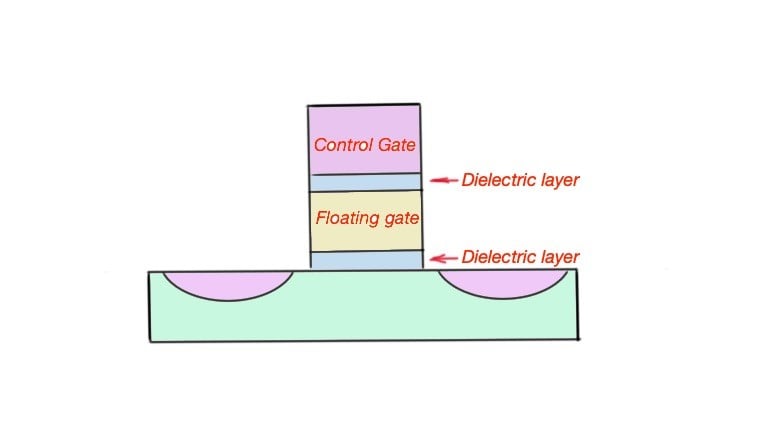
• Series – relatively non-expensive, has low density (<265kbit), and is used as a commodity product;
• NAND Flash memory;
• NOR Flash memory.
• Uniform-block memory is divided into equally sized blocks;
• Non-uniform-block memory or boot-block, which is often used to store the boot code of the microprocessor and other data. The memory blocks that store boot code are usually smaller and rarely accessed.
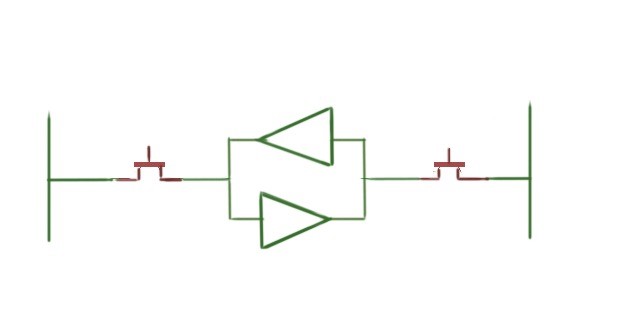
Figure 2. SRAM feedback latch.
Dynamic RAM (DRAM) is a more cost effective type of RAM, where transistors and invertors are replaced with the capacitor as shown in Figure 3. DRAM architecture is depicted in Figure 4. It is structured as a matrix of bits with rows and columns, which determines the data adress. Rows and columns are multi–plexed onto the same pins. Row addresses are loaded and stored in the RAS (raw adress stobe). Column addresses are loaded and stored in the CAS (colums address strobe).
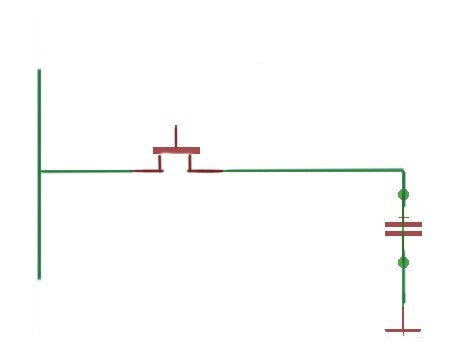
Figure 3. DRAM feedback latch.
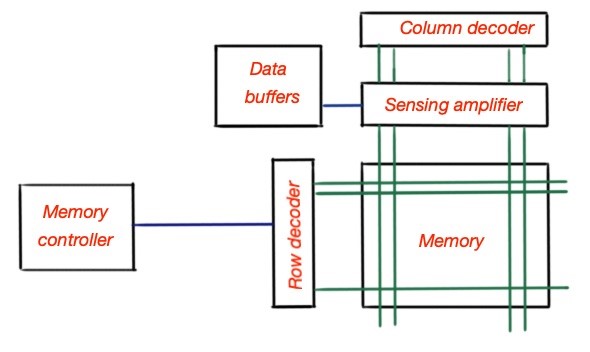
Figure 4. DRAM architecture scheme.
The DRAM chip should contain a sensitive amplifier, that detects capacitor charging times and maintains refresh operation of the DRAM. The whole data row is refreshed at the same time to maintain data integrity. DRAM modification with better performance is SDRAM (synchronous DRAM), where the synchronous bus interface accelerates data transaction.
The SDRAM process works as depicted in Figure 5. This operation is called the read-modify-write data process – when a piece of data is extracted from the memory, modified and placed back. This process significantly increases efficiency of this memory type.
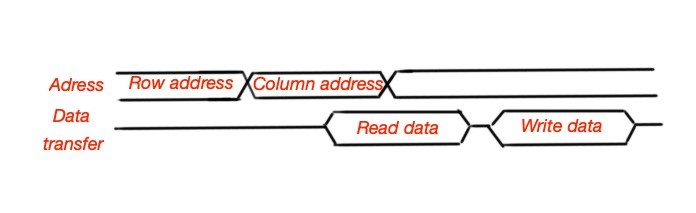
Figure 5. Read-modify-write transaction.
The fast page mode (FPM) DRAM memory type brings even more efficiency, and are used in CPUs.