





There’s a moment in antenna work that feels almost poetic: you think you’ve done everything right, yet the performance curve refuses to behave. The model looks clean. The geometry is elegant. The lab setup is solid. And still, the device loses connection when a hand comes near it, or the efficiency nosedives in a position nobody tested because nobody thought to.
It’s humbling. It’s also a useful metaphor for workplace equality.
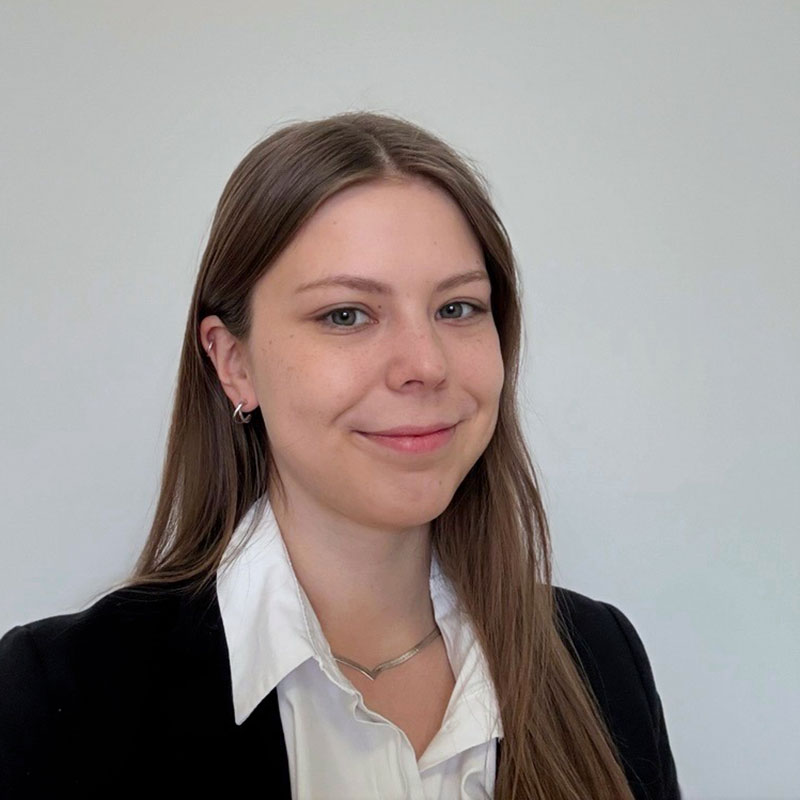
Because the biggest problems in RF are rarely the loud ones. They’re the subtle mismatches: assumptions you didn’t question, constraints you didn’t see, a “small detail” that ends up causing issues to the whole system. In anticipation of International Women’s Day, we interviewed junior antenna engineer Venla Vastamaki, who notices the same pattern in engineering culture. Progress doesn’t come from one grand statement. It comes from straightforward, concrete actions that change outcomes.
And outcomes, in engineering, are the things that really matter.
The theme that lands differently in a lab
When Venla hears “Rights. Justice. Action.”, her mind doesn’t go to slogans. “Straightforward concrete actions towards equality,” she says. The kind you can point to. The kind you can measure. The kind that makes it easier to do your job well without having to do a second job on top of it: proving you belong.
Venla works at Radientum, a Finnish consulting company specialising in antennas, radio frequency (RF), and electromagnetic compatibility/interference (EMC/EMI). The team supports the entire wireless development process: from antenna design and simulation to testing and validation, helping companies bring better-performing products to market faster.
It’s precision work, deeply technical, and it demands exactly the kind of engineer Venla is. By excelling in a field where women remain significantly underrepresented, she demonstrates the tangible benefits of diversity in engineering and the value of including varied perspectives in the pursuit of innovation.
In a workplace, “rights” can sound like a legal word, but Venla frames it in practical terms. Policies matter when they’re usable, visible, and trusted. Radientum has structures that help shape them into everyday reality: female representation in the health and safety committee, a harassment plan with the option to report anonymously, and parental leave as a real option regardless of gender.
That last one is quietly radical in its simplicity. If family life is treated as a “women’s issue,” women carry more career friction by default. When parental leave becomes normal for everyone, it stops being an issue attached to one group and starts being what it should be: part of a humane working life.
Why antennas? Because waves don’t care who you are
Ask Venla why she chose antennas and RF, and she smiles at the kind of answer that always reveals a real engineer: “I enjoy the mathematics behind RF engineering, and the work feels both challenging and meaningful.”
And what keeps her interested is the sheer breadth of where the efforts show up. “The constant pace of innovation and broad range of applications, such as 5G/6G, Wi-Fi, radar, satellites, avionics, and loT.”
When Venla started studying electrical engineering there were only 11 women in her cohort, and at graduation, at least three more had left the field. Compared to the total amount of students, which was over 100, the number of women is drastically low.
“I believe the main barriers women face in tech are often subtle, unspoken assumptions,” she says. “Choosing a career in technology can be treated as unusual for women, as if we need to prove something rather than simply pursuing what we enjoy.”
She pauses to reflect: “Entering the field shouldn’t be seen as an achievement based on gender. It should be just as normal for women as for men.”
It’s a deceptively simple thing to say. It’s also, in 2026, still not the reality.
Turning questions into competence: engineer upskilling
RF can easily feel like a gated community. The fastest path forward is usually not another solitary evening with a textbook – it’s conversation.
“The best way to get up to speed faster,” Venla says, “is to openly discuss with people who have experience on the topic.” She adds. Even though initiating those discussions can require extra effort, the payoff is worth it.
From that we can draw simple but powerful action for fellow engineers and leaders to take: create a culture where questions are welcomed, not judged. In RF, curiosity is not a weakness. It’s a strong building block that helps strengthen the whole team.
And it’s also a reminder of why specialist environments are powerful. In teams where antenna and RF expertise is concentrated, knowledge transfer becomes part of the daily rhythm.
The signal worth amplifying
There’s a reason antenna engineers think carefully about signal-to-noise ratio. Too much noise and the signal gets lost, the information you actually need buried under interference.
Women like Venla Vastamaki are the signal. The expertise is there. The drive is there. The clarity of thought is there. What’s needed in RF field, in tech, and in engineering altogether, is less noise on whether they belong, and more infrastructure to make sure they thrive once they’ve arrived.
If you’re looking for a single habit that makes a difference, start here: support growth regardless of gender or other unrelated aspects. Create a safe space to ask questions, learn, and improve without unnecessary labels.