





“No company is going to be immune” if the AI bubble bursts, warned Sundar Pichai, CEO of Alphabet, Google’s parent company, suggesting that even the world’s largest AI players would feel the impact of a market correction.
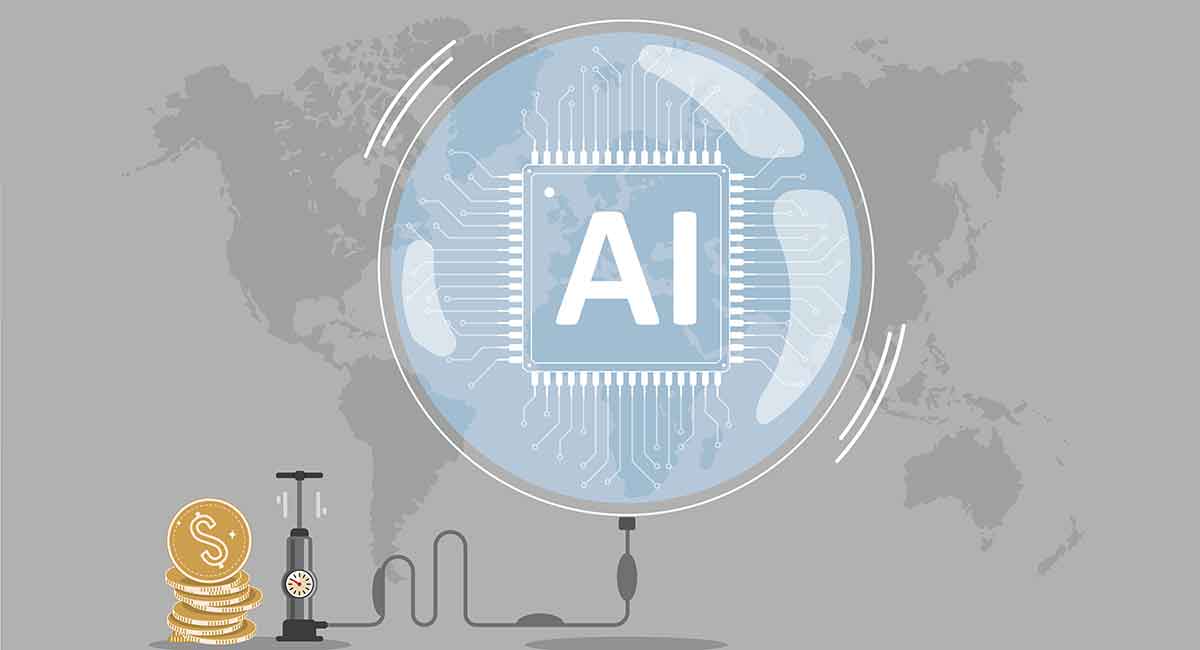
As AI valuations continue to surge far ahead of its current capabilities, infrastructure maturity, and commercial readiness, the market is showing increasing signs of irrationality. While AI as a whole has been extraordinary in its technological feat and rate of progress, current investment valuations are now outpacing the underlying infrastructure, skills, and commercial maturity needed to support long-term growth.
The growing concerns from economists and regulators about the widening gap between AI investment and real-world execution come at a time when investors are betting heavily on AI to drive growth, productivity, and service improvement. Analysts warn that without a stronger focus on technical foundations and skills, organisations risk betting on returns that current infrastructure may not yet be able to deliver.
These concerns are reminiscent of previous tech-driven bubbles, such as the dotcom boom before its crash in 2000, when the industry over-invested, much as many are concerned about the AI boom. AI may be able to pull through, but some of the money poured in would be at a loss.
As governments and major enterprises expand their AI programmes, by building new research centres and accelerating digital transformation, the next phase of adoption will test how prepared organisations really are. AI is set to reshape every profession, creating new opportunities but also significant disruption for workforces that are unprepared. The organisations that adapt, invest in skills, and build their strategies on solid technical foundations will navigate that transition far more effectively than those relying solely on momentum.
Kenn van Hauen, Chief AI Officer at AND Digital commented: “Pichai’s frank acknowledgment of ‘irrationality’ in the current AI boom reflects what many across the industry are seeing – a period of extraordinary progress mixed with equally extraordinary expectations. Phases like this naturally bring volatility alongside genuine breakthroughs.
“If momentum slows or a correction comes, it won’t signal failure of the technology but a recalibration of how quickly it can be commercialised and scaled. The long-term trajectory remains strong, but the near future will separate companies creating genuine value from those dependent on continued exponential valuation growth.”
Stuart Harvey, CEO of Datactics commented: “The businesses that will remain the most resilient throughout the broader AI cycle are the ones treating data readiness and data quality as a core pillar rather than an afterthought. The most powerful models still collapse without clean, well-governed data and transparent processes.
“As AI adoption accelerates, so does the risk that poor data management will result in unreliable outputs, regulatory issues, or costly rework. A market correction would only amplify the importance of effective governance, because when the hype subsides, the advantage shifts to the teams that invested in trustworthiness, quality, auditability, and responsible development from the start.”
As AI scrutiny intensifies, the discussion is shifting from AI’s promise to the fundamentals required to sustain long-term value. Leaders across the industry agree that the next phase of AI growth must be built on stronger technical maturity, responsible design, and measurable outcomes, not just market momentum.