
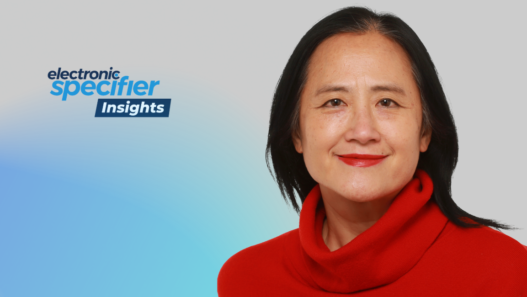



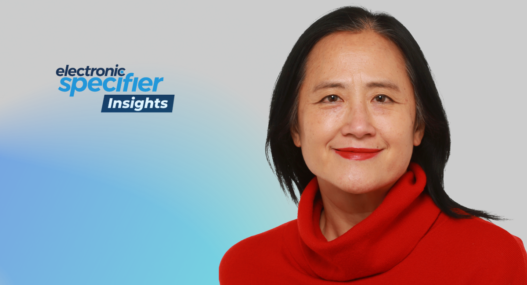
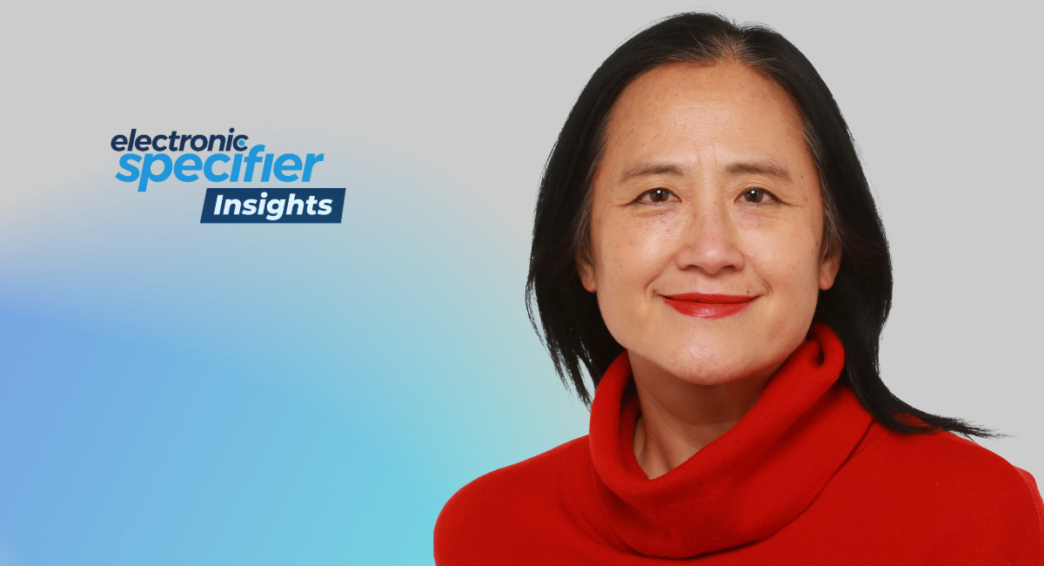
In a recent episode of Electronic Specifier Insights, Associate Editor Sheryl Miles speaks with Fang Tuurnala, Senior Director, SiTime about leadership, resilience, career uncertainty, and the unique strengths women bring to engineering and leadership roles.
Fang begins by sharing her background. Originally from China, she has lived in Finland for over 30 years. She studied technical physics in China and continued with electron physics at Aalto University in Finland. Her career has spanned CMOS, MEMS, and research institutes, ultimately leading her to SiTime, where she leads MEMS technology development and the Finnish site.
She explains that SiTime is uniquely dedicated to timing and precision timing solutions – oscillators, clocks, resonators, and increasingly software. Leveraging semiconductor manufacturing and MEMS technology, the company delivers smaller, lower‑power, more precise, and highly reliable timing devices. Fang emphasises not only the innovation but also the culture at SiTime: a “can‑do” attitude, strong collaboration, and a lack of rigid boundaries, all supported by leadership and people who help each other.
Sheryl and Fang then explore Fang’s unconventional career path. Fang never had a clear idea of what she wanted early on; studying technical physics was not initially her own choice. She now sees that “undefined” start as a strength. It taught her to remain curious, to try things even when uncertain, and to accept that it’s okay to fail. This openness helps her recognise potential in people who may feel lost and to encourage them to step into uncertainty and discover what they’re good at.
Fang also reflects on moving to Finland young, studying and working in a foreign language with minimal English and no Finnish. That challenging period built deep resilience and reinforced her belief in not giving up, even when overloaded or stuck. This experience informs how she supports her teams: noticing when people are overwhelmed, helping them reprioritise, and showing them there is “a way out.”
A key theme is Fang’s strength for “making sense of things” – connecting research, development, business, and human aspects. This systems view helps her navigate highly technical environments like MEMS while still making grounded business and people decisions.
She introduces her “90/10 rule”: no one is perfect; about 90% of each person is great, and 10% could be improved. Effective leadership means leveraging the 90% rather than obsessing over the 10%. She illustrates this by pairing big‑picture, multi‑project drivers with detail‑oriented specialists so their strengths cover each other’s gaps.
Addressing women in engineering, she acknowledges self‑criticism and perfectionism as common. Her advice: first ask, “Do I really want this role?” If yes, let that desire drive you to apply or step up, accepting that failing is part of learning – “what doesn’t kill you makes you stronger.”
Fang also highlights the importance of work-life balance. Work never ends, she notes, so family, friends, and life outside work are essential to regaining perspective, strength, and making better decisions.
Looking to the future of women in tech, Fang believes women often naturally think in terms of “us” rather than “me”, support teams toward common goals, and are strong at pulling people together to get things done. She urges organisations to value these team‑oriented, integrative leadership strengths alongside technical skills and closes by encouraging women to stay open, curious, and passionate, and to find the path that truly fits them – being “the best of yourself.”
To hear more from Fang Tuurnala, you can listen to Electronic Specifier’s interview on Spotify or Apple podcasts.