







The automotive industry is quietly undergoing a structural transformation that is every bit as significant as the move from carburetors to electronic fuel injection or from mechanical steering to drive-by-wire. The rise of the software-defined vehicle (SDV) is reshaping OEM business models, engineering practices, and supply chains at a speed that only a few years ago would have seemed improbable.
In this new reality, even premium manufacturers such as BMW – companies with deep in-house engineering capability and long-established software competencies – are making strategic investments in modern development tools to support increasingly complex vehicle architectures. Their recent decision to adopt Percepio’s runtime observability technology is more than a single OEM upgrading a single capability; it’s part of a broader shift that is becoming visible across the industry.
VDC Research’s Automotive Software Development Report, published in late 2025, provides a useful backdrop for understanding why companies like BMW are strengthening their software toolchains at this moment. The report highlights a convergence of pressures: expanding software scope, increasing architectural complexity, rising regulatory demands, and the growing centrality of cybersecurity. Taken together, these forces are stretching traditional debugging, testing, and validation processes beyond their limits.
Complexity as the primary constraint
One of the most revealing findings in VDC’s analysis is that automotive engineers view system and application complexity as the leading cause of project delays. This may seem unsurprising – vehicles are integrating more sensing, more connectivity, more domain controllers, more AI – but the way this complexity manifests is new.
Today’s development challenges are no longer confined to a tricky timing issue on a single ECU. They emerge between cores, across domains, between middleware and application layers, and at the intersection of safety-critical and non-critical subsystems.
The VDC report argues that this complexity has become “a central pressure point” for SDV programs. It affects integration effort, testing cycles, debugging efficiency, and software reuse. It also places new demands on developers, who must now understand not only their own code but how that code interacts dynamically within an interconnected system.
It is precisely here – at this intersection of complexity and visibility – that the significance of BMW’s collaboration with Percepio becomes clear. Observability is no longer a luxury; it has become a structural requirement for navigating SDV architectures.
A new foundation for SDV development
While the VDC report covers a broad portfolio of emerging automotive technologies – from virtualisation to model-based engineering to requirements management – the underlying theme is unmistakable: software development must modernise at the same rate as vehicle architectures.
OEMs are actively rethinking how they design, test, validate, deploy, and maintain software. They need tools that not only reveal faults but reduce the work required to find them. They need systems that help engineers understand behaviours they cannot reproduce easily. And they need ways to unify development practices across multiple internal teams and external suppliers.
Looking forward
As the software-defined vehicle era matures, the need for deep runtime insight will only increase. Centralised compute platforms will amplify cross-domain interactions. ADAS and automated driving workloads will depend on predictable timing under load. OTA updates will raise the stakes for validation. And cybersecurity frameworks will demand trustworthy behavioral evidence for compliance.
VDC’s report makes one conclusion unavoidable: the SDV transition is not only about more software – it is about better-managed software. BMW’s recent investment illustrates how leading OEMs are responding. It is upgrading its toolchains, strengthening its observability capabilities, and building development environments that match the demands of the vehicles it aims to deliver.
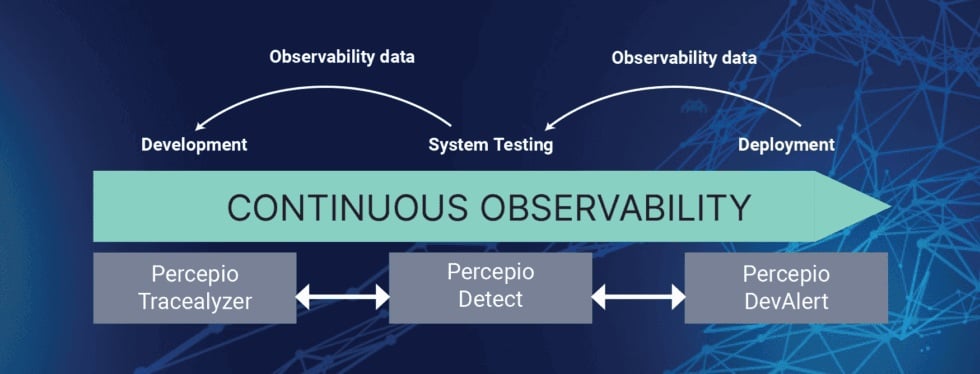
As the industry follows suit, Percepio believes observability will become a foundational layer of automotive software development, playing a role as essential as static analysis, testing frameworks, and simulation tools.
It is not simply a trend. It is the future of SDV engineering – and BMW is one of the companies showing the way forward.

By Andreas Lifvendahl, CEO, Percepio
This article originally appeared in the February’26 magazine issue of Electronic Specifier Design – see ES’s Magazine Archives for more featured publications.