


British scientists will send a colony of tiny worms to the International Space Station (ISS) in a groundbreaking experiment aimed at solving one of the biggest obstacles in long-duration spaceflight: keeping astronauts healthy.
Launching on 10th April 2026 aboard a cargo vehicle from NASA’s Kennedy Space Center in Florida, the mission is built around C. elegans – a 1mm nematode worm widely used in biological research. Despite their size, these creatures may hold answers to questions that have challenged space medicine for decades.
What is the Petri Pod – and why does it matter?
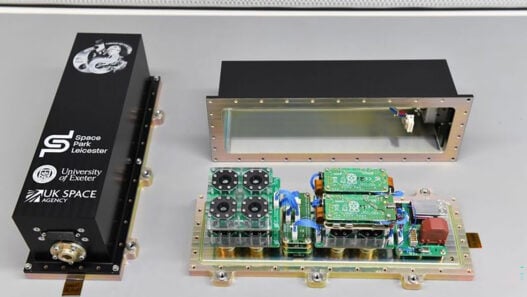
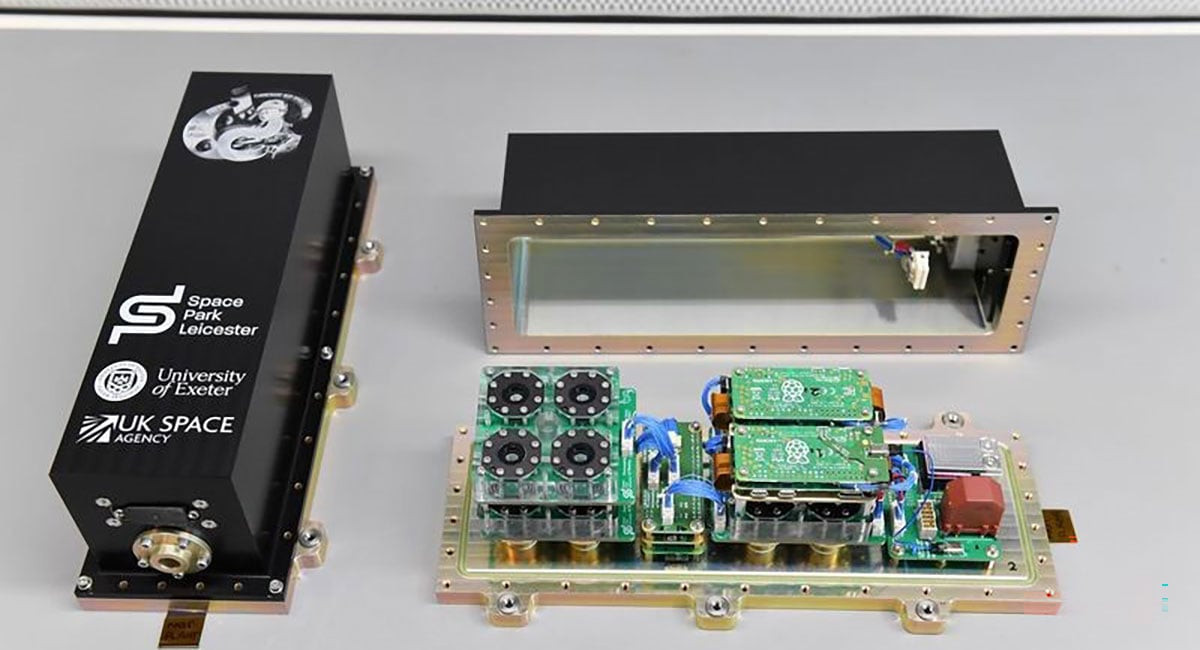
The experiment is housed in a compact unit called the Fluorescent Deep Space Petri Pod (FDSPP), roughly the size of a shoebox (10 × 10 × 30cm) and weighing just 3kg. Designed and built by the University of Leicester at Space Park Leicester, and led by the University of Exeter, the device contains 12 sealed experimental chambers – four of which can be actively imaged using fluorescent and white-light cameras.
Each chamber acts as a miniature life-support system, maintaining temperature, pressure, and breathable air for organisms that would otherwise be exposed to the vacuum of space. Worms receive food and water through an agar carrier, and the pod transmits live data – including temperature, pressure, and radiation dose readings – back to scientists on Earth.
Funded by the UK Space Agency and managed for launch by Voyager Space Technologies, the project represents the University of Leicester’s first major microgravity life sciences mission.
Why nematode worms?
C. elegans are a staple of biological research for good reason. Their genetics are well-mapped, they reproduce quickly, and their cellular responses to stress are measurable in real time. In space, the worms’ health will be monitored through fluorescent signals – glowing markers that indicate how their cells are responding to microgravity and radiation – captured via time-lapse photography and live video feed.
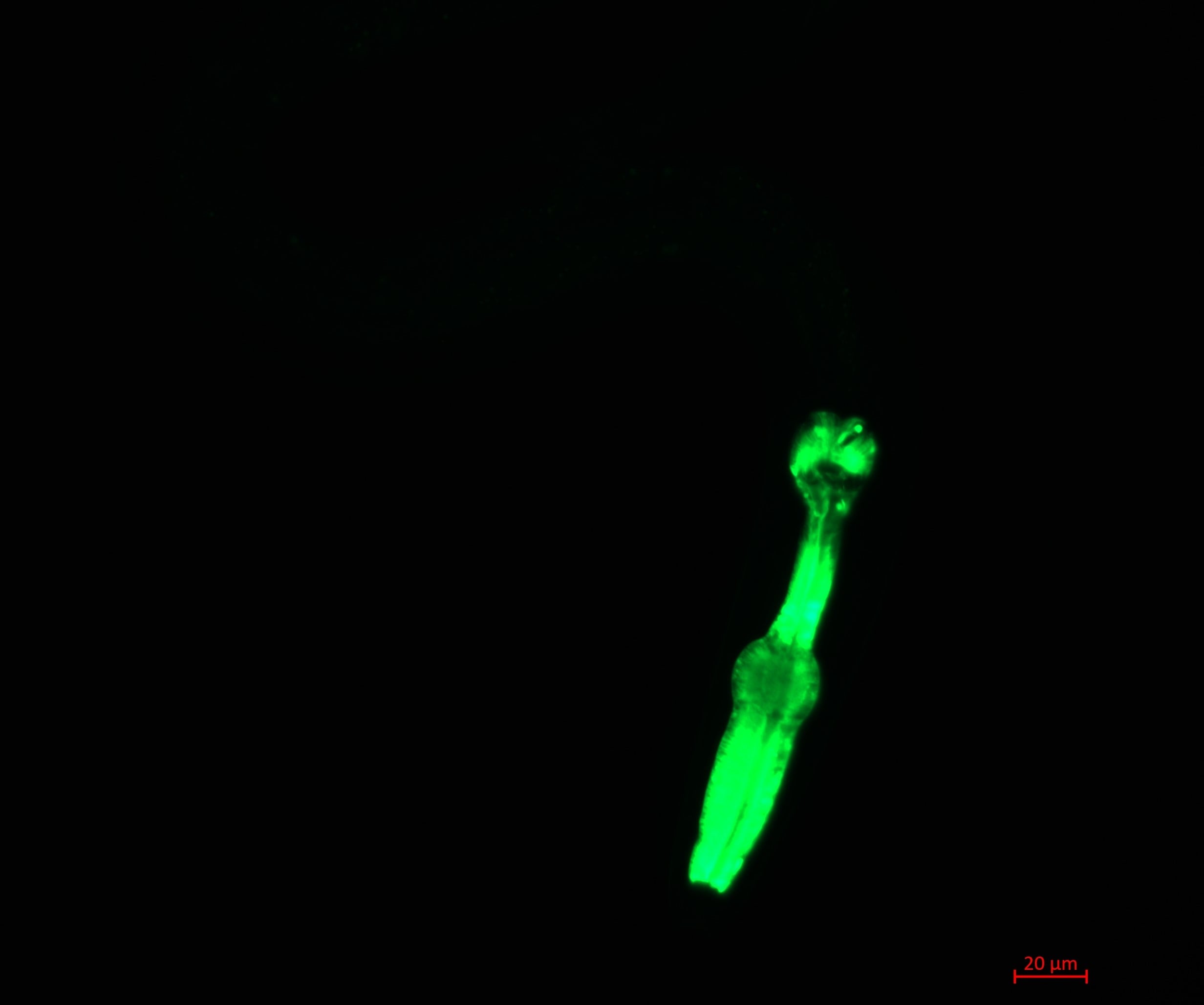
This makes them an ideal model organism for studying how living systems adapt to conditions that no amount of Earth-based training can fully replicate.
The health risks of deep space travel
Extended spaceflight poses serious physiological risks. Microgravity accelerates bone density loss and muscle atrophy, causes fluid to shift toward the head, and can impair vision. Cosmic radiation penetrates spacecraft shielding, potentially damaging DNA and raising long-term cancer risk.
These aren’t hypothetical concerns – they’re documented realities for astronauts aboard the ISS. For crews planning to live on the Moon or travel to Mars, the stakes are even higher. Understanding how biology responds and adapts to these conditions is essential before such missions can proceed safely.
The Artemis connection
The mission arrives at a significant moment. NASA’s Artemis programme is actively working toward returning astronauts to the lunar surface – the first time since 1972 – with ambitions to establish a long-term human presence there. Scientists behind the FDSPP project believe their findings could directly inform how future lunar crews are protected and monitored during extended stays.
Dr Tim Etheridge, from the University of Exeter, said: “By studying how these worms survive and adapt in space, we can begin to identify the biological mechanisms that will ultimately help protect astronauts during long-duration missions – and bring us one step closer to humans living on the Moon.”
The UK Space Agency told Electronic Specifier that: “Artemis II is a really exciting moment, not just for the United States, but for the UK and our international partners too. Unlike Apollo, which was essentially an American endeavour, Artemis is a genuinely collaborative international programme, and the UK has a meaningful role to play both now and in the future.
“Right here in the UK, Goonhilly in Cornwall has been actively tracking and supporting communications for the Artemis II mission through its deep space network, which is a brilliant example of British infrastructure contributing directly to human spaceflight today.”
Looking ahead through the European Space Agency, UK companies are already building the descent engines for Argonaut, ESA’s lunar lander, which will be central to future Artemis surface missions.
“We’re also tackling some of the harder engineering challenges that come with sustained human presence on the moon – like power. Because the lunar day is so different from ours, with two weeks of sunlight followed by two weeks of darkness, you can’t rely on solar power alone. That’s where UK industry and academia are stepping up, working on nuclear power solutions that could sustain long-term operations on the lunar surface.”
How the experiment works
Once aboard the ISS, the Petri Pod will first operate inside the station. It will then be deployed on an external experimental platform – exposed to the full environment of low Earth orbit, including vacuum, radiation, and microgravity – for up to 15 weeks.
Remote imaging will allow researchers on Earth to observe the worms continuously, tracking changes in behaviour, cellular health, and biological function without any crew intervention needed.
A blueprint for affordable space biology
Beyond its scientific aims, the mission is designed to demonstrate something equally important: that meaningful biological experiments don’t require large, expensive infrastructure. The FDSPP is compact, remotely operated, and built at relatively modest cost – a proof of concept for a new generation of miniaturised space labs that could open deep-space biology research to a wider range of institutions.
The UK Space Agency invested just over £350,000 in this research, it told Electronic Specifier. Being remotely controlled means it avoids cost drivers such as integration of new station facilities and the use of astronaut time. It also uses some off-the-shelf components which are generally cheaper than bespoke parts built in-house.
Space Minister Liz Lloyd said: “It might sound surprising, but these tiny worms could play a big role in the future of human spaceflight. This remarkable mission – backed by government funding – shows the ingenuity and ambition of UK space science, using a small experiment to tackle one of the biggest challenges of long‑duration space travel: protecting human health.
“As we prepare for a new era of exploration, including future missions to the Moon, research like this will help astronauts stay healthy and return home safely. It’s a great example of how we’re driving innovation to grow the economy and keep the UK at the forefront of future technologies.”