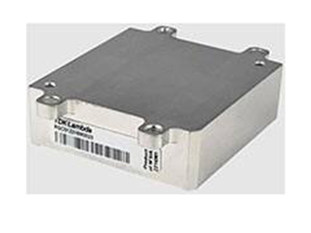






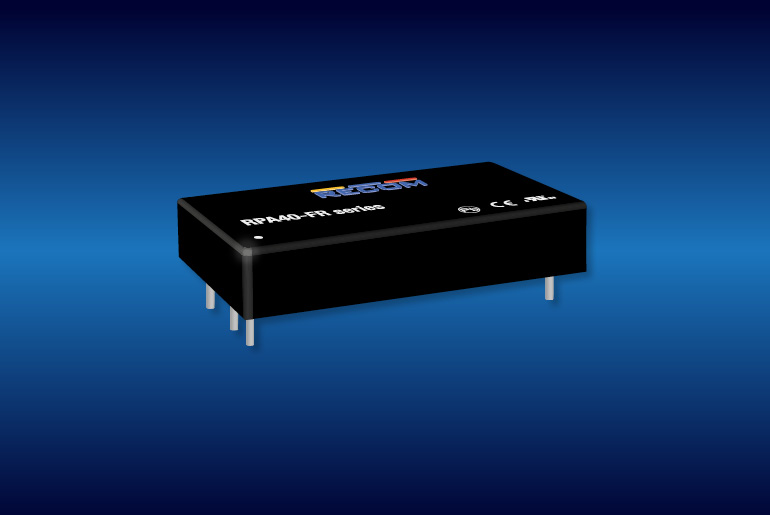
The regulated and isolated RPA40-FR series features a 36–160V input range (200V/1 sec) which includes rail nominals of 72V, 96V, and 110V with surges and dips making them widely applicable. Low-noise, single and dual outputs available are 5V, 5.1V, 12V, 15V, 24V, +/-12V and +/-15V with the single outputs’ trimmable minimum +/- 10% (15 and 24V models are trimmable to +20/-10%). Additionally, no minimum load is required.
The efficiency of the RPA40-FR series peaks at 90% which, along with advanced thermal design, allows operation with natural convection to high temperatures without derating up to 105°C ambient with reduced load and/or airflow. Protection is included against over-temperature, input under-voltage, output over-current, and short circuits. A control pin is also provided to shut down the DC/DCs into a low dissipation state.
Safety certifications held by the products include UL/EN/IEC 62368-1, EN 45545-2, and EN 50155, with a reinforced isolation rating of 3kVAC/1 min. EMC specification EN 55032 class A is met without external components while class B can be met with a simple external filter network. Reliability is high with an MTBF of 1.25MHrs at 25°C according to MIL-HDBK 217-F (GB) making these rugged, encapsulated parts highly suitable for harsh rail environments as well as for general industrial use.
Matthew Dauterive, DC/DC product manager of RECOM comments: “We have pushed power density boundaries even further with these 40W products for the rail market without compromising performance and flexibility”.
Parts include a three-year warranty, and samples and OEM pricing are available from all authorised distributors or directly from RECOM.