

This discussion with Hiroyuki Kato, Senior Manager, Global Market Technology, Anritsu, examines the pivotal role of 3GPP ultra-reliable low latency communication (URLLC), including performance and enhanced reliability, while addressing the technical challenges associated with deployment, standardisation, security, and testing requirements as technology advances towards 6G.
What is the rationale behind the 3GPP definition of URLLC?
Mission-critical and real-time use cases, such as smart factories, autonomous vehicles, and robotics, require fast, low-latency communications with exceptional levels of reliability. Many critical and time-sensitive applications require latencies as low as 1ms and reliability up to 99.9999% and beyond. Traditional networks are increasingly inadequate for these cases and others like them.
In the 6G era, ultra-reliable low latency communication (URLLC) will become a necessity to enhance to ‘end-to-end’ level. To realise this, NW optimisation (by AI) and NW slicing and guaranteed QoS at end-to-end level will be required. Enhanced mobile broadband (eMBB) can support very high data rates but is not as good in terms of latency. Massive machine-type communications (mMTC) meanwhile can support huge quantities of UE devices, but there are trade-offs in terms of reliability.
How does URLLC fit into future smart factories?
URLLC addresses the needs for low latency and high reliability in real-time IoT applications and modern data-driven Industry 4.0 smart factories.
It can handle industrial applications such as distributed control systems, collaborative robots, and autonomous mobile robots. Achieving the real-time control and security requirements for these applications has traditionally been difficult with conventional Wi-Fi or wired LAN. Combining URLLC with local 5G can potentially unlock huge productivity and efficiency gains for smart factories.
What are the technical challenges in implementing URLLC?
There are various technical challenges in implementing URLLC. These include resource contention, interference management, error correction for short packet data, end-to-end latency, synchronisation accuracy, and security. While these are being partially addressed in 5G, new technologies such as AI, Edge computing, and synchronisation accuracy enhancement are essential for 6G.
There are also various challenges in achieving URLLC wide coverage, such as short propagation distances due to high-frequency bands, increased cell density, reliability during handovers, indoor and remote area coverage, interference management, and compliance with global regulations. In 6G, industry will address this issue by utilising RIS and NTN.
There are also various test requirements for URLLC such as precise measurement of latency and reliability, handover performance, interference reproduction, security verification, and real-world environment simulation. These require test environments that have very high accuracy time synchronisation and configurable packet data (short packet, data rate, etc.). There is also a need to verify the performance of point-to-point, end-to-end, and short term, longer term.
How is standardisation key to implementing URLLC?
Standardisation is required for global alignment on required performance, testing, and deployment aspects. A key challenge is to accommodate different national regulations and frequency allocations. Standards must also be future proof for emerging technologies.
3GPP began standardising URLLC in Release 15, accelerated efforts in Release 16, and has been enhancing industrial applications and wide-area coverage since Release 17. In 6G, some emerging technologies such as AI, ISAC (integrated sensing and communication), energy efficiency (ambient IoT), and MRSS (spectrum sharing) are helping to assist with the implementation of URLLC.
What is the security-performance trade-off for URLCC?
Enhanced security measures increase latency through encryption and authentication, compromising the real-time capability of URLLC (trade-off in packet size versus latency). Several candidates are emerging to solve this, including minimising latency increases through lightweight cryptography, PLS (physical layer security), and AI control. In 6G, quantum cryptography is another potential approach to solving this issue.
What test instruments and services does Anritsu offer for URLCC testing?
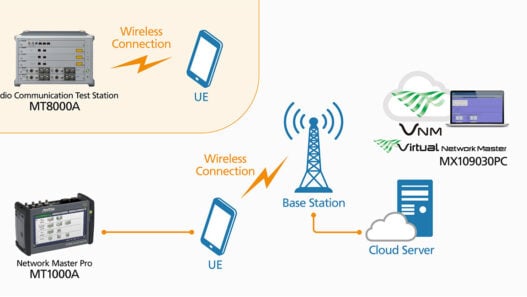
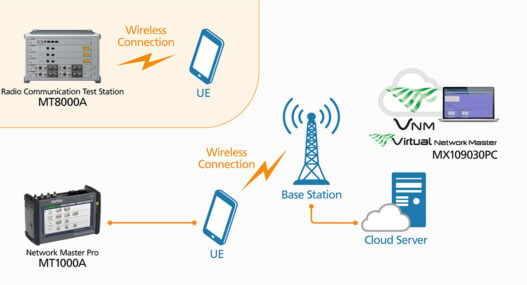
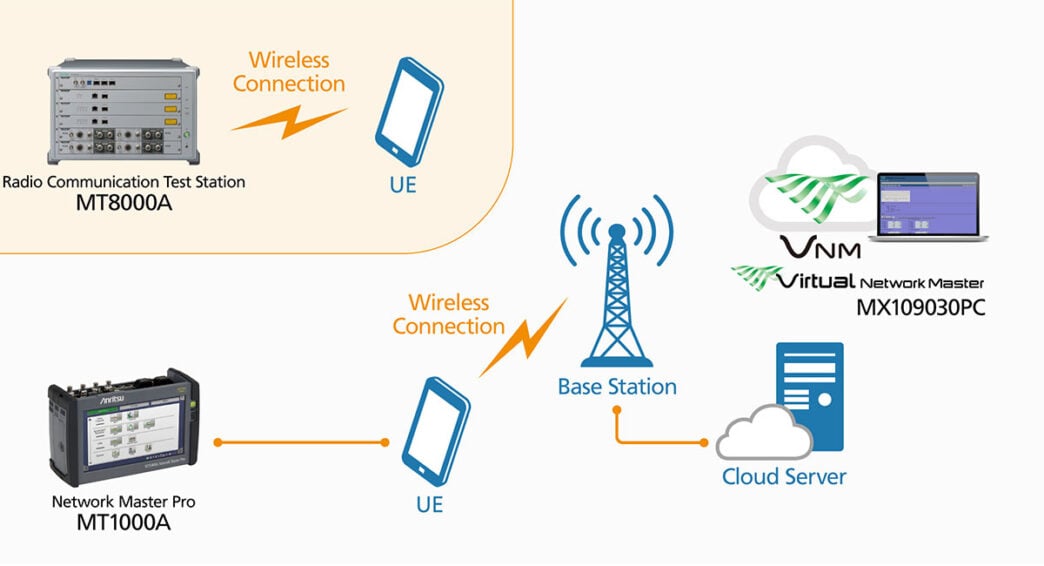
Anritsu offers MT8000A (as 5G RAN platform) and MT1000A/VNM (Virtual NW Master) for URLLC testing. MT1000A/VNM has a very high accuracy time synchronisation and can support flexible data packet (size of packet, data rate, etc.). Since VNM is not a HW test solution, users can install anywhere and can measure any two points (point-to-point, end-to-end). In addition, some industries have limited experience in using measurement instruments. Anritsu is able to consult and advise on solutions and best practices.
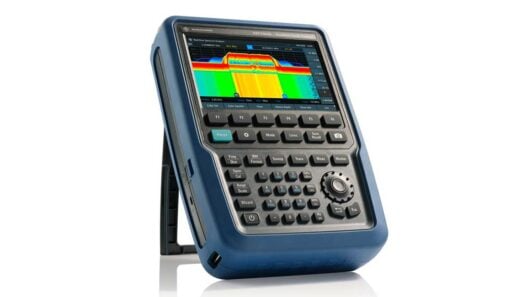
As well as providing test solutions for monitoring spectrum interference, Anritsu can also provide real-time RF analysis by AI. This is helpful in applications such as unknown drone detection, and jamming signal detection. Anritsu has a close relationship with YOTASYS regarding AI RF analysis. We also partner with organisations such as AUTOCRYPT to deliver cybersecurity test solutions for the automotive industry.
This article originally appeared in the August’26 magazine issue of Electronic Specifier Design – see ES’s Magazine Archives for more featured publications.