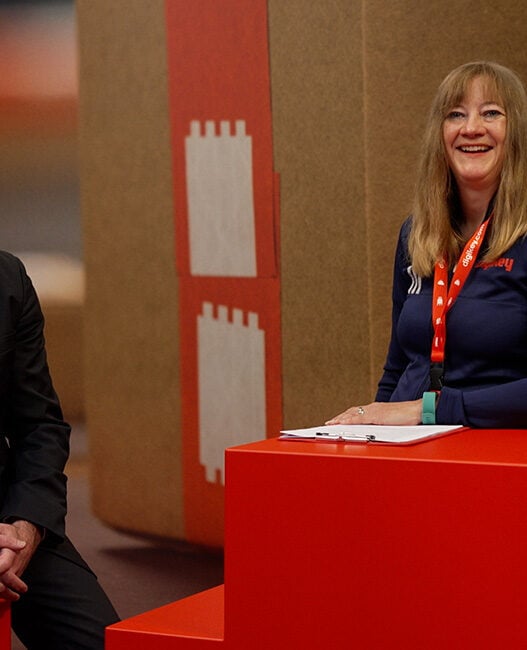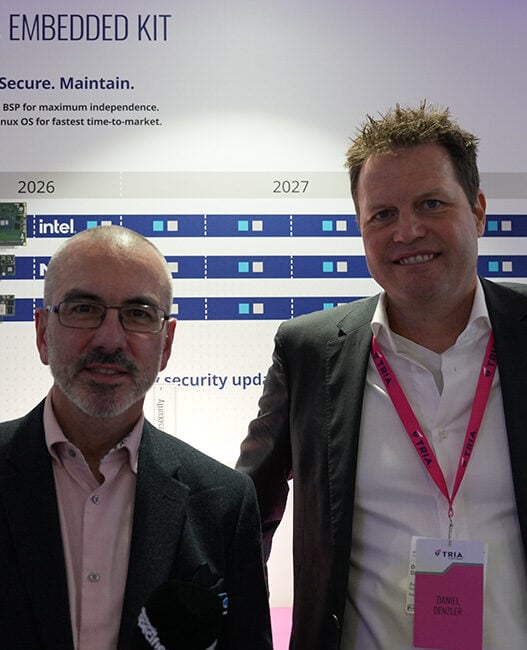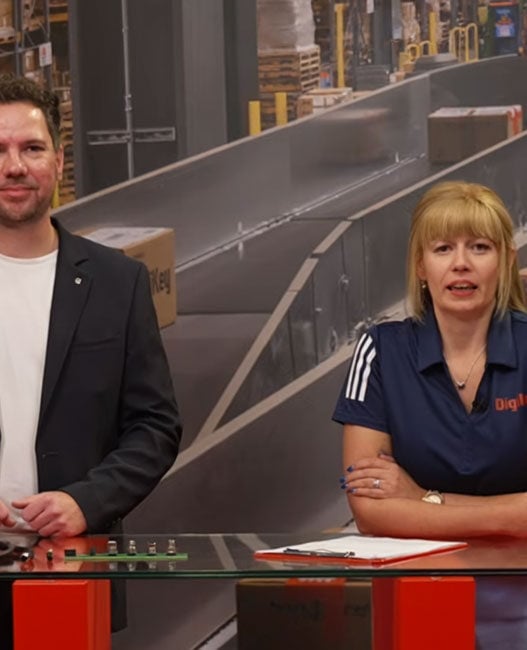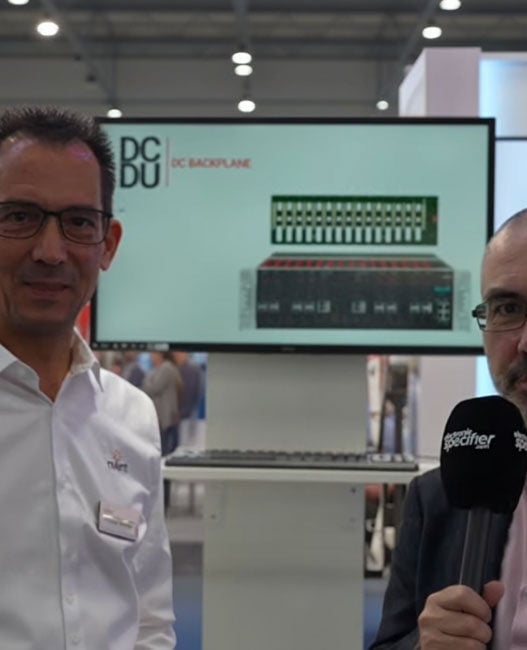






At electronica 2026, Paige Hookway spoke with Scott Kleinle, General Manager at Amphenol, at the DigiKey booth. They discussed Amphenol’s Ethernet connector and cable assembly portfolio and how design engineers can choose the right solution for their application.
As General Manager of Commercial Products, Kleinle is responsible for Amphenol’s Ethernet products. He said that the company’s global footprint is a key part of what it offers: “We have manufacturing facilities all around the world. So, not only the proper technology but also the supply chain to meet customer needs all around the world.”
Three form factors, one protocol
Amphenol offers three Ethernet form factors: ModJack (RJ), Single Pair Ethernet (SPE), and ix Industrial. On speaking about how a designer chooses between them, he said: “Sometimes the application will drive it.”
ModJack (Modular Jack), or registered jack, connectors came out of the data centre and have been used for decades. They are four-pair products. SPE uses a single pair, for applications where four pairs aren’t needed. ix Industrial is another four-pair solution, but it is built specifically for industrial environments that need more ruggedness than a data centre. All three are multi-sourced, and all are available as board connectors and cables to form a total solution. “The differentiator is what number of pair do you need? What power may you need to bring along with it, and what type of application or architecture best fits the physical dimensional form factor?” said Kleinle.
Why RJ is here to stay
Asked why RJ connectors are still so widely used, Kleinle said it’s because of their track record: “They’ve been so rugged, robust, well understood, and have permeated applications where you need to network different application pieces together piece by piece by piece. If something works, you keep doing it.”
As data centre demands grew, RJ connectors kept increasing in speed. “You can get it at 1 gig, 10 gig, all the different speeds, all kinds of flexibility, right price point, multiple sources, available all around the world,” he said.
SPE at the Edge
Looking to the factory floor, Kleinle explained that SPE is aimed at cameras, sensors, actuators, and other Edge devices where size is a constraint. Ten or 20 years ago, many factories relied on proprietary protocols. Today, whether through SPE, ModJack, or ix Industrial, “it’s all Ethernet”. This makes it easier to move data from the manufacturing facility to the Cloud for analysis.
Being able to carry power and data over the same pair is a big part of SPE’s appeal. “Why have two connectors when you can have one, right?” Kleinle said. Customers want less clutter and fewer wires, and the ability to deliver “a little bit of power that can power that end device, say a sensor, a camera, something like that … but do it all in Ethernet connectivity and signalling.” He sees the strongest demand for SPE at the Edge and in robotics, where small size and flexibility matter most.
ix Industrial: smaller, denser, tougher
The ix Industrial connector is around 70% smaller than a standard RJ45. “Anything that used to be a ModJack in the industrial solution could be immediately an ix Industrial solution because it’s four pair to four pair,” said Kleinle. It also offers Cat6A performance, so 10G links can move straight across. “Everybody wants more and more density. So when it’s 70% smaller, you can get obviously more density and make your device smaller as well.”
While a temperature-controlled data centre is ideal for ModJack, ix Industrial is built for the factory floor. Amphenol’s solutions are typically rated IP20 or IP67. Kleinle described IP20 as “touch proof” and IP67 as moisture proof to a degree, which matters in factories where equipment may be hosed down.
Amphenol also helps customers move between technologies. “It’s very common that we’ll have a cable assembly that’ll be ix on one end and RJ or ModJack on the other end, connecting yesterday with future applications that are coming online now,” he said.
IoT, AI, and the next five years
The growth of IoT sensors is changing how factories are wired. “Now in the factory, it’s about getting as many devices to Ethernet protocol to get that data again to the Cloud,” said Kleinle. “Analyse the data, optimise the factory, and do it without any sort of latency or protocol shifts or changes from legacy gear to new equipment.”
Looking five years ahead, he expects growth across all three form factors. “I think RJ will live forever … because it’s just so flexible, so cost-effective, and again, everybody knows it. I think that you’re going to see growth in all three.”
AI will be a major driver, as factories use it to cut downtime and find efficiencies. “Ethernet specifically helps AI because all these data centres, what protocol do they run? Ethernet,” Kleinle said. Ultimately, the goal is to prepare factories for AI-driven analysis “as easily and cost effective as possible.”
Watch the full interview here: