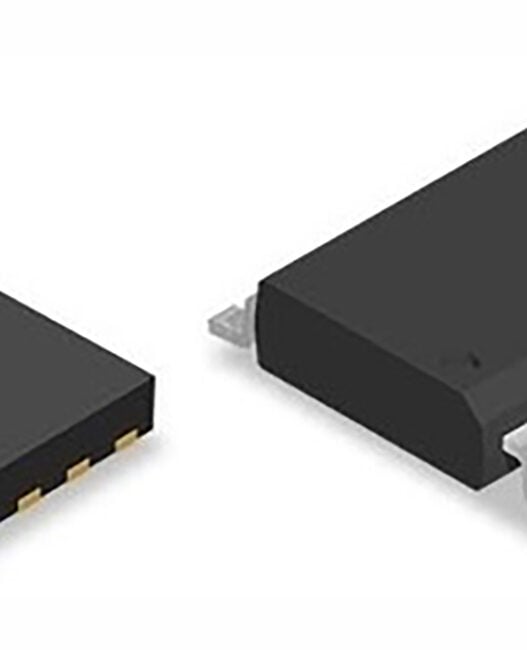

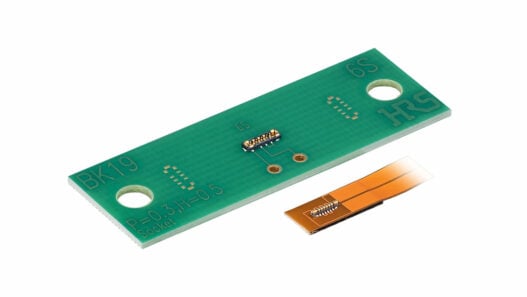


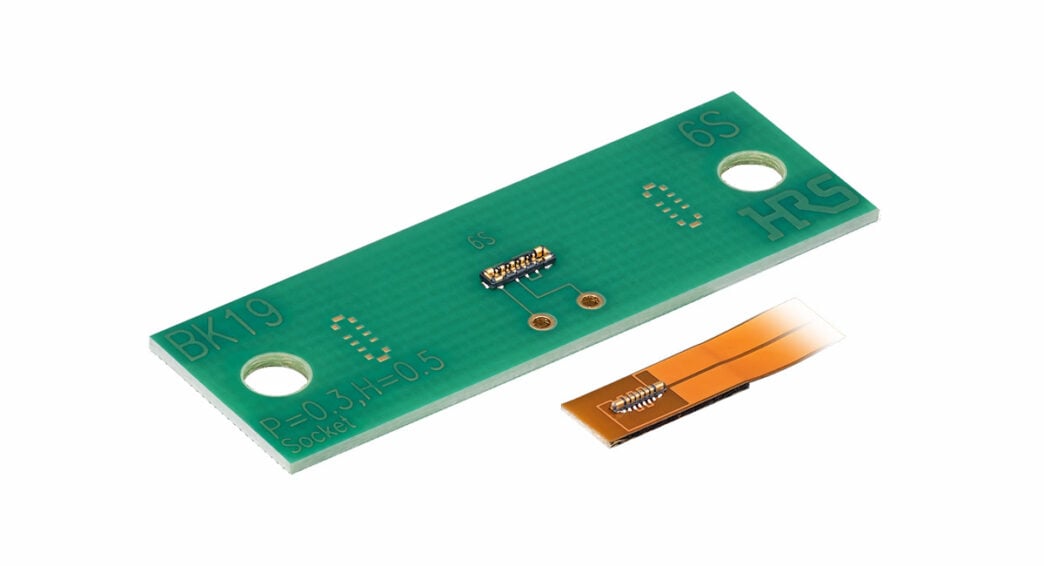
Hirose has expanded its hybrid FPC-to-board connector family with a narrow-width, ultra-low-profile version that enables slimmer, more compact designs for portable devices. Among the world’s smallest single-row FPC-to-board connectors, the BK19 Series features a 0.3mm pitch, 0.5mm stacking height, and 1.2mm width.
The BK19 Series utilises a fully armoured design for enhanced reliability and durability in portable electronic applications susceptible to drop impacts. The armour also helps protect against housing damage from misalignment during mating.
Offering design flexibility, the hybrid BK19 Series combines power and signal contacts in a single connector, helping reduce connector count and save PCB space.
“With consumer devices continuing to evolve with thinner profiles and greater functionality, demand for compact yet highly reliable connectors is increasing. To address this market demand, Hirose developed one of the world’s smallest-class single-row FPC-to-board connectors. The BK19 Series hybrid power and signal connector achieves advanced miniaturisation across pitch, width, and height to increase housing and mechanical design freedom. This enables more sophisticated device architectures while delivering tangible benefits to both device designers and end users,” said Pete Lais, Assistant Vice President of Product Management for Hirose Electric Americas.
Key features:
- Ultra-low profile and narrow width: 0.3mm pitch, 1.2mm width, 0.5mm stacking height
- Fully armoured design to prevent housing damage
- Dimpled contact lock design enables high extraction force
- Easy mating operation with wide self-alignment range: pitch direction: ±0.3mm, width direction: ±0.3mm
- Insert moulded plug and receptacle design prevents solder wicking
Key Applications:
- The BK19 Series is commonly used in consumer and medical portable electronics devices, including:
- Compact medical devices
- Portable gaming devices
- Smartphones
- Wearable devices (consumer and medical)
- VR/AR glasses