

Technologies developed for AI data centres are starting to shape products well beyond the server room, from factory machinery and medical devices to electric vehicles and home appliances, according to Delta Electronics.
The Taiwan-based power and thermal management specialist says high power density, liquid cooling, high-voltage DC systems, and silicon carbide power electronics are no longer limited to hyperscale computing. It believes they are becoming the engineering baseline for the next generation of products made by original equipment manufacturers (OEMs).
The company points to the scale of current AI investment. It says the five largest US cloud providers plan to spend more than $600 billion on capital expenditure in 2026, mostly on AI compute, data centres, and networking.
Delta’s argument comes as several manufacturing markets show signs of recovery. ZVEI, the German Electro and Digital Industry Association, expects the global electrical and electronics market to grow by 7% this year and 6% in 2027. It credits AI infrastructure investment, alongside electrification, digitalisation, and automation.
Meanwhile, the German engineering association VDMA reports that price-adjusted orders for the country’s mechanical engineering sector rose by 5% in the first seven months of 2026. Orders from outside the eurozone were up 14%. VDMA expects production to return to growth next year.
Other sectors are changing too. Europe’s medical technology market is worth about €173 billion. Battery-electric vehicles made up 20.7% of new EU passenger car registrations in the first half of 2026.
Delta sees three main openings for manufacturers.
The first is supplying AI data centres directly. Beyond the servers, these facilities depend on pumps, valves, coolant distribution, fans, and power systems, which are areas where European industrial firms already have expertise. As data centres move towards 800V DC power systems, Delta says EV makers’ experience with high-voltage platforms could also carry across.
The second is building AI capabilities into OEMs’ own products. Delta cites medical devices as one of the fastest-moving areas. The US Food and Drug Administration had authorised 1,451 AI-enabled medical devices by the end of 2025, including a record 295 that year, and 76% of them are in radiology. The company says this puts new demands on power supplies, which must deliver more performance while meeting strict medical safety and electromagnetic compatibility rules. Those requirements can affect certification timelines.
The third is treating regulation as a reason to redesign products, not just a compliance task. The EU Machinery Regulation, which applies in full from January 2027, brings in new requirements on cybersecurity, AI, and lifecycle management. In consumer goods, the EU Standby Regulation and Right to Repair Directive are increasing demand for more efficient, modular, and repairable designs.
Delta argues that a common mistake is to see AI infrastructure and industrial products as developing separately. In its view, the two are converging, and firms that adapt early will be better placed to shorten development cycles and stay competitive.
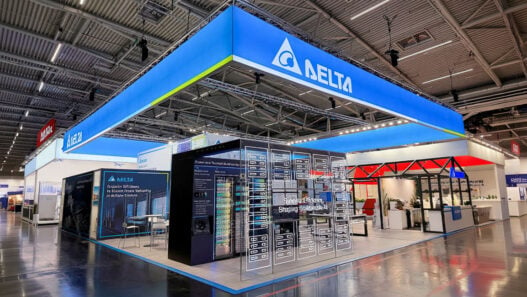
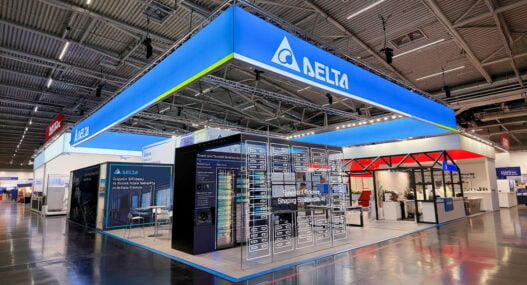
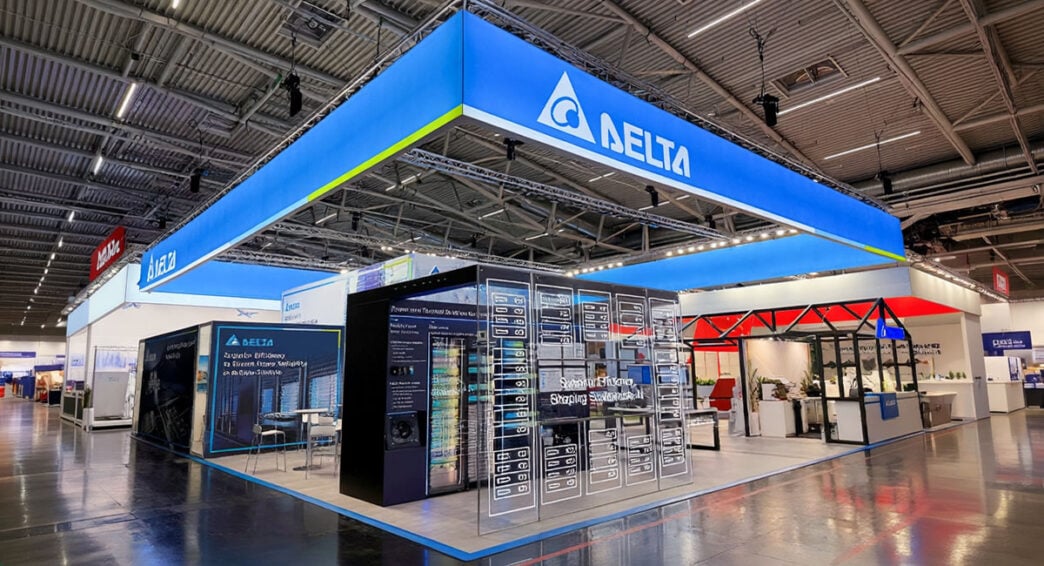
The company will show how AI-derived power and thermal technologies are being used in industrial, medical, mobility. and consumer markets at electronica 2026 in Munich, on booth A5.202.
Founded in 1971, Delta is listed on the Taiwan Stock Exchange and operates from close to 200 locations across five continents.