




In automotive body electronics, detecting physical states is becoming increasingly complex as system-level requirements grow. What were once simple, discrete signals must now operate reliably within tightly defined electrical interfaces, support functional safety concepts, and remain robust under real-world operating conditions over the full vehicle lifetime.
In many applications, such as the seat belt buckle switch (SBBS), this detection is implemented through low-complexity interfaces that often combine power supply and signal transmission over a single line. While these architectures are well-established and cost-effective, they impose strict limits on how information can be encoded, transmitted, and diagnosed at the system level, creating clear challenges in the era of software-defined vehicles (SDVs).
Enhanced vehicle safety functions are placing greater demands on signal integrity and fault detectability. Inputs once treated as basic status indicators now feed safety-relevant decision chains, requiring deterministic behaviour, clearly defined fault states, and compatibility with increasingly rigorous system-level safety targets. As a result, even simple sensing functions are no longer designed in isolation at the component level, fundamentally redefining the hardware automotive engineers need to succeed.
Seat belt buckle sensing: a safety-critical signal under strict constraints
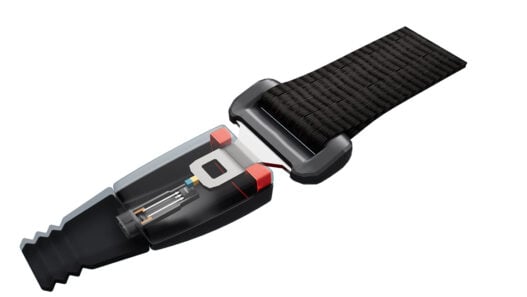
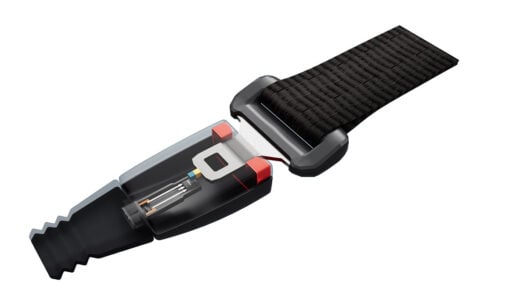
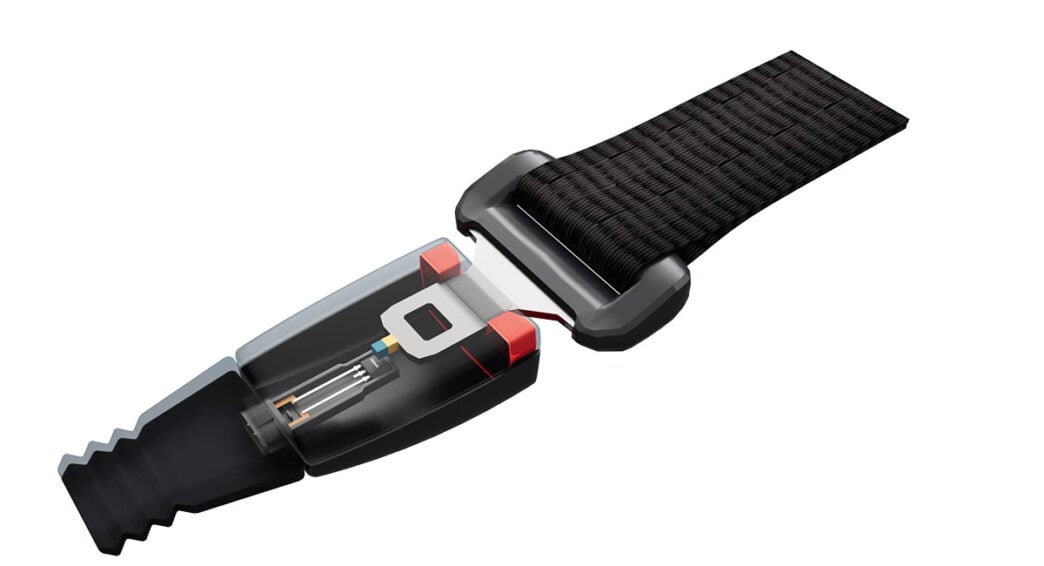
Traditionally, seat belt buckle sensing has used mechanical switches or basic Hall-based solutions, providing simple binary state detection within a tightly defined electrical interface. These sensors operate as current-mode devices over a two-wire interface, where power supply and signal transmission share the same connection. The ECU interprets the system state based on discrete current levels, so defining and separating these levels is critical to reliable operation.
The signal is typically encoded across three distinct conditions:
- Unbuckled state: defined by a programmable low current level, typically within either 2 to 5mA or 5 to 6.9mA, allowing compatibility with different ECU input thresholds
- Buckled state: represented by a higher current level, typically in the range of 12 to 15mA
- Safe state: a defined fault condition below 1mA, enabling clear detection of error scenarios such as internal faults or certain wiring issues
This approach provides a simple, robust mechanism for state detection while enabling basic diagnostics, particularly for open- and short-circuit conditions. However, it also imposes strict constraints. These approaches offer limited flexibility, fixed switching behaviour, and minimal component-level diagnostic capability. The current levels must remain within predefined ECU input windows, maintain sufficient separation under all operating conditions, and remain stable across temperature, supply variation, and component tolerances.
In modern vehicles, the buckle signal directly influences system-level behaviour. It serves not only seatbelt reminder functions but also as input to restraint-system logic, including airbag deployment strategies. As a result, the signal must be deterministic and fault-aware, ensuring the ECU can clearly distinguish valid states from fault conditions.
Understanding the engineering constraints
Delivering this level of performance is complicated by several application-specific constraints. From an integration standpoint, two-wire, PCB-less implementations are often required to minimise wiring complexity, reduce cost, and simplify assembly. Eliminating external components such as discrete capacitors further constrains the design, placing greater emphasis on integration within the sensing element itself.
Electrically, the environment is also demanding. The sensor typically connects directly to the vehicle battery and because of the buckle’s physical accessibility, it is exposed to elevated levels of electrostatic discharge. High ESD robustness is essential, particularly in configurations where system grounding is limited or impractical.
The mechanical design of seat buckles introduces additional variability that needs to be considered. Buckle mechanisms have multiple moving parts, and assembly tolerances directly affect the air gap between the magnet and the sensor. This variation affects the magnetic field strength at the sensing element, making it harder to define consistent magnetic operating and release thresholds. In practice, this can drive the need for stronger magnet materials such as samarium-cobalt (SmCo) or neodymium-iron-boron (NdFeB), or lead to multiple design iterations to achieve stable switching behaviour across production.
Packaging and sensing orientation further influence system design. While PCB-less implementations are often preferred, some OEMs may use SMD-based approaches when additional flexibility is required.
Similarly, while Z-axis sensing remains the standard approach, with the magnetic field applied perpendicular to the sensor surface and the magnet typically positioned above or below the device, the increasing use of lateral (X-axis) sensitivity enables more compact mechanical designs. By detecting magnetic fields parallel to the sensor surface, X-axis sensing lets the magnet be positioned and moved laterally relative to the device, reducing reliance on vertical stacking and increasing flexibility in buckle design, though it places greater emphasis on sensor sensitivity and magnetic system design.
For Tier 1 suppliers and automotive OEMs, these constraints define SBBS as a function that must operate within a fixed electrical interface, under harsh environmental conditions, and with significant mechanical variability, while still delivering clear state definition and reliable fault detection for safety-relevant system functions.
Enabling reliable seatbelt buckle sensing within system constraints
In a seat belt buckle system, where a binary signal directly influences restraint behaviour, clear, reliable state definition is critical.
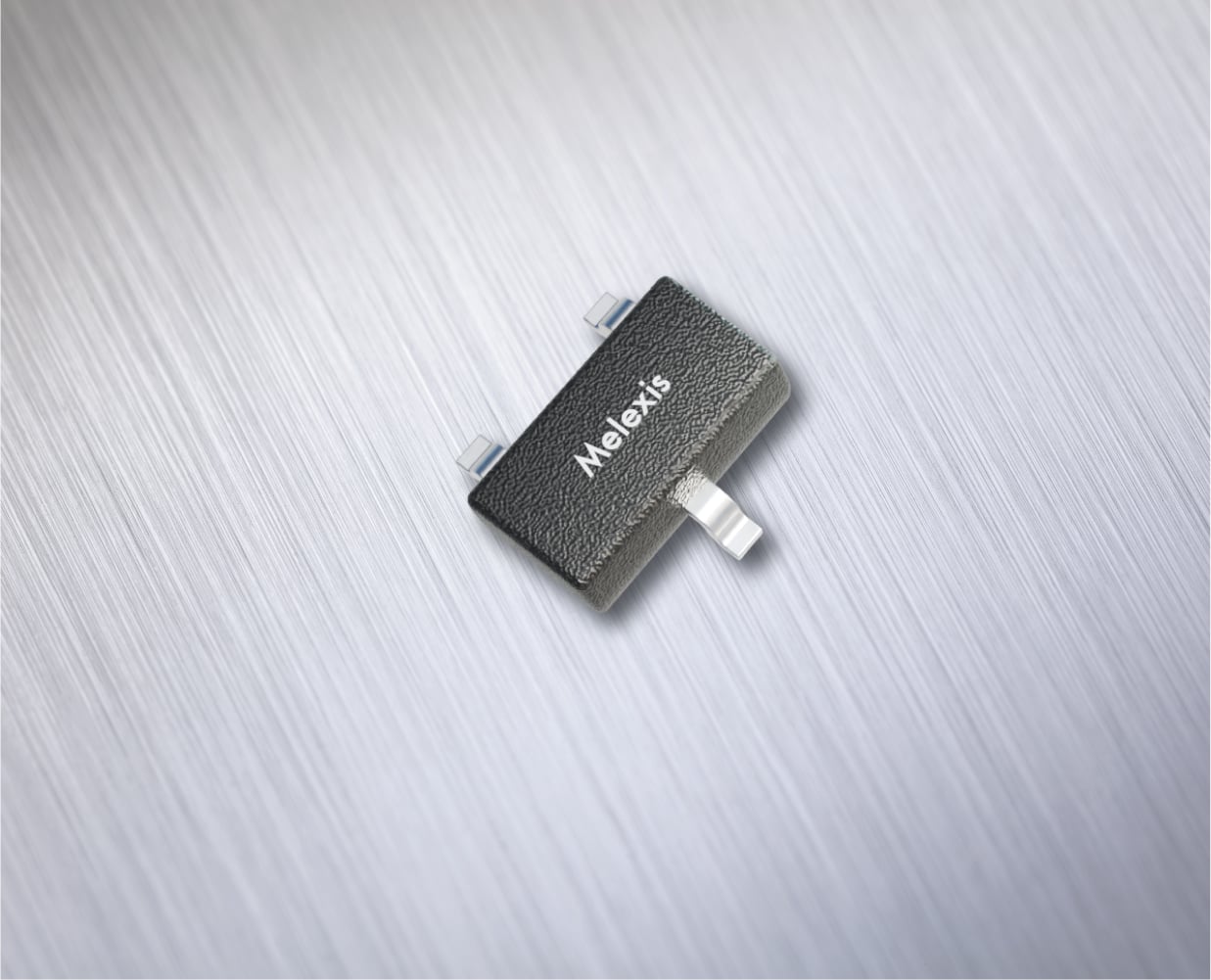
To address today’s constraints of two-wire architectures and safety-relevant signalling, Melexis has developed a family of programmable current-mode Hall-effect switches for seat belt buckle sensing. The MLX92341 provides a robust foundation that meets the safety, accuracy, and reliability requirements of SBBS systems in modern vehicles, aligns with ECU input windows, and delivers new levels of functionality, integration, and operational consistency. Building on this, the MLX92342 adds end-of-line programmability, enabling system-level compensation for mechanical tolerances during mass production.
Robustness and integration in buckle environments
To support safety-critical operation, both devices are developed according to ISO 26262 as an ASIL B Safety Element out of Context (SEooC), integrating internal self-diagnostic functions that continuously monitor device behaviour. In the event of a fault, the sensor transitions to a dedicated safe state below 1mA, ensuring unambiguous detection at the ECU level. Fast output updates within 100µs ensure diagnostic conditions are communicated within system timing constraints.
In seat belt buckle applications, the sensing element must operate reliably despite direct battery connection and physical exposure to the occupant. The MLX92341/MLX92342 provides high ESD robustness, ensuring stable operation under electrical stress while reducing the risk of latent damage during assembly and throughout the vehicle’s lifetime.
Furthermore, Melexis engineers have optimised integration for the constraints of buckle assemblies. The device supports a two-wire interface and includes an internal capacitor in its moulded package, enabling PCB-less implementations where the sensor connects directly to the wiring harness. This reduces component count, simplifies assembly, and supports compact, cost-sensitive designs without compromising EMC or ESD performance.
Managing mechanical variability and enabling design flexibility
The MLX92342 addresses variability in buckle mechanisms caused by mechanical tolerances through end-of-line programmability of the magnetic switching thresholds (Bop/Brp), allowing each device to be calibrated after integration. This ensures consistent switching behaviour across production, reduces the need for tighter mechanical constraints or higher-cost magnets, and minimises design iterations.
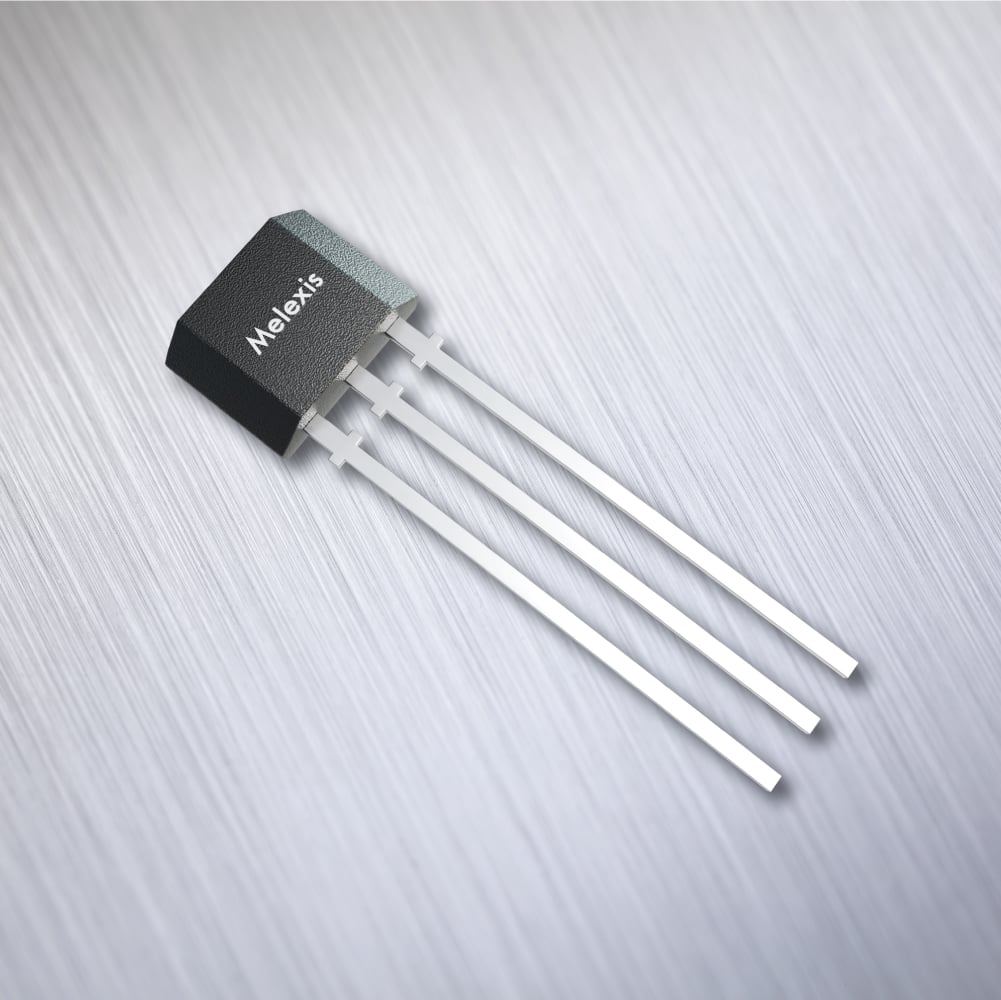
In addition, high magnetic sensitivity and accuracy, combined with programmable temperature compensation and configurable current levels, provide Tier 1 suppliers and OEMs with greater flexibility in magnet selection and ECU interfacing, enabling optimisation across a wide range of buckle designs.
Conclusion: from simple signals to system-level intelligence
Seat belt buckle sensing illustrates how even the simplest functions in a vehicle are being reshaped by evolving system requirements.
What was once a straightforward binary switch input is now a safety-relevant signal that must operate reliably within constrained electrical interfaces, withstand harsh environmental conditions, and account for mechanical variability, all while providing clear diagnostic feedback to the system.
As shown, conventional hardware can no longer meet these requirements. Instead, sensing functions must be integrated into the broader system architecture. By combining programmable signal definition, embedded diagnostics, and robustness within a single device, solutions such as the MLX92342 enable more predictable behaviour, simplify integration, and improve fault visibility without increasing system complexity.
More broadly, this reflects a shift across automotive body electronics. As vehicles evolve toward more software-defined architectures, sensing is no longer a peripheral function but part of interconnected control systems that directly influence safety, system behaviour, and user experience.
For engineers, this means component-level decisions directly affect system reliability, scalability, and the ability to meet increasingly stringent safety requirements. As seat belt buckle sensing demonstrates, even well-established functions must be reconsidered to meet the demands of next-generation vehicle platforms.