



Higher voltages, smaller form factors, longer service life: the demands placed on resistors are changing faster than standard catalogues can keep up. Isabellenhütte therefore focuses on the very source of a resistor’s electrical properties – the material itself. A look at the manufacturing facility in Dillenburg, Germany, reveals what an end-to-end value chain from the alloy to the finished component means for developers.
When a catalogue component becomes a compromise
Whether in e-mobility, aerospace, or industrial power electronics, developers often face the same dilemma. A standard component almost fits – but only almost. The resistance value is correct, but the package doesn’t fit into the available space. Or the geometry is right, but the thermal performance isn’t sufficient for the mission profile. In the end, a compromise is reached that comes at the expense of space, performance or reliability.
Many of these limitations do not lie in the component itself, but one level deeper: in the resistor alloy. How stable a resistor remains across temperature ranges, how much energy it can absorb, and how compact it can be designed are largely determined by the material.
A value chain at a single location
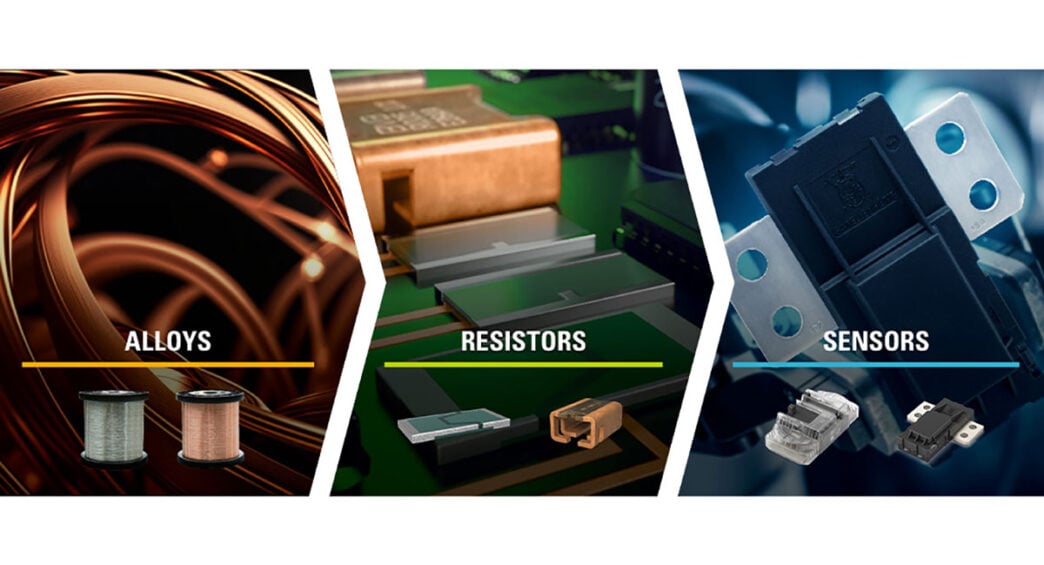
At its headquarters in Dillenburg, alloys, resistors, and sensors are produced under one roof – from the foundry and wire-drawing mill to cleanroom production and final inspection. Isabellenhütte describes this value chain as unique worldwide. Because material development and component manufacturing take place at the same location, the alloy, processing, and component design can be engineered together – rather than sequentially and by different suppliers.
For customers, this means that customisations are not limited to the component itself. Services range from melting metallurgy and heat treatment to machining. To develop new materials, Isabellenhütte melts sample batches weighing between 100g and 20kg under vacuum. The customer decides whether to receive semi-finished products, powder, paste, or a finished component.
This vertical integration has grown over the centuries. Isabellenhütte was first documented in 1482 as a copper smelter. The company has been owned by the Heusler family since 1827. In 1889, Isabellenhütte developed MANGANIN, an alloy whose electrical resistance remains virtually unchanged across a range of temperatures. In addition to MANGANIN, the portfolio of precision resistance alloys includes ZERANIN, ISAOHM, and NOVENTIN.
According to Isabellenhütte, a single electric vehicle contains around 60 components from Dillenburg, while satellites contain up to 800 parts per unit.
From material to function: an example
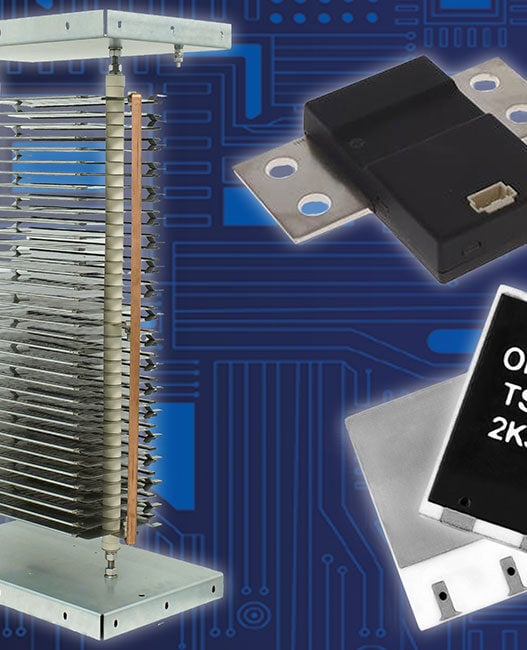
The PMT pulse load resistor demonstrates just how directly the material determines the properties of a component. It is based on the ISA-PLAN technology of SMD measurement shunts but uses the company’s proprietary NOVENTIN alloy. Its resistivity is approximately two to three times higher than that of conventional measurement alloys. This transforms a proven design into a resistor with a completely different function: rather than measuring current, it absorbs voltage spikes.
Isabellenhütte developed the PMT series not only for peak technical performance, but also with the aim of supporting customers personally and reliably – from the first prototype to series production. For the company, it is not just about the product, but about the partnership.
From the technical centre: high-strength copper alloys without beryllium
A project from the Alloys Division’s technical centre demonstrates just how deep this material expertise runs. A customer wanted to remove beryllium from its high-strength copper alloys, as the element can be highly harmful to health in certain forms. At the same time, the mechanical properties of the semi-finished products could not be compromised. There was no off-the-shelf solution for this.
Isabellenhütte developed two beryllium-free alloy variants. Because the company handles melting, processing, and manufacturing in-house, it was able to produce sample components directly from the new alloys. The result: equivalent mechanical properties, such as hardness and tensile strength, without any harmful substances.
From alloys to shunts to measurement technology
What begins in the technical centre extends throughout the entire product portfolio. Its alloys are used to produce resistive foils for the shunts. The current and voltage sensors manufactured by Isabellenhütte, in turn, are based on these shunts. Among other applications, these sensors are used in battery management systems.
Each stage builds on the previous one – and each stage offers a point of entry. Control over the alloy makes it possible to tailor a shunt’s resistance value, design, and contacts precisely to a specific application. This vertical integration enables customer-specific shunts and custom adaptations that go beyond simply modifying a standard component.
Partnership instead of a catalogue
At Isabellenhütte, custom projects begin with a joint needs analysis and an assessment of technical feasibility. For developers and buyers, this means that when a catalogue part is no longer sufficient, it’s worth taking a closer look – at the material itself.