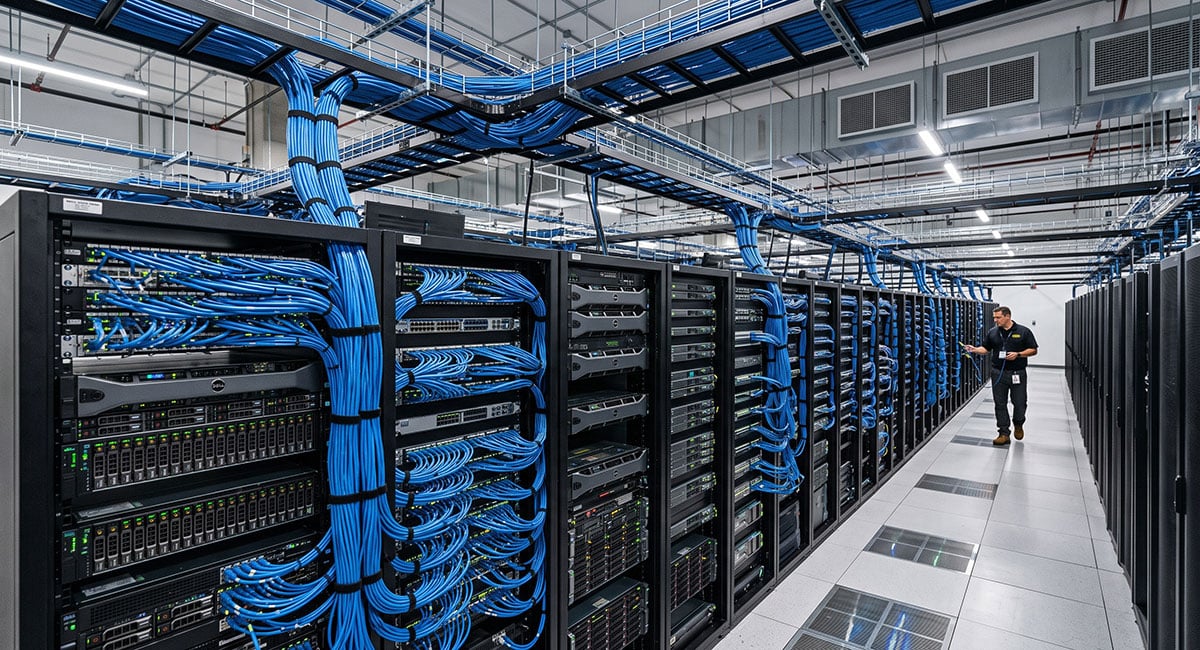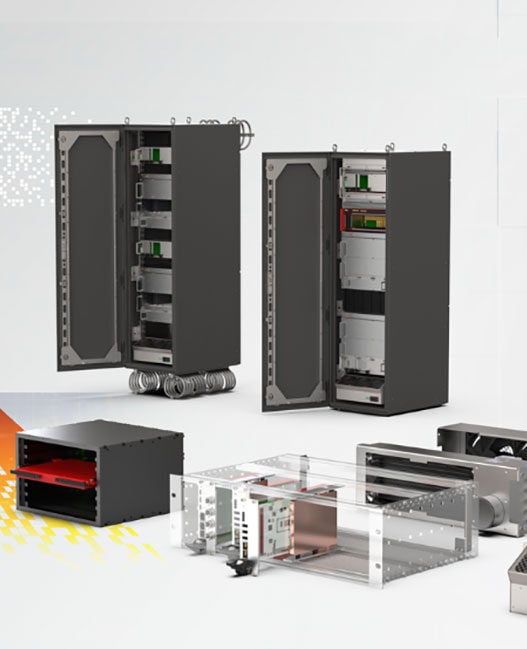



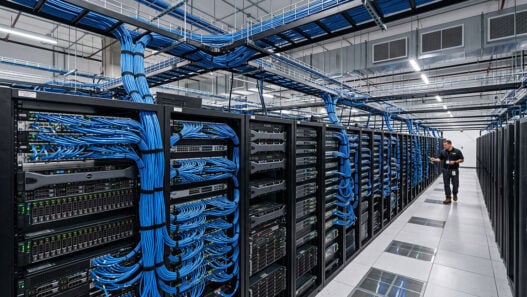




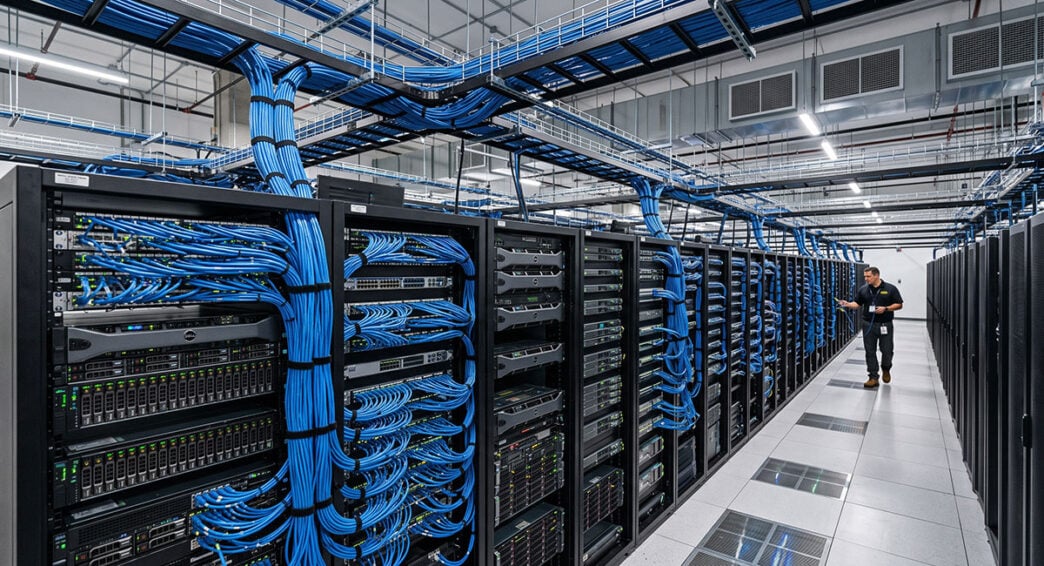
Choosing the right rack architecture for non-hyperscale data centres means balancing equipment type, density, power, cooling, scalability, maintenance, and budget, often all at once. Hyperscale designs are one option among many. Open frames, enclosed cabinets, wall-mount enclosures, and specification-driven designs each solve different problems, and the best fit depends on what a specific facility actually needs to run.
The expanding case for rack architecture choice beyond hyperscale
The Office for National Statistics tracks UK data centre growth and electricity consumption across co-location, managed hosting, and hyperscale facilities. Between 2020 and 2024, the count rose from 221 to 239 sites in Great Britain, while consumption climbed 41%, or 1.3 terawatt hours (TWh), to 4.5TWh. That total represents roughly 2% of grid electricity consumption.
UK government analysis points to a shift toward a hybrid and distributed data centre model, with smaller, geographically dispersed facilities, including Edge deployments, complementing large centralised sites. Each of those sites faces its own rack decision, shaped by its own constraints.
Key factors to weigh before choosing a rack architecture
Non-hyperscale operators balance competing considerations that can each tip the decision toward a different architecture. Rack selection typically draws on several specifications at once:
- Equipment type and footprint: the hardware a rack must house shapes its form factor, so server, networking, and telecom gear may each point to a different design
- Density requirements: packing more compute and storage into limited space raises the load each rack must carry
- Power distribution: where power is delivered and managed inside the rack may steer operators toward certain architectures
- Cooling approach: airflow, containment, and supplemental cooling needs influence how open or enclosed a rack should be
- Scalability: room for future growth often reduces the need for later rework
- Maintenance and serviceability: technician access and ongoing upkeep tend to differ widely between open and enclosed designs
- Budget: upfront cost matters alongside total cost of ownership over the rack’s life
2-post open-frame racks
Two-post open-frame racks are lightweight and favour accessibility and corrosion resistance over enclosed security, which suits teams that want cables and controls within easy reach. Hammond Manufacturing’s open-frame 2-post rack design emphasises those priorities and is often suited for network, telecom and data room equipment.
The manufacturer says: “Open frame 2-post rack design allows full access to equipment for installation, servicing, and cable management.”
Enclosed 4-post cabinets
Four-post enclosed cabinets can provide stability and protection, which favours teams that prioritise security slightly over accessibility. StarTech positions enclosed rack cabinets with lockable access to physically secure equipment.
A lockable glass front panel lets technicians monitor hardware by sight while the door keeps the cabinet locked. As StarTech puts it: “Enclosed server racks […] securely protect equipment while allowing visual monitoring through the glass lockable front panel.”
OCP ORV3 compliant racks
The Open Compute Project (OCP) Open Rack Version 3 (ORV3) specification establishes internal dimensions, power architecture, and mechanical interfaces, which gives rack designers a common baseline. It sets minimum requirements and stays intentionally flexible, so manufacturers can tailor the standard design to different environments.
Emcor Enclosures addresses OCP ORV3 rack deployment considerations and says, “ORV3 racks follow a standardised specification, but that doesn’t mean every deployment looks the same. Deployment requirements and OCP rack use cases vary significantly across hyperscale facilities, modular data centers and edge environments.”
Wall-mount cabinets
Wall-mount cabinets fit distributed sites by using vertical wall space in place of floor area, while protecting the hardware inside. Martin Enclosures offers wall-mount cabinets for Edge deployments aimed at these smaller, remote locations.
Martin Enclosures states: “Edge computing, distributed networking, remote access points, and localised control systems require equipment protection where floor space is limited or nonexistent.” The listed use cases share a need for protected hardware in a minimal footprint.
Aligning rack architecture with long-term data centre priorities
Every architecture fits best in specific situations. Choosing the right rack architecture for non-hyperscale data centres depends on how well each option matches a site’s hardware, thermal and power demands, growth plans, and budget. Smaller operators now have as many credible architecture options as larger facilities do. As Edge deployments expand, rack choices that fit current requirements and leave room for growth may deliver the most long-term value.
Engineering explainers

How to maximise battery life in wearable medical devices
As wearables become more common, more patients and providers expect incremental functionality, performance and longevity improvements.

How stream data processing enhances smart grid management
Global electronics has more information to process than it knows how to handle. Data scientists are engineering next-generation strategies to parse it all.

How to secure hardware against side-channel attacks
With the growing demand for faster, more connected devices, companies need stronger hardware security than ever. Encryption algorithms and secure protocols protect sensitive data, but lesser-known security threats – like side-channel attacks – can easily bypass these components.

Addressing 3 workforce challenges in electronics manufacturing
Electronics manufacturers in the UK face many workforce challenges also seen in other parts of the world. Tackling them is essential since the industry’s goods are in perpetually high demand. An awareness of the most pressing issues is also necessary before affected parties can begin mitigating the effects.

How to secure data in transit
Today, data is constantly moving, with people worldwide continuously sending emails, uploading files to the Cloud and sharing information between devices. This is known as data in transit, which is often vulnerable to attacks.