


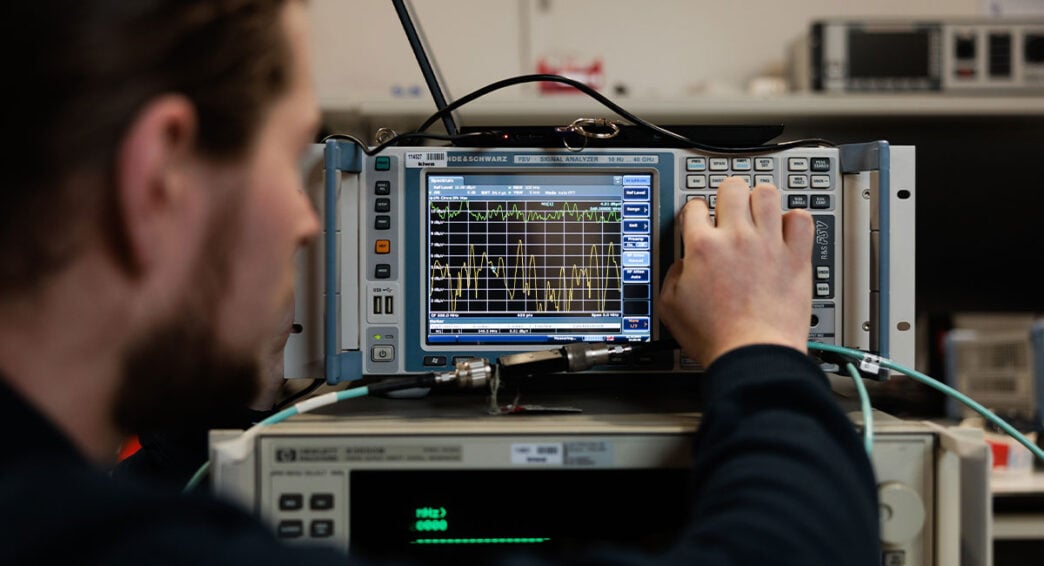
With a growing number of new electrical product solutions now reliant on radio technology to increase connectivity, a rigorous radio testing process is central to assessing a product’s readiness for market, reducing risk, and remaining compliant with current regulations.
Steve Hull, Laboratory Manager at Kiwa, highlights some of the benefits of a radio testing service.
The best strategies when launching any new product to market include ensuring compliance with all prevailing rules and regulations, mitigating risks, and ensuring it is market-ready for commercial success.
As such, a test-first approach is critical for many new electrical products as radio technologies become ever more integral to how they interact with the world and, in particular, the impact on local radio frequencies.
Radio testing services – operated by experienced external testing service providers – can assess newly developed products to prove they do not interfere with devices and users of nearby radio frequency equipment.
The testing process demonstrates compliance with the standard markets across the globe, so manufacturers and suppliers have the assurance their new product satisfies the requirements for the market in which they wish to sell.
Be market ready for launch
Electrical product testing ensures manufactured items meet regulatory requirements for radio, safety, and electromagnetic compatibility, allowing them to be legally sold in different markets.
This involves testing for both a product’s radio frequency (RF) performance and its electromagnetic compatibility (EMC) with other devices.
The testing process ensures which could be using common radio technologies such as Wi-Fi, Bluetooth, Zigbee, PMR, GPS, and RFID – does so efficiently within the radio spectrum.
There are a variety of compliance requirements for worldwide markets.
These range from meeting CE marking in Europe under the Radio Equipment Directive (RED), which is also now acceptable in the UK following a post-Brexit transition period, through to the Federal Communications Commission (FCC) in the USA, the ISED in Canada, and the MIC in Japan. Each has its own certification processes that need to be followed to be able to lawfully sell electrical products into the respective market.
Radio testing services will not only ensure that such compliance is achieved, they will also signpost adjustments that may be needed to the product’s design and performance, to meet the regulatory thresholds set by individual markets and the governing rules associated with radio technology use.
Get your proof
Undertaking a radio testing programme as part of the product’s development phase provides confidence that when exposed to the target market the product has been thoroughly reviewed and deemed fit for purpose. If required, the base line demand that it does not interfere with other products on the radio spectrum can be supported with testing evidence which reports this is the case.
Reduce your risk
Having the operational proof on hand through the availability of an external test report removes the potential for future concerns and challenges that can lead to potentially costly delays to launch plans or the need to undertake remedial actions.
Radio testing delivered independently can come in a variety of forms depending on specific product need. For example, Kiwa provides an Initial Assessment Service, which highlights potential issues prior to a commitment to full product testing.
Enhance your product
Aside from securing compliance, externally provided radio testing can also support the product’s development programme and help iron out issues that could damage market success post-launch.
Committing to an externally driven radio testing programme offers a range of benefits that can support successful market introductions.
From proving compliance with legal operating rules in various markets, to product improvements and ensuring performance risks are minimised, partnering with experts for radio testing makes good business sense.
Did you know?
Almost all electronic-electrical products (devices) are capable of emitting radio frequency energy. Most, if not all, of these products must be tested to demonstrate compliance to The Federal Communications Commission (FCC) rules for each type of electrical function that is contained in the product.
When a device is subject to the FCC rules, then the type of equipment authorisation procedure required must be determined. Either a Supplier’s Declaration of Conformity (SDoC) or Certification, or both may apply.
What is the difference between FCC and CE certification?
CE EMC requirements include emissions and immunity testing for products to be sold in Europe. The CE mark also includes product safety testing. FCC testing focuses specifically on EMC testing of electronic goods sold in the United States.
At what point in product development should regulatory requirements be considered?
Regulatory compliance requirements for any country should be considered as early as possible in the product concept/design stage. The actual authorisation process should begin and be completed prior to any product being mass-produced and marketed.
This article originally appeared in the May’26 magazine issue of Electronic Specifier Design – see ES’s Magazine Archives for more featured publications.