







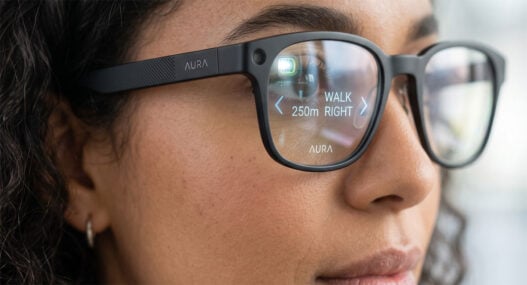
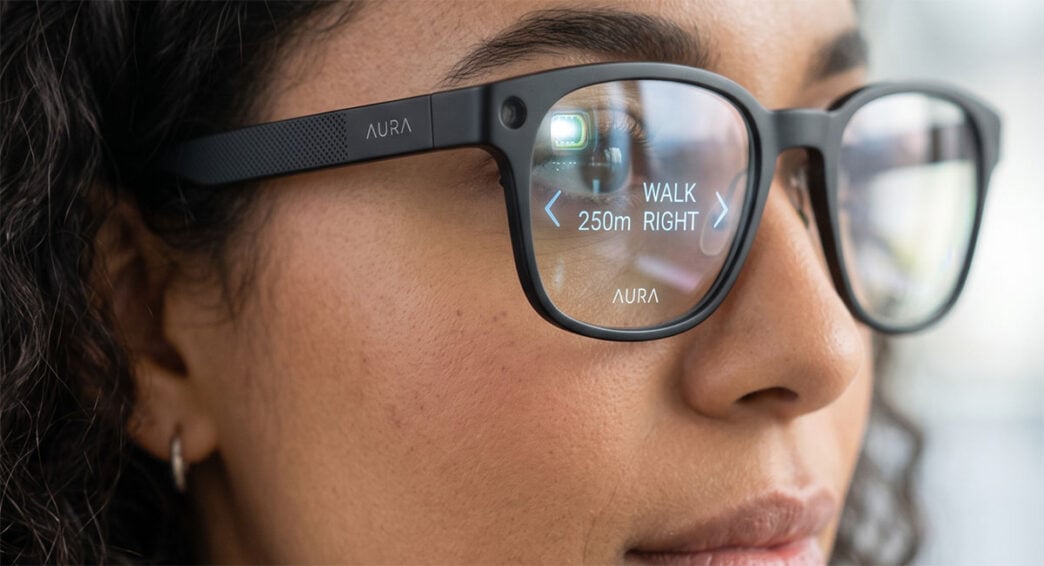
Every wearable category eventually runs into the same wall: there’s only so much you can fit into a form factor before physics starts pushing back. Smartwatches hit it with battery life. Earbuds hit it with antenna placement. AI glasses are hitting it now, and arguably harder than anything that came before, because a pair of glasses gives engineers almost no volume to work with and zero tolerance for extra weight on the bridge of someone’s nose.
The power budget problem
A camera, a microphone array, a speaker, a radio, and enough compute to run on-device AI inference all have to fit into a frame that weighs, at most, a few dozen grams and can’t get noticeably warm against skin. That constraint shapes almost every design decision downstream. Unlike a phone, where a few extra millimetres of thickness buys meaningful battery capacity, glasses have nowhere to hide additional cells.
Most current designs solve this by splitting the workload: lightweight always-on functions run locally, while anything computationally heavy, image processing, larger model inference, gets offloaded to a paired phone over a low-power wireless link.
This is precisely the kind of constraint that’s been reshaping wearable AI market dynamics more broadly. As silicon vendors push more capable neural processing units into smaller power envelopes, the line between ‘runs on the device’ and ‘needs a paired phone’ keeps shifting, and glasses manufacturers are among the most demanding customers pushing that line forward.
Thermal management in an impossible package
Heat is arguably the harder problem. A smartphone can dissipate heat across a relatively large surface area and tolerate a warm back panel; glasses touch skin directly at the temples and nose, where even a few degrees of temperature rise becomes noticeable and uncomfortable fast.
Camera sensors and image signal processors generate heat during active recording, and squeezing that thermal load out of a frame with essentially no surface area to spare has forced some genuinely creative engineering: distributing heat-generating components across both temple arms rather than clustering them, using the frame material itself as a heat spreader, and aggressively throttling video capture duration to avoid sustained thermal buildup.
Sport-oriented designs face an added wrinkle here. This is especially true for smart glasses with a camera built for athletic use, which need to manage heat and battery draw under conditions that are already thermally demanding, direct sun, elevated body temperature, sustained physical activity, without the design compromising on durability or fit. That’s a meaningfully harder engineering brief than a pair of glasses designed for casual indoor use, and it’s part of why sport-specific variants tend to differ meaningfully in internal layout from their more fashion-oriented counterparts, even when both run similar silicon.
Sensor fusion on a tiny budget
Camera and AI glasses don’t just need a camera. They typically integrate an inertial measurement unit for head orientation, beamforming microphones for voice pickup in noisy environments, and increasingly a low-power always-on sensor that can trigger wake events without burning through battery on continuous high-power monitoring.
Fusing that sensor data efficiently, rather than running every sensor at full power continuously, is what actually makes all-day battery life plausible on a device this small. Techniques originally developed for other constrained wearable categories, biosensing chip designs built for medical wearables being a notable example, are increasingly finding their way into consumer eyewear precisely because the power and size constraints are so similar.
Why this category is a genuine testbed
For chip designers and component suppliers, AI glasses represent one of the tightest simultaneous constraints on power, thermal output, and physical size currently shipping at consumer volume. That combination makes the category a useful proving ground: technology that works reliably inside a pair of glasses tends to translate well into other constrained form factors, hearables, medical patches, industrial sensors, where similar limits apply. Industry analysis has noted that consumer wearables have historically served this role, with lessons learned in smartwatches migrating into medical devices a few years later; AI glasses appear to be following the same pattern, just with a tighter and more demanding set of constraints than anything that preceded them.
Analysts and engineers covering Edge AI hardware trends have also pointed to on-device inference efficiency as the metric to watch going forward. Every generation of glasses that manages to run more AI processing locally, rather than leaning on a paired phone, buys back battery life and reduces latency, and that trajectory looks set to continue as neural processing silicon keeps shrinking.
What comes next
None of these constraints are going away soon, but they are loosening gradually. Battery chemistry improvements, more efficient NPUs, and better thermal materials are all incremental, not breakthrough, but incremental gains compound quickly in a category this power-constrained. The next couple of hardware generations will likely bring longer battery life, better sustained video capture without thermal throttling, and tighter sensor fusion, all without meaningfully increasing weight or bulk.
For component suppliers and chip designers, that makes AI glasses one of the more interesting design challenges in consumer electronics right now: a category where every gram and every milliwatt still matters enormously, and where solving those constraints well tends to pay dividends across several other wearable categories at once.