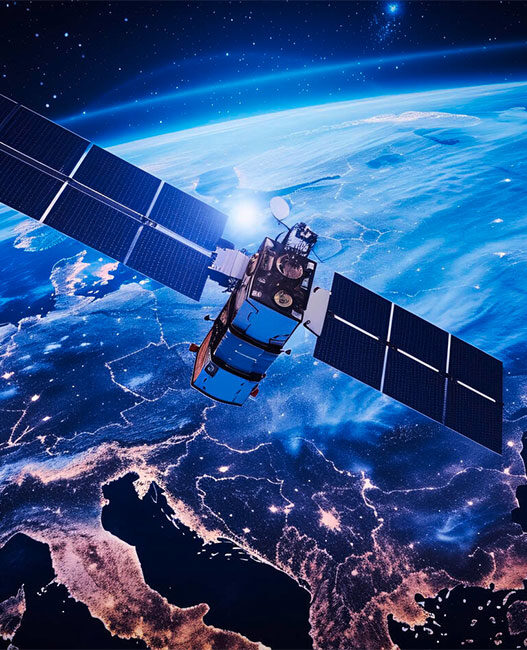





From radiation-hardened chips to fault-tolerant flight computers, the real engineering challenges of deep space electronics are every bit as dramatic as anything George Lucas imagined. On Star Wars Day, we ask: how close is the galaxy to being not-so-far-away?
Every 4th May, engineers, designers, and electronics professionals around the world May pause to acknowledge that Star Wars exists. Then they get back to their desks and wrestle with problems that, in their own way, are just as complex as anything the Rebel Alliance ever faced. But here is the thing: when you hold Star Wars spacecraft technology up against the real engineering demands of deep space electronics, the comparison is more instructive than you might expect.
Let’s take a tour of what the galaxy far, far away gets right – and where its screenwriters might have benefited from a few more hours with a datasheets library.
The vacuum problem nobody talks about
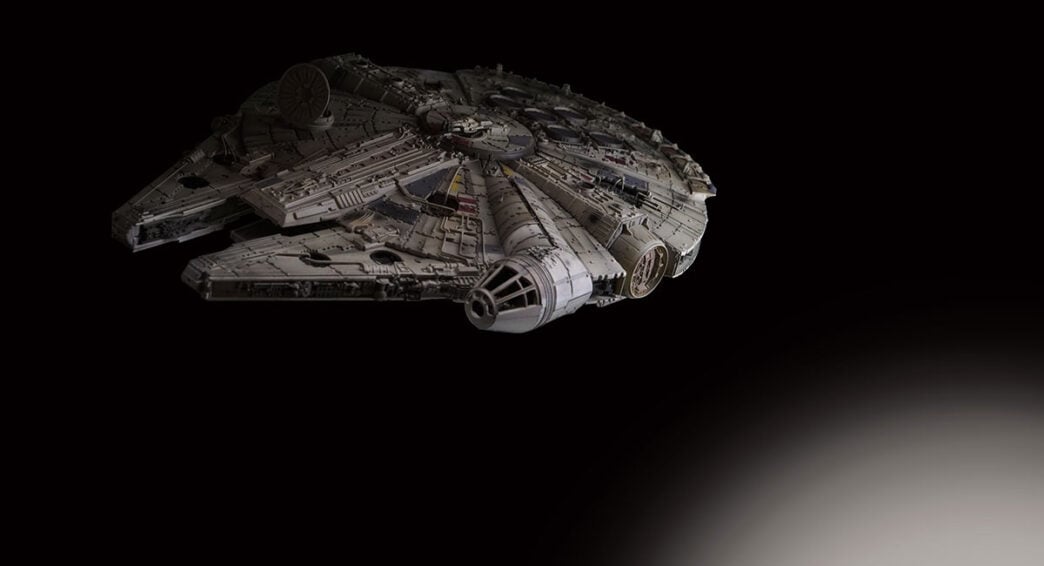
The Millennium Falcon’s cockpit is cramped, warm, and apparently full of atmosphere – and that is already a significant engineering achievement. Maintaining a pressurised, thermally stable environment in the vacuum of space requires careful materials selection, hermetic sealing, and robust thermal management. These are well-understood challenges in real spacecraft design, but they are far from trivial.
In reality, temperature swings in low Earth orbit can range from around −120 to +120°C within a single orbital period. Electronics must function across that entire range without drift or failure. Materials expand and contract; solder joints fatigue; thermal interface materials degrade. Real space-grade PCBs are engineered to handle these extremes with careful attention to coefficient of thermal expansion matching – something the Falcon’s designers apparently sorted out off-screen.
Radiation: the silent mission killer
Here is where Star Wars really glosses over the details. Space is saturated with ionising radiation – protons, heavy ions, and electrons trapped in planetary magnetic fields, plus galactic cosmic rays that arrive from every direction. For electronics, this is a serious problem.
A phenomenon called Single Event Upset (SEU) occurs when a high-energy particle strikes a semiconductor, depositing enough charge to flip a logic bit from 0 to 1 or vice versa. In a memory register, that single flipped bit can corrupt data. In a flight-critical system, it can cause a crash – the space kind, not the software kind. Radiation hardening is the discipline that prevents exactly this.
In reality, the radiation-hardened (rad-hard) electronics market has become a serious and fast-moving field. Components are engineered to withstand ionising radiation levels ranging from 10 krad(Si) to over 1 Mrad(Si) depending on mission requirements, and the global market is growing steadily – currently valued at around $2 billion, with projections showing it reaching $3.5–$3.8 billion by 2032. By 2026, the gap between rad-hard and commercial silicon performance had narrowed substantially, with some rad-hard chips now matching – or exceeding – their commercial counterparts in compute performance.
In Star Wars, nobody worries about any of this. X-wings fly through planetary radiation belts, and the computers just work. In the real world, your spacecraft avionics would need radiation-hardened processors, memory with error-correcting codes (ECC), and careful component screening.
Redundancy: the thing that actually keeps spacecraft alive
One thing Star Wars does – perhaps unintentionally – get right is the theme of redundancy. When one system fails, another takes over. The Falcon’s hyperdrive famously malfunctions, but the ship has manual backup systems, alternative routes, and a crew resourceful enough to keep it flying. This mirrors a core principle of real spacecraft electronics design.
Triple Modular Redundancy (TMR) is a standard technique in space-grade avionics: three identical computational modules run in parallel, and a voter circuit determines the correct output by majority decision. If radiation corrupts one module’s result, the other two outvote it. Some flight computers even implement triple-triple modular redundancy – nine modules in three voting groups – for the most safety-critical functions.
Real spacecraft software has grown enormously in complexity alongside this hardware discipline. Where early missions like Mariner ran on tens of lines of code, modern platforms carry hundreds of thousands – all of which must be verified, validated, and designed to degrade gracefully when individual components fail. The Millennium Falcon’s approach to software reliability appears to involve Han Solo shouting at it, which is not, strictly speaking, an industry-approved method.
The COTS revolution: cheaper, faster, riskier
One of the most interesting real-world developments in recent years mirrors something Star Wars implies: the move towards commercial off-the-shelf (COTS) components in space applications. Historically, rad-hard components trailed commercial silicon by 15 to 20 years in terms of performance – a spacecraft launched in 2020 might carry processors architecturally comparable to desktop chips from around 2000.
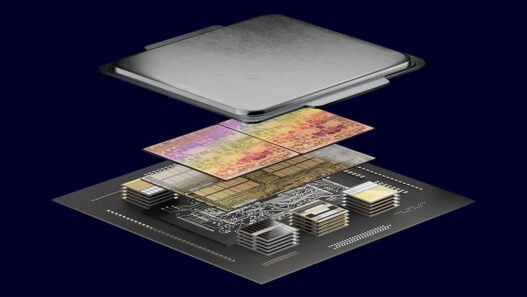
That gap is now closing fast, driven partly by the commercial space boom. New satellite constellations need electronics that are cost-effective, capable, and delivered at volume. This has pushed innovation in radiation-tolerant COTS components and Radiation Hardening by Design (RHBD) – circuit-level architecture improvements that include fault-tolerant logic, redundant pathways, and error correction – rather than relying solely on expensive specialised fabrication processes.
The result is a more dynamic supply chain, but also new risk considerations. COTS components are not qualified to the same standards as traditional space-grade parts. Mission planners must carefully assess single-event effects, total ionising dose, and displacement damage for every component – a rigorous process that sits at the intersection of electronic engineering, materials science, and probability theory.
The communications question
Star Wars handles interplanetary communications with characteristic handwaving – signals travel instantly across star systems with no apparent latency. Real space communications are constrained by the speed of light, which at interplanetary distances introduces delays of minutes to hours. At the distance of Mars, a signal takes between 3 and 22 minutes to arrive, depending on orbital positions.
This has profound implications for spacecraft design. Systems cannot rely on real-time ground control for critical decisions; they must be capable of autonomous fault detection and response. On-board processing therefore needs to be not just radiation-tolerant, but intelligent – capable of diagnosing faults and executing recovery procedures without waiting for instructions from Earth.
This is one area where the fictional galaxy’s approach – autonomous droids, self-managing systems, on-board intelligence – actually points in the direction real space engineering is heading. Edge AI and on-board machine learning for anomaly detection are active research areas for satellite operations, driven by exactly the same logic: when you cannot call home quickly, you need systems that can think for themselves.
May the engineering be with you
The best science fiction has always served as a mirror for the engineering challenges of its era – and in 2026, as we see crewed missions returning to the Moon, small satellite constellations reshaping global communications, and deep space probes pushing further than ever before, the gap between fiction and reality has never felt smaller.
The Rebellion did not win because of magic. It won because of smart engineering under extreme constraints, creative problem-solving with limited resources, and – crucially – systems that kept working when everything around them was failing. Which, if you think about it, is a pretty solid brief for any space electronics design team.