





Amazon Web Services has launched Kiro, a spec-driven AI development environment designed to take software from prototype to production – and early adopters are already seeing transformative results.
For years, AI coding tools have promised to make developers faster. They delivered on autocomplete, then on function generation, then on multi-step task completion. But a persistent gap remained: the tools could write code, but they couldn’t help teams guide the process, enforce standards, or ensure the output aligned with how their organisation actually wanted to build software.
Kiro, by AWS, is Amazon’s answer to that problem. It’s not just another AI code editor. It’s a rethink of the entire software development workflow – one built around structure, transparency, and a concept the team calls spec-driven development.
The problem Kiro was built to solve
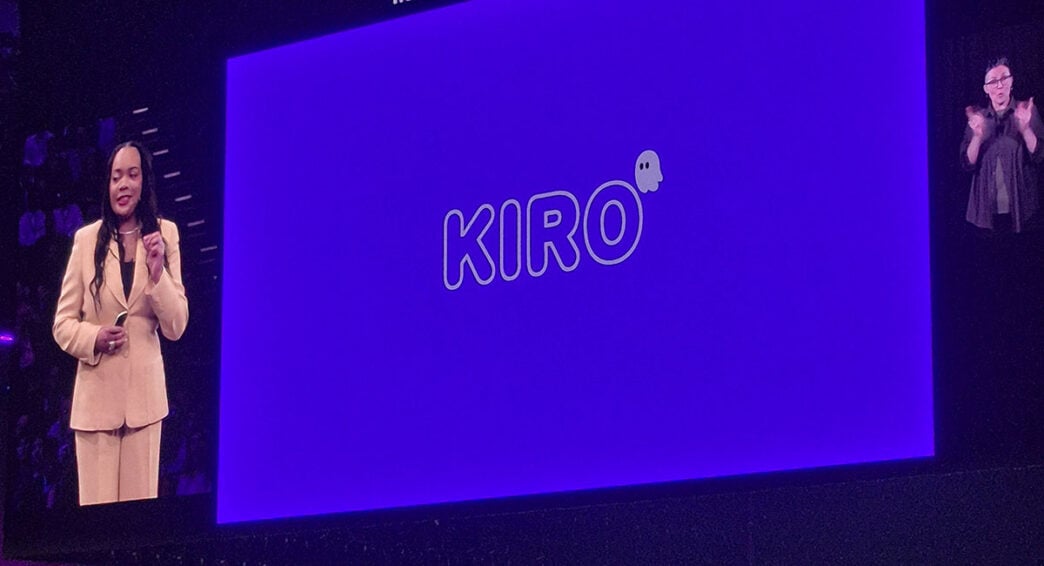
Francesca Vasquez, AWS VP of Professional Services and Agentic AI, framed it plainly at the company’s London Summit: “They were generating code, but builders couldn’t guide the process or ensure it aligned with their team standards.”
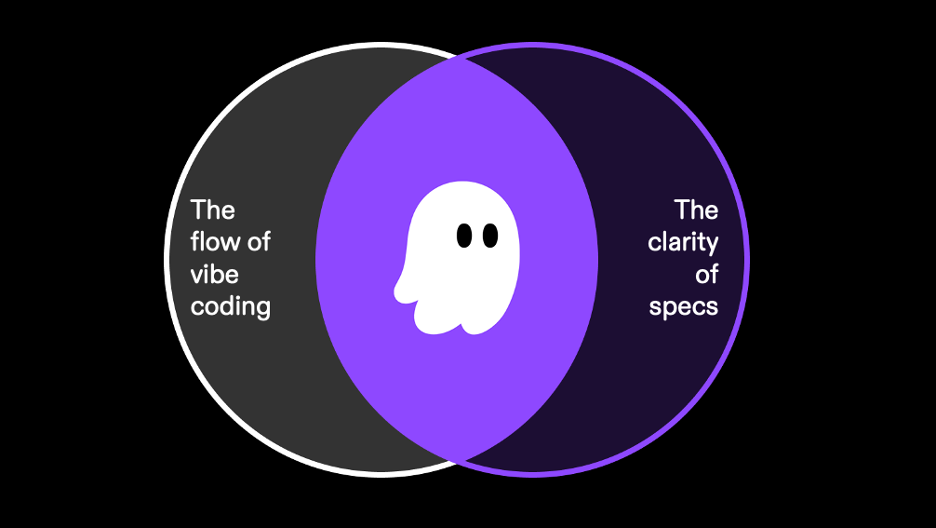
The Kiro blog puts it another way: “Prompt, prompt, prompt, and you have a working application. It’s fun and feels like magic. But getting it to production requires more.” Assumptions go undocumented. Requirements stay fuzzy. Design decisions accumulate invisible debt. The result is code that works in a demo but struggles in the real world.
Kiro was built to close that gap – preserving the speed and creative energy of AI-assisted development while adding the rigour teams need to ship with confidence.
How it works: specs, hooks, and agents
Specs: from single prompt to full blueprint
The centrepiece of Kiro is its spec system. When a developer types a prompt – say, “Add a review system for products” – Kiro doesn’t jump straight to writing code. Instead, it generates a layered specification: user stories with acceptance criteria using EARS notation, a technical design document with data flow diagrams and API schemas, and a sequenced task list linked back to each requirement.
Each task comes pre-loaded with unit test requirements, integration test plans, loading state considerations, mobile responsiveness notes, and accessibility requirements. The point is not to slow developers down – it’s to make the invisible visible before the first line of code is written.
Specs also stay in sync as the codebase evolves. Developers can ask Kiro to update specs as they build, solving the chronic problem of documentation that becomes stale the moment implementation begins.
Hooks: an automated quality layer
Alongside specs, Kiro introduces “hooks” – event-driven automations that fire when files are saved, created, or deleted. The practical effect is a background collaborator that catches things developers miss: updating test files when a component changes, refreshing documentation when an API endpoint is modified, scanning for leaked credentials before a commit goes out.
Once committed to a repository, hooks enforce standards across an entire team. Every engineer benefits from the same quality checks, whether they remember to run them manually or not.
The rest of the feature set
Beyond specs and hooks, Kiro ships with Model Context Protocol (MCP) support for connecting external tools, steering files to encode team-specific standards, agentic chat with file and URL context, and a full VS Code-compatible plugin ecosystem. It is built on Code OSS, meaning teams can migrate without leaving their existing settings behind.
Kiro in practice: Motorway’s story
The most compelling evidence for Kiro came not from the product team but from Ryan Cormack, Principal Engineer at Motorway, the UK’s fastest-growing online used car marketplace, who took the stage at the AWS London Summit to describe what the tool has meant for his organisation.
Motorway’s engineering challenge is a familiar one: a rapidly growing team, a maturing codebase, and pressure to keep shipping at startup speed while the organisation begins to look more like a grown-up company. “Every single change that we make to our systems and services, every single update we do and tweak to our algorithm has a real-world impact to our customers,” Cormack said. “Everything we do either builds that trust or erodes it.”
Before Kiro, the team was adopting AI coding tools in a disjointed way – individual engineers moving fast in isolation, shipping more code but not always to the engineering standards that the organisation expected. “We didn’t want to just shift things faster. We wanted it to work well,” Cormack explained.
Kiro changed that by embedding quality at the start of every piece of work rather than checking for it at the end. Every task begins with a spec. Those specs are reviewed before a line of code is written. Steering files encode Motorway’s specific patterns – API design conventions, event structures, internal processes – so Kiro knows how to build “the Motorway way.” Custom agents understand the CI pipeline, the infrastructure-as-code setup, and how internal applications interact.
Motorway has seen a 250% increase in code deployed. Engineering output is now four times what it was before Kiro adoption. The tool is now writing over a million lines of code for the team every single month. And adoption happened organically: over 80% of engineers reached for Kiro on their own, without being told to. “When we build things and make the easy way the right way, people just want to pick up the tool,” Cormack said.
The impact extends beyond the engineering team. Product and UX designers can now ship real prototypes into customers’ hands in hours instead of weeks. Kiro helps deploy code, monitors production, and has accelerated incident resolution – surfacing and fixing bottlenecks before they reach customers.
What developers are saying
Developer testimonials shown at the London Summit underscored the breadth of Kiro’s appeal. One engineer said they were able to ship more code in five months than in the previous ten years – and described it as working with a partner, not a tool. “It operates the way my brain operates,” they said. Another described the possibility: “Everything feels possible now. You can go from zero to proof-of-concept ten times faster.”
Where Kiro fits in AWS’s broader bet on agentic AI
Kiro is not a standalone product. It sits within a broader AWS push into what the company calls “frontier agents” – autonomous, long-running systems capable of handling complex tasks independently and collaborating with other agents.
The Kiro autonomous agent, for example, runs continuously alongside developer workflows. It can independently upgrade a library across dozens of microservices: updating code, running test suites, and delivering merge-ready pull requests for each service – in the background, without blocking the developer’s main focus.
This sits alongside the AWS security agent, which proactively reviews design documents and scans code for vulnerabilities, and the AWS DevOps agent, which investigates incidents and identifies operational improvements. Together, these tools represent AWS’s vision for the full software development lifecycle – not just writing code, but securing, deploying, and operating it.
Alison Kay, VP and Managing Director of AWS UK and Ireland, captured the scale of what this kind of tooling makes possible at the Summit’s opening. AWS’s own engineering team recently rebuilt the inference engine behind Bedrock from scratch using AI agents: six engineers completed in 76 days what would previously have required 40 engineers and a year of work.
Availability and what comes next
Kiro is currently free during preview, with some usage limits. It supports Mac, Windows, and Linux, and works with most major programming languages. AWS has published a hands-on tutorial that walks through building a complete feature from spec to deployment.
The longer-term vision goes beyond individual developer productivity. The Kiro team has described ambitions to tackle design alignment across teams, conflicting requirements, technical debt, code review rigour, and the preservation of institutional knowledge when senior engineers leave. The goal, in short, is not just to help developers write code faster. It’s to change how human and machine coordination in software development actually works.