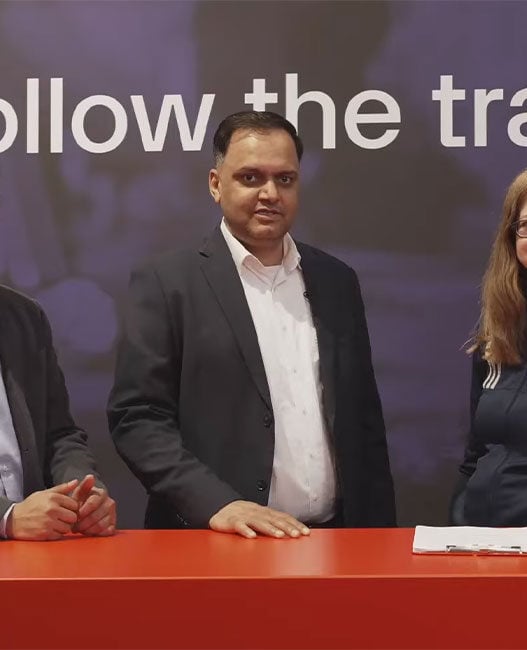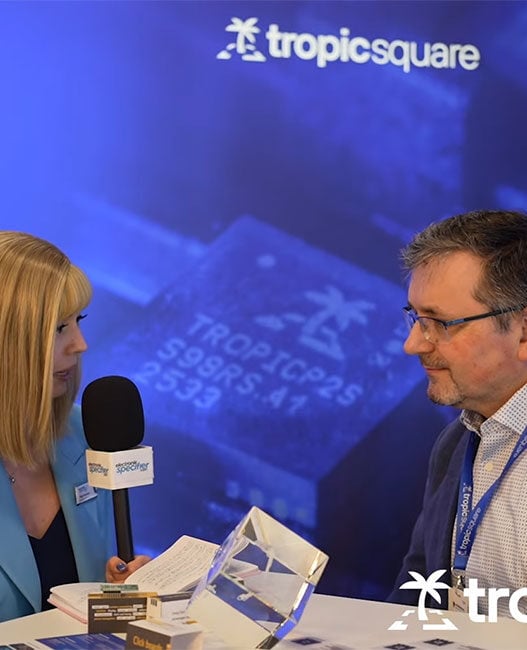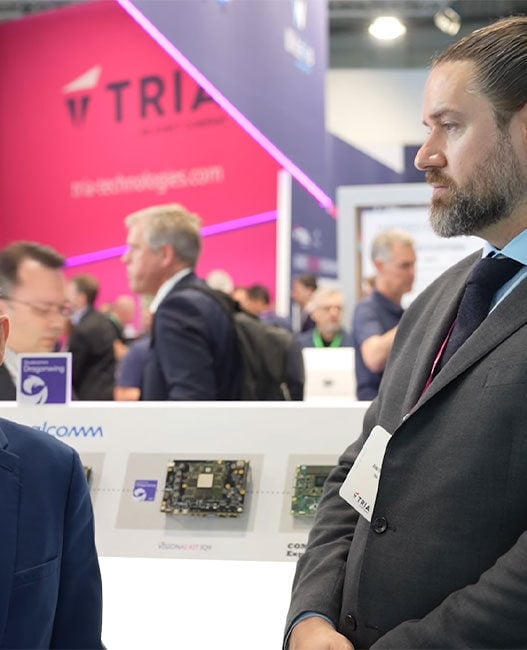



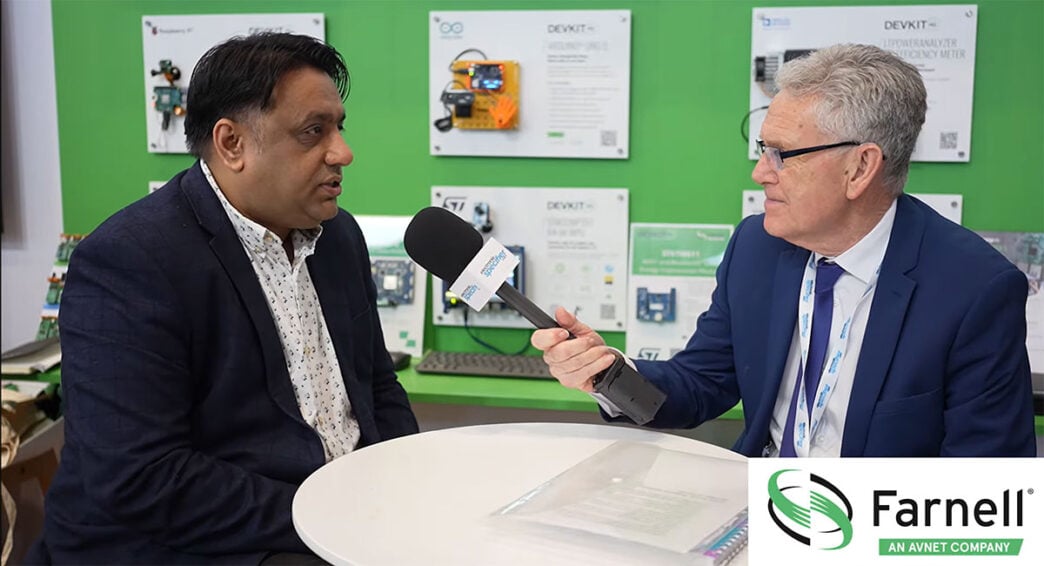
At embedded world 2026, Electronic Specifier Editor Mick Elliott speaks to Ankur Tomar, Regional Solutions Marketing Manager at Farnell, about Edge AI and DevKit HQ and their stand demos.
According to Tomar, the shift from experimentation to production in AI is happening fast. “A lot of engineers are moving towards that now,” he says. “It’s not a matter of prototyping or understanding what AI can do, it’s getting into production.” A recent Farnell survey supports this, finding that the majority of customers are either already using AI in their designs or are considering it for their next project.
Hardware development and software integration are accelerating in parallel, enabling engineers to take designs from prototype to real-world application faster than before. The trend is reflected in how development kits are now being used – not as evaluation tools, but as the foundation of finished products. Suppliers are responding by bringing application-driven platforms to market, bundling hardware and fully integrated software stacks for specific use cases such as vision AI, gesture control, and HMI solutions, removing the need for engineers to piece together fragmented ecosystems.
To support engineers navigating this landscape, Farnell has launched DevKit HQ – a centralised platform bringing together development kits, single-board computers and evaluation boards in one place. Engineers can browse by processor family or search for application-specific kits, and each listing is supported by a content-rich page covering training videos, schematics, software resources, bill of materials, and hardware design guidance. The aim, says Tomar, is to eliminate the need to “hop on different websites to find all the information” and instead give engineers a single starting point from prototype to production – including recommendations on compatible silicon, microcontrollers, and power management ICs.
The platform also integrates with Farnell’s broader element14 community, where engineers can connect with peers, share code, and troubleshoot problems. Open-source hardware – including Arduino, with its extensive library of open-source resources – sits alongside offerings from semiconductor manufacturers. Tomar highlights that suppliers and the wider community are actively contributing to open-source ecosystems, helping to strike the right balance between hardware and software so designers can stay focused on the application rather than the integration.
One of the most significant barriers engineers still face when scaling AI from proof of concept to field deployment is the hardware-software integration challenge. Pre-certified wireless modules are helping to address this, reducing the certification burden and cutting time to market. At the same time, advances in low-power silicon mean that AI models can now run on a microcontroller powered by a lithium polymer or lithium-ion battery – a capability that was unthinkable just a few years ago. “You don’t have to have a very high-end, high-performance microprocessor to run your AI algorithm,” Tomar explains, pointing to the growing availability of smaller footprint system-on-chip and system-on-module solutions tailored for edge deployment.
Security is also becoming a higher priority as AI applications increasingly involve personal and proprietary business data. Suppliers are putting significant effort into end-to-end encryption and secure environments, ensuring that hardware scaling does not come at the cost of data protection. DevKit HQ reflects this production-readiness by going beyond the dev kit itself – Farnell can also supply enclosures, cables, connectors, external antennas, and displays, covering every component needed to bring a finished product to market.
At embedded world 2026, ran hands-on workshops directly from its stand – a first for the company at the show. Running every hour across all three days, the workshops covered a rotating lineup of platforms, including Raspberry Pi, Arduino Unoe, STMicroelectronics, NXP, Infineon, and Microchip. Each session walked attendees through getting started with a board, connecting to AWS Cloud via the Avnet IoT Connect platform, and running real-world AI applications – from driver monitoring assistance systems and fall detection to industrial automation. “Visitors are crowding – they are standing outside to be part of it,” Tomar says. “We are fully booked, even before the show started.”
Watch the full conversation here: