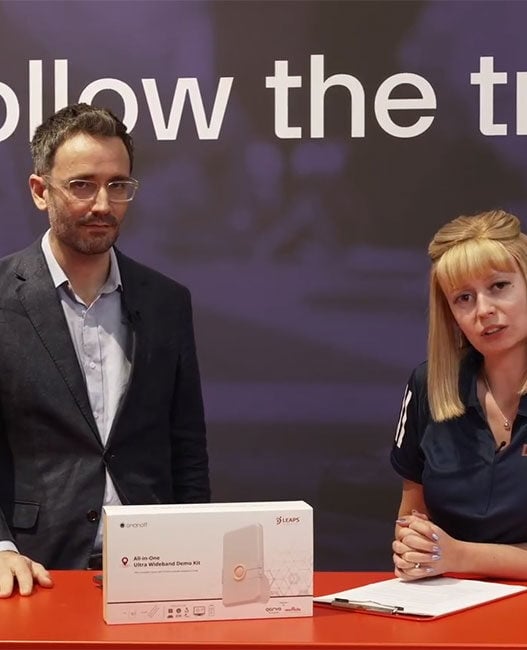






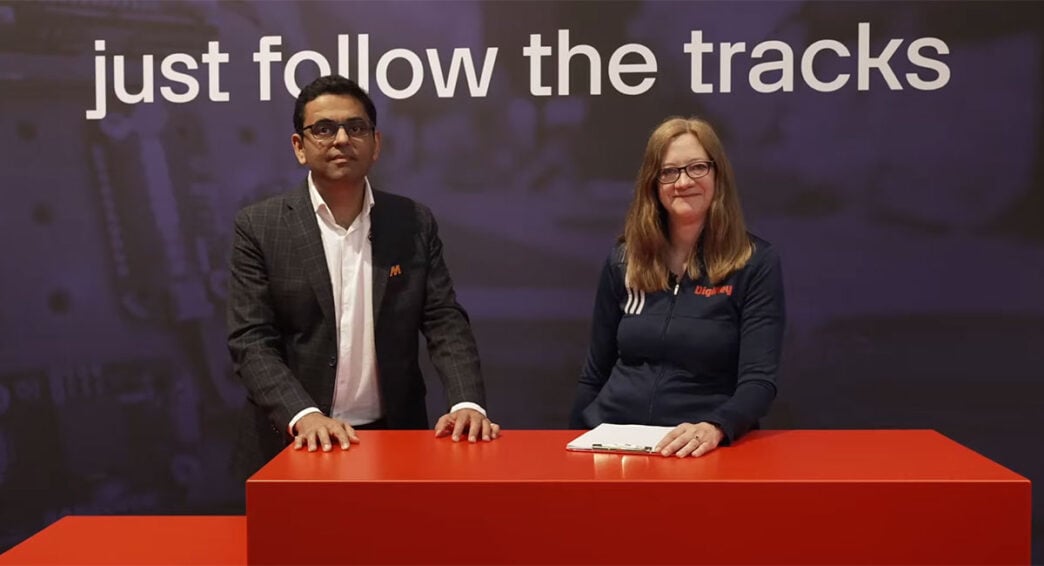
At embedded world 2026 on the DigiKey booth, Lucy Barnard spoke with Sameer Sharma, Assistant Vice President of IoT at MediaTek, to discuss unleashing the full potential of artificial intelligence in IoT devices.
“MediaTek, I say jokingly, is the most famous silicon company you haven’t heard of,” commented Sharma. “We are one of the top five fabless semiconductor companies.”
MediaTek invests over $4.5 billion a year in R&D, and cumulatively, we’ve invested about $30 billion over the last few decades.
So, how is AI a gamechanger for connected devices?
Sharma explains how AI had increasingly moved beyond Cloud computing and into devices themselves, enabling faster, more efficient decision-making at the Edge. This shift towards Edge AI has been anticipated for years, but has only recently become practical due to advances in hardware and software.
“Latency would be an obvious one. An autonomous car is a perfect example of a lot of AI on wheels at the Edge because doing all that compute in the Cloud to avoid an obstacle is not an option.”
According to Sharma, three factors continued driving the move towards processing data closer to devices: the need for low latency, the rising energy cost of transmitting large volumes of data, and increasing regulatory requirements around data privacy.
“So I call it the laws of physics, the laws of land, and laws of energy, which require you to think about Edge AI and what can be done at the Edge versus sending everything in the Cloud.”
How is AI improving the performance of IoT devices?
Sharma described how AI-enabled IoT systems could improve efficiency across many sectors.
One example is intelligent traffic intersections. Instead of relying on fixed timing schedules for traffic lights, AI-enabled cameras could analyse vehicle flows in real time and dynamically adjust signal timings.
“Which side is traffic more on? And then therefore [the smart systems can] adjust the timing dynamically,” Sharma explained.
Other use cases included retail environments, where generative AI could support workers by providing training prompts or guidance when processing complex product returns. In healthcare, AI systems could assist with medical imaging analysis and administrative tasks, helping clinicians spend more time with patients.
Energy efficiency remains a central concern for IoT devices, particularly those powered by batteries. Sharma explained that Edge AI allowed systems to analyse data locally and transmit only relevant information to the Cloud.
Using traffic monitoring as an example, he noted that sending constant video streams was unnecessary when Edge processing could detect key events and transmit only important data.
“So all this level of intelligent computation can happen at the edge and therefore you know make processing more sustainable, more energy conservative.”
Edge AI could also extend battery life in mobile devices by shifting certain workloads to specialised processors.
Find out more in the interview below.