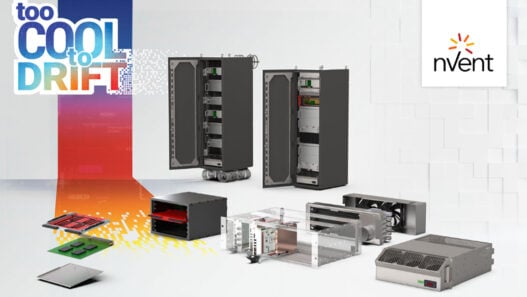




Fast-paced enterprise adoption of artificial intelligence (AI) is accelerating data centre transformation. AI data centre capacity is growing at approximately 33% per year and is expected to account for 70% of all data centre demand by 2030. As compute density rises, hyperscale’s, cloud providers, and industry organisations are scaling liquid cooling, which offers performance and efficiency advantages by effectively dissipating heat from CPU- and GPU-powered workloads even in constrained spaces. The market for liquid cooling is surging with a compound annual growth rate of 17% between 2025 and 2030, according to TE’s broad-based industry estimates. Simultaneously, enterprise AI inference and analytics workloads are becoming more latency-sensitive, increasing the need for thermal designs that ensure real-time responsiveness and continuous uptime.

The transition from air cooling to direct-to-chip (D2C) cooling isn’t an easy one. Leaders must decide whether to retrofit racks and rows or build greenfield facilities dedicated to AI and high-performance computing (HPC). Facilities and IT teams must determine which D2C architecture is best suited (liquid-to-air or liquid-to-liquid) and implement equipment, including coolant distribution units (CDUs), pumps, cold plates, heat exchangers, piping, filters, and tooling.
Teams must also manage more complex coolant loops, which require specific material selection, ongoing monitoring, and control of coolant flows that prioritise rapid intervention when anomalies are detected. They’re guided in this work by Open Compute Project standards that enable companies to use the same frameworks, architectures, components, and features, improving interoperability. As heat flux continues to rise, adequate sensing technologies become essential to maintain system integrity and uptime, especially when it comes to coolant quality, continuity, and flow stability.
Here are four ways that advanced sensors support the transition to industrial-scale liquid cooling.
-
Sensors stabilise pressure in high-density coolant loops
Pressure sensors must deliver reliable, long-term performance across millions of cycles, with exceptional measurement accuracy and output stability. These are essential in D2C cooling systems because they are part of the control loop that regulates coolant pressure, which is distributed to the cold plates to dissipate heat consistently. Pressure sensors must be both rugged and reliable, which is why TE uses a simple construction with a silicon strain-gauge glass bonded directly to a single-piece metal port. With no welding joints, there is no risk of coolant leakage through the sensor, which could cause equipment downtime or damage to critical IT equipment.
-
Sensors provide accurate temperature measurements in constrained spaces
Temperature sensors monitor liquid-cooling systems, ensuring coolant temperature remains within the required operating range to maintain peak GPU performance. They provide precision readings and are stable across a wide temperature range. Manufacturers, such as TE, offer solutions with varying levels of performance and customisation to address a wide variety of use cases. In high-density environments where thermal gradients form quickly across the coolant path, accurate temperature data supports smarter control logic, enhances energy efficiency, and maintains safe operating margins.
-
Combination sensors reduce leak risks
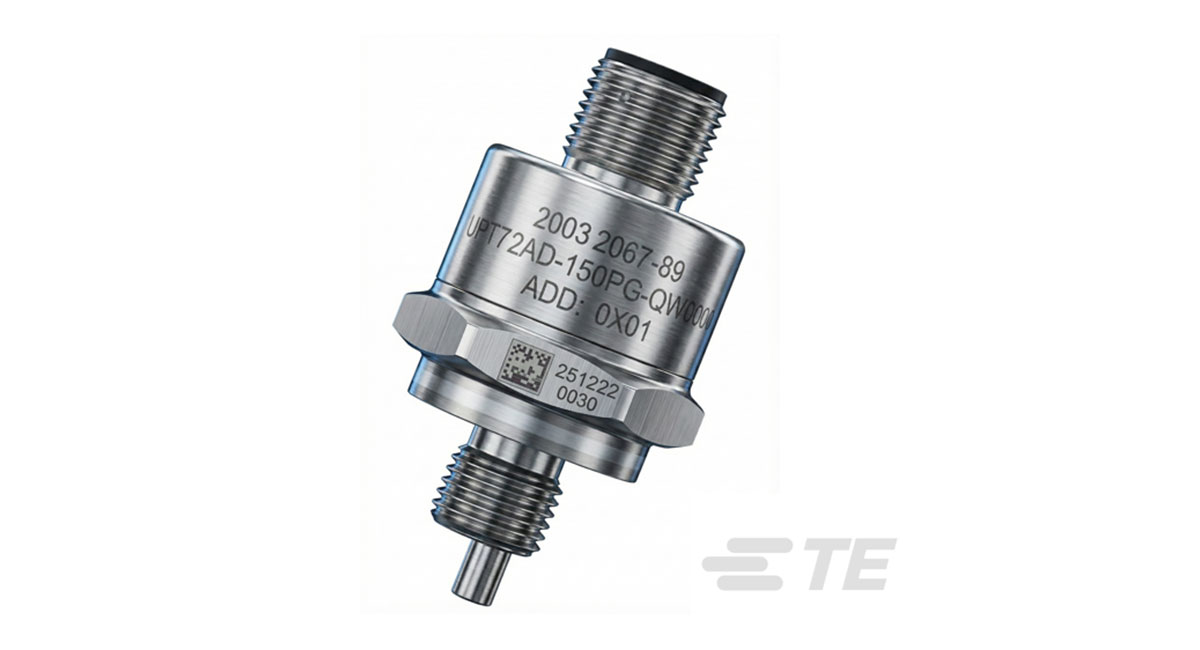
TE’s UPT72 combination pressure-temperature sensors use a temperature probe and a silicon piezoresistive microelectromechanical systems (MEMS) sensor. The MEMS is encapsulated in an oil cavity by a metal membrane that transfers external pressure to the internal sensing element. TE estimates that this compact solution reduces the number of hermetic sensor ports by up to 50% while maintaining reliable performance in harsh environments. That translates to a significantly reduced risk of leakage and a lower total cost of ownership by reducing system complexity, wiring, and failure points, which is especially important in architectures where space and reliability are at a premium.
-
Sensors prevent pump failures with bubble-tolerant level detection
Ultrasonic piezoelectric sensors, such as TE’s LL-01 Series Ultrasonic Sentio Miniature Liquid Level Switch, are designed to be less susceptible, enabling consistent detection of fluid presence or level without being affected by bubbles in cooling circuits. By monitoring coolant levels, they ensure pumps don’t run dry, which can cause failure. As coolant loops lengthen and become more distributed, stable level detection becomes a critical safeguard against cavitation, flow interruptions, and pump damage.
Using sensors to enable precision monitoring of advanced cooling systems
In today’s AI-driven landscape, D2C liquid cooling is scaling fast, accounting for about 35% of the market, according to TE’s data-backed estimate. As AI infrastructure expands, sensing technology will play an increasingly central role in ensuring reliable, efficient, and scalable data centre operations. Data centre sensors deliver stable, high-accuracy measurements of pressure, temperature, level, and coolant condition to help maintain high system uptime and peak GPU performance. Furthermore, sensors enable operators to move from reactive maintenance to predictive management, which is critical for AI environments that cannot afford downtime.
About the author:

Alexandru Istrate, Senior Principal Systems Architect/System Applications, TE Connectivity