






Since its inception, Raspberry Pi has evolved far beyond its roots as a single-board computer (SBC) for hobbyists and educational purposes. Today, it is an increasingly popular choice for industrial and commercial applications due to its flexibility, high performance, and vibrant ecosystem that supports rapid prototyping and large-scale production.
In this article, Farnell’s Regional Solutions Marketing Manager, Ankur Tomar, shares his insights into how Raspberry Pi is bridging the gap between traditional embedded solutions, industrial controllers, and modern Edge computing platforms.
Raspberry Pi for professionals
Raspberry Pi began as an accessible, low-cost SBC originally aimed at hobbyists, makers, and students eager to explore computing. Its versatility, however, has since driven its adoption into serious industrial applications. Over time, the Raspberry Pi family has expanded from the original Pi to the current Raspberry Pi 5, Compute Modules, and Pico family, offering solutions tailored to various design requirements. For engineers seeking embedded applications, Raspberry Pi introduced the RP2040 and RP2350 microcontrollers, which are ideal for Edge computing, sensor control, and motor management in industrial contexts.
Scale greater heights
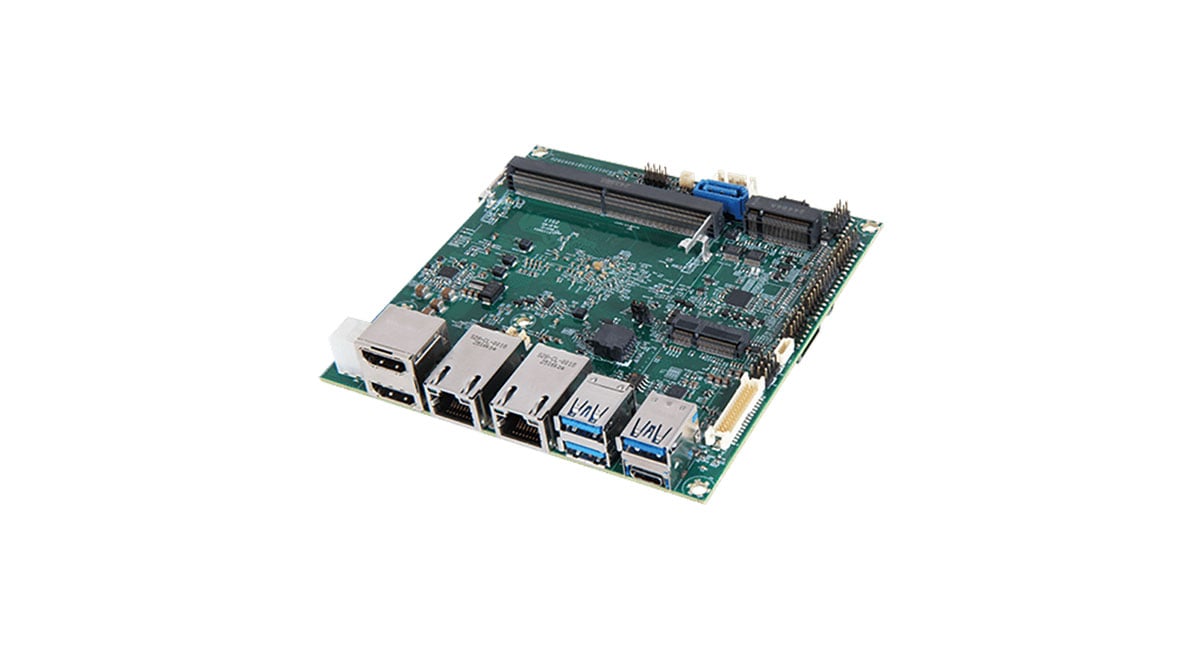
For larger-scale, high-performance applications, engineers can choose among three categories of Raspberry Pi products. Microcontroller-based designs, such as the Raspberry Pi Pico devices, are suited for lightweight embedded projects. SBCs, including the Raspberry Pi 5 and earlier models, offer full-fledged computing capabilities that can be deployed in automation systems, gateways, and human-machine interface solutions. For those requiring large-volume production with custom hardware, Raspberry Pi Computer Modules, including CM4 and CM5, provide a ‘brain’ that can be integrated into custom carrier boards.
The choice between an SBC and a system-on-module (SOM) depends primarily on production volume and design complexity. SBCs are well-suited for prototyping and low-volume projects, whereas SOMs are ideal for engineers needing tailored, large-scale deployments with specific peripheral and power requirements.
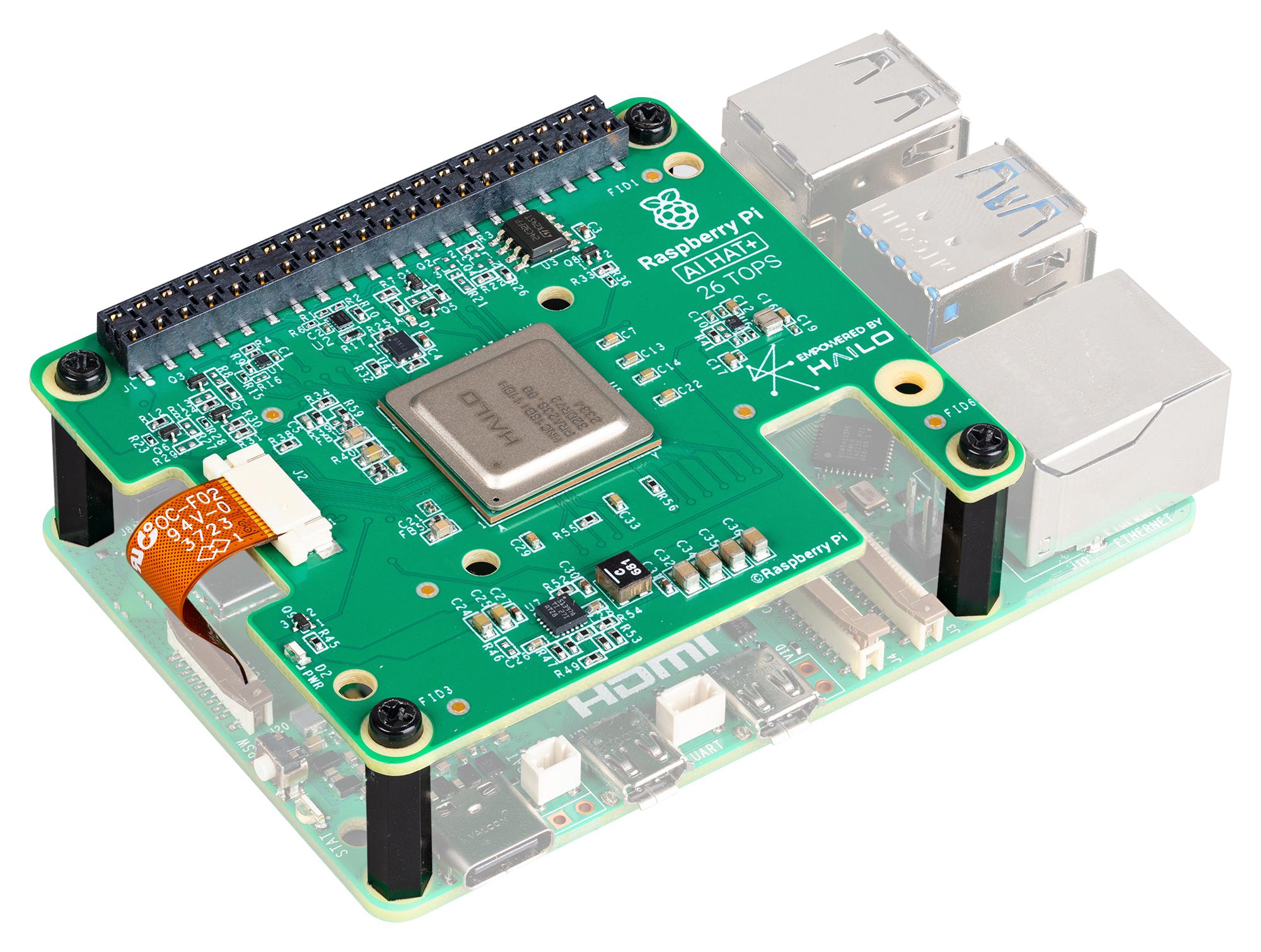
The technical advantages of Raspberry Pi make it an attractive option for industrial applications. Whether controlling sensors, managing motors, or serving as a gateway for connected devices, Raspberry Pi boards feature multi-core ARM processors with low power consumption, high-speed connectivity through PCI Express, and hardware-accelerated video processing. Extensive I/O capabilities include USB, HDMI, SPI, I²C, UART, and dual-display support, complemented by wireless connectivity options such as Wi-Fi and Bluetooth. Engineers benefit from a broad ecosystem of add-on accessories, including cameras, AI HAT, PoE, multi-touch displays, and industrial I/O extensions, enabling rapid prototyping of complex systems without the need for custom hardware design.
On the software side, the Linux-based Raspberry Pi OS is supported by a global community of developers, providing compatibility with embedded computing frameworks, IoT platforms, industrial automation tools, and Cloud integration. Docker, Node-RED, and other containerised environments further simplify deployment and management.

Built for industry
The evolution of Industry 4.0 and the emergence of Industry 5.0 have shifted industrial automation toward intelligent, distributed Edge computing. Unlike traditional PLCs, which often require proprietary programming knowledge and expensive software licenses, Raspberry Pi supports multiple programming languages and operating environments, giving engineers the ability to develop customised solutions without vendor lock-in. Multi-core ARM processors provide substantial computational power for AI inference, high-speed data processing, and real-time control. When packaged with industrial enclosures and equipped with eMMC storage, Raspberry Pi boards demonstrate reliable operation in controlled industrial environments, while significantly reducing development costs. Practical implementations include Raspberry Pi-based PLCs from Revolution Pi, Industry Shield, and Episenses, which leverage the platform’s computational power, software ecosystem, and low cost to replace or complement traditional automation systems.
Pi at the Edge of IoT
Raspberry Pi also plays a central role in Edge computing and IoT applications. With support for RS-485, Modbus, SPI, I²C, CAN, Ethernet, and wireless interfaces, Raspberry Pi can connect to a wide range of industrial sensors. Add-on AI HATs and camera modules enable real-time neural processing locally, allowing object detection, predictive maintenance, and quality control without overloading the main processor. By aggregating and processing data from multiple sensors, Raspberry Pi reduces bandwidth requirements and latency while supporting advanced analytics and automated decision-making. Real-world applications include automated quality inspection, packaging verification, worker safety monitoring, digital signage, transportation displays, environmental monitoring in smart buildings, smart homes, and precision agriculture. These implementations demonstrate the platform’s capability to support complex, high-performance applications at the Edge.
The platform’s suitability for Edge computing is enhanced by its ability to integrate with multiple sensors and process AI tasks locally. Raspberry Pi’s add-on AI modules allow engineers to run colour sorting, facial recognition, and other AI applications directly on the device, eliminating network delays and enabling real-time decision-making.
Integration into industrial systems is facilitated by a wealth of software frameworks and accessories. Docker and balena provide containerised platforms for managing distributed devices, while Node-RED and MQTT protocols enable seamless IoT communication. The extensive ecosystem of accessories and libraries allows engineers to implement complex solutions quickly, whether for prototyping or full-scale deployment.

Raspberry Pi in action
Raspberry Pi has already seen widespread adoption across a variety of industries. For example, airport flight information displays are powered by Raspberry Pi, demonstrating reliability and scalability. In retail, the platform supports digital kiosks, menu boards, and interactive maps, while industrial automation applications leverage Raspberry Pi for Edge computing gateways, sensor networks, and PLC replacements. In smart buildings and homes, the platform is used for energy management, security, and environmental monitoring. Agricultural applications include precision farming and environmental sensing, while multimedia centres, security surveillance systems, and AI-powered monitoring solutions further highlight the platform’s versatility. A couple of real world examples can be seen in the box out.
Long-term support
One of the key challenges engineers face when designing industrial systems is support for the future, and long-term support and maintenance are critical in industrial applications. Raspberry Pi has demonstrated a commitment to product longevity, continuing to supply and support models like the original Raspberry Pi from 2012. The company guarantees a product lifecycle of up to 10 years, ensuring stability and availability for industrial engineers designing long-term solutions. Beyond 10 years, continued supply can be arranged for customers with sufficient demand, providing additional assurance for mission-critical applications.
Conclusion
Raspberry Pi has evolved from a hobbyist SBC to a high-performance industrial platform capable of supporting embedded computing, Edge AI, IoT, and industrial automation applications. Its combination of flexibility, performance, software ecosystem, and long-term support makes it an attractive alternative to traditional PLCs and industrial microcontrollers. Engineers can leverage SBCs for rapid prototyping, SOMs for large-volume customised deployments, and microcontroller-based designs for lightweight embedded applications. With its robust capabilities, Raspberry Pi continues to redefine what is possible in industrial electronics, smart automation, and Edge computing, enabling engineers to create more intelligent, efficient, and scalable solutions for the modern industrial landscape.
For more information visit Raspberry Pi for Industry | Farnell UK
NEC large format displays and MPi4 Kit powered by Raspberry Pi
Professional digital signage and information displays require reliable embedded computers for content playback, data visualisation, and remote management. Traditionally external media players or PCs were used. However, NEC integrated the Raspberry Pi Compute Module 4 (CM4) directly into the display architecture, creating a compact, low-power, embedded computing platform that eliminates external hardware while maintaining professional-grade control and connectivity.

At the heart of Sharp and NEC Large Format Displays is the MPi4 Kit which is powered by the Raspberry Pi CM4. This MPi4 Kit is an open-platform solution that enhances display performance for various visual applications and it is the smartest combination of computing power with professional yet cost-effective signage displays. The NEC Interface Board hosts the module, which offers features for intelligent digital signage support, such as the Watchdog Timer and Real-Time Clock for scheduling. The module’s Ethernet and USB interfaces allow easy integration into networks or external devices.
Sfera Labs industrial controllers
Italian-based Sfera Labs designs and manufactures open technology solutions for industry. The company primarily offers industrial automation servers, I/O modules, and sensors based on Raspberry Pi devices. Faced with the challenge of upgrading its Strato Pi Max industrial server to meet the evolving needs of its customers, Sfera Labs began looking for a way to provide faster processing, enhanced connectivity, and improved reliability for mission-critical applications. The company integrated the Compute Module 5 (CM5) for several reasons, including performance and affordability, flexibility and scalability, reliability, and support, along with its ease of integration and full industrial compliance.

By combining Compute Module 5’s advanced capabilities with Strato Pi Max’s proven flexibility and robustness, Sfera Labs has created a solution that successfully meets the demanding requirements of modern industrial automation and IoT applications. CM5’s increased processing power and memory capacity have enabled faster data processing, improved application responsiveness, and widened support for more complex algorithms like machine learning and AI at the Edge.