


Manufacturers around the world are discovering that building a smart device is a bit like raising a genius toddler: it learns fast, demands constant attention, and makes a mess if you don’t manage what it eats.
The ‘food’ for a smart device, of course, is data. Embedded Edge devices are drowning in it, with sensor readings, vibration logs, voltage levels, temperature traces, and machine-learning features all arriving faster than a conveyor belt in overdrive. Everyone wants real-time analytics, predictive maintenance, and AI-driven decisions, but when data ingestion, storage, and processing aren’t properly handled, things go from ‘smart’ to ‘surreal’ in a hurry.
Inside these tiny devices, chaos brews quietly. Buffers overflow, flash memory gasps for space, timestamps go missing, and models trained on perfect lab data start hallucinating in the field. Engineers pull all-nighters debugging ‘ghost readings’ while managers wonder why the predictive maintenance system predicted nothing. What should be an elegant AI workflow turns into digital spaghetti, threads tangled, data half-cooked, and nobody sure what’s stale or fresh.
The truth is, data management is the backbone of intelligence, and without it, even the best hardware and AI model can’t stand upright. Embedded systems need deterministic ingestion, structured time-series storage, feature windows, and selective synchronisation to keep bandwidth and sanity intact. Clean, contextual, and traceable data is what separates a reliable product from an expensive prototype.
Traditionally, pre-embedded IoT and AI, teams relied on flat files or custom, home-built data stores. In modern systems, those options are no longer viable for reliable, scalable data management. Compared with flat files, an embedded modern Edge database (i.e. ITTIA DB) gives embedded/industrial devices structure, speed, and safety: it enforces schema and units, offers indexes for millisecond queries, and delivers deterministic reads/writes. Transactions (ACID) and power-fail-safe commits protect data during resets, while flash-aware, append-optimised storage reduces write amplification and wear. Built-in concurrency control prevents corruption from multiple tasks, and security features come standard. For analytics and AI, window functions and aggregates turn raw streams into features locally, with selective sync of KPIs instead of bandwidth-heavy dumps.
At the embedded Edge, data processing, data management, and AI enablement form a single on-device pipeline: sensors stream high-rate signals that are ingested deterministically into time-aligned windows; preprocessing then cleans and transforms the raw feed so it’s compact and meaningful; a data management layer enforces schema, units, and constraints, provides time/key indexing, compression, and power-fail-safe durability, and records labels/metadata for full traceability; the prepared features feed on-device AI (rules, anomaly scores, classifiers) for millisecond decisions, with results and provenance stored locally; finally, selective synchronisation ships only KPIs, outliers, and ‘hard cases’ upstream, while security, observability, and OTA keep models and policies compliant, monitored, and up to date across fleets.
That’s where the ITTIA DB Platform steps in, the calm in the data storm. With ITTIA DB Lite ensuring MCU-grade determinism, ITTIA DB delivering MPU-level analytics and AI readiness, ITTIA Data Connect handling selective sync across fleets, and ITTIA Analitica keeping an eye on trends and model drift, manufacturers can finally get their devices off that ‘data diet’ and back to intelligent productivity. Because when devices can manage their data, they stop misbehaving and start thinking.
Rather than resembling a genius toddler, devices will have good manners and behaviour when wrapped in kindness with ITTIA DB. Astonishingly wise without ever forgetting to say ‘please’ and ‘thank you’.
About the author:
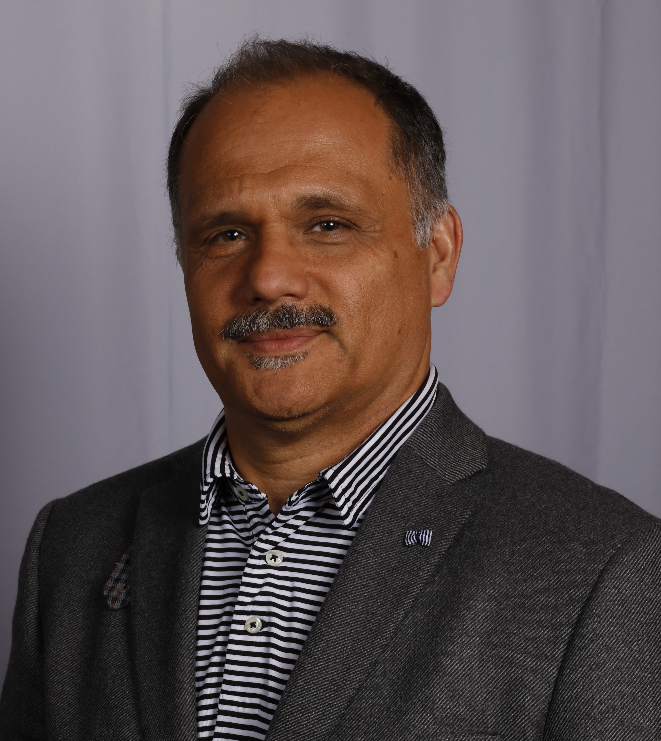
Sasan Montaseri is the Founder and President of ITTIA, a global leader in high-performance, secure Edge data management software that empowers a new generation of intelligent embedded systems to monitor, gain insight, and store data in real time. With extensive experience in real-time data processing and data management for revolutionary Edge data computing, Sasan has been instrumental in shaping how devices think, act, and learn at the Edge. Under his leadership, ITTIA software has become a trusted data management platform for manufacturers in industries such as industrial automation, robotics, clean energy, automotive, defence, and medical devices, enabling deterministic data processing, time-series analytics, and AI enablement on both MCUs and MPUs.