


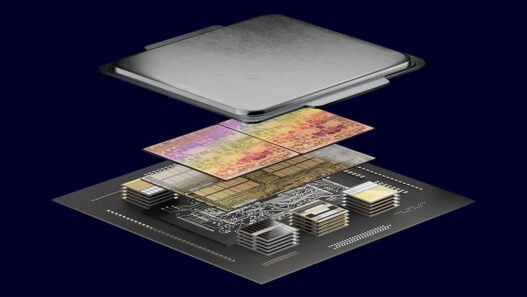







LEO satellites, rather than operating from a fixed position, move across the sky and must dynamically steer communication beams to maintain uninterrupted and high speed connectivity to ground terminals. The new BFIC solution is highly reliable while performing under extreme temperatures and cosmic radiation for the full 10- to 12-year lifespan of each satellite.
“Electronically steered array technology is a necessity for the builders and operators of the next generation of LEO constellations. This technology provides MDA and Telesat with the ability to simultaneously steer multiple beams and allows beams to be rapidly repositioned at speeds that are not possible with mechanical systems,” said Bryan Goldstein, Vice President of Aerospace and Defence at Analog Devices.
“We are excited to collaborate with MDA to support the Telesat Lightspeed constellation.”
“The collaboration with ADI has enabled MDA to develop the critical solutions required to perform electronic beam steering on the Telesat Lightspeed antennas,” said Amer Khouri, Vice President of Satellite Systems, MDA.
“We look forward to continuing this journey together and producing the large quantity of antennas required for this groundbreaking program.”