



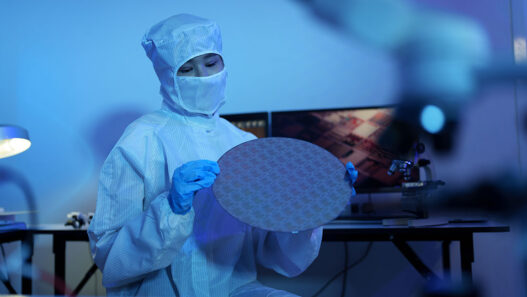

By using 3D aerosol jet-printing to put perovskites on graphene, scientists at EPFL have made X-ray detectors with record sensitivity that can greatly improve the efficiency and reduce the cost and health hazard of medical imaging devices.
Since Wilhelm Röntgen discovered them in 1895, X-rays have become a staple of medical imaging. In fact, barely a month after Röntgen’s famous paper was published, doctors in Connecticut took the first ever radiograph of a boy’s broken wrist.
There has been a lot of progress since. Aside from radiographs, which most people have taken at least once in their lives, today’s X-ray medical uses includes fluoroscopy, radiotherapy for cancer, and computer tomography (CT), which takes multiple X-ray scans of the body from different angles and then combines them in a computer to generate virtual cross-sectional “slices” of a body.
Nonetheless, medical imaging often works with low-exposure conditions, and therefore requires cost-effective, high-resolution detectors that can operate at what is called a “low photon flux”. Photon flux simply describes how many photons hit the detector at a given time and determines the number of electrons it generates in turn.
Source: “3D-printing perovskites on graphene makes next-gen X-ray detectors”, Nik Papageorgiou, EPFL News