





Efficient and cheap batteries that also capture carbon emissions could be “right around the corner” thanks to a new tool, researchers have claimed.
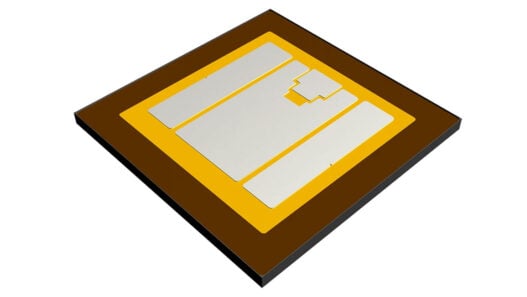
The technology, a system that speeds up evaluation of catalysts for lithium-carbon dioxide (Li-CO2) batteries, was developed at the University of Surrey, Imperial College London and Peking University in China.
The researchers used their new lab-on-a-chip to test and screen materials such as platinum, gold, silver, copper, iron and nickel, to easily investigate whether they would be suitable candidates for developing high-performing Li-CO2 batteries.
“We have created a cutting-edge lab-on-a-chip electrochemical testing platform that can do multiple things at the same time,” said Surrey’s Dr Kai Yang, project co-leader and corresponding author on work.
“It helps evaluate electrocatalysts, optimise operation conditions, and study CO2 conversion in high-performance lithium-CO2 batteries. This new method is more cost-effective, efficient, and controllable than traditional ways of making these materials.”
Li-CO2 batteries are a promising new type of battery that work by combining lithium and carbon dioxide, the researchers said. “They not only store energy effectively but also offer a way to capture CO2, potentially making a dual contribution to the fight against climate change,” a research announcement said.
As a result of studies using the new platform, Li-CO2 coin cells and pouch cells were fabricated, demonstrating high capacity, stability, and energy efficiency of up to 90%. Li-CO2 have a theoretical energy density of 1,800Wh/kg, which could mean batteries that are lighter or have more capacity for the same weight compared to lithium-ion batteries. This could have potential benefits in industrial applications and elsewhere.
Dr Yunlong Zhao, lead corresponding author of the new study and a senior lecturer at Imperial, said: “It is crucial that we develop new negative emissions technologies. Our lab-on-a-chip platform will play a crucial role in advancing this goal. It will not only enhance our understanding of novel batteries, but it can also be applied to other systems like metal-air batteries, fuel cells, and photoelectrochemical cells.
“This new tool will enable quick screening of catalysts, studying reaction mechanisms, and practical applications, from nanoscience to cutting-edge carbon removal technologies.”
The study was published by Energy and Environmental Science.