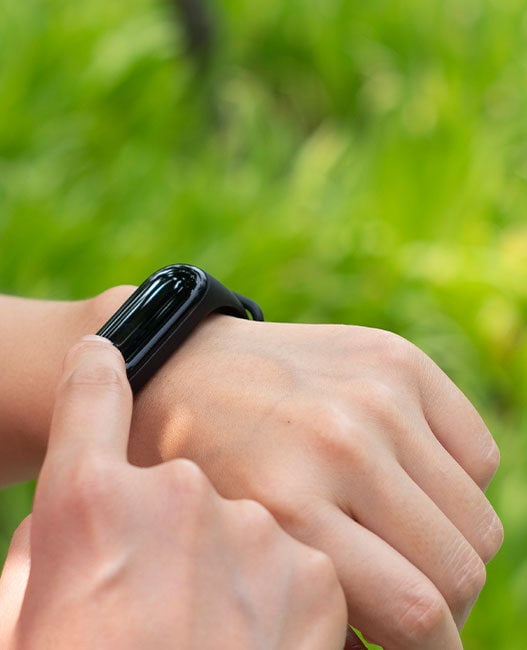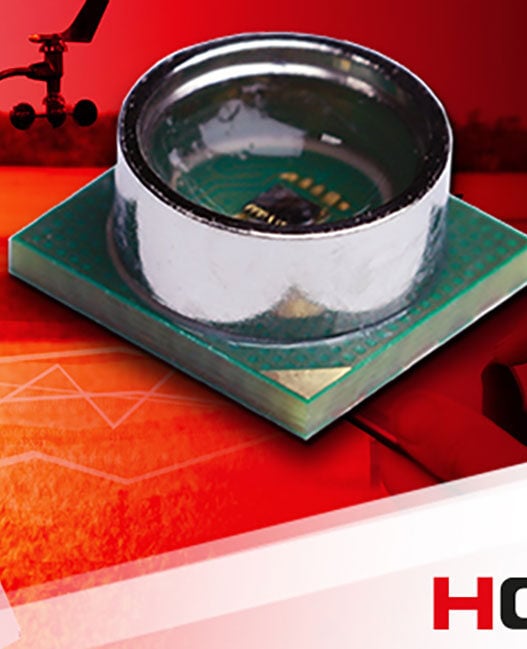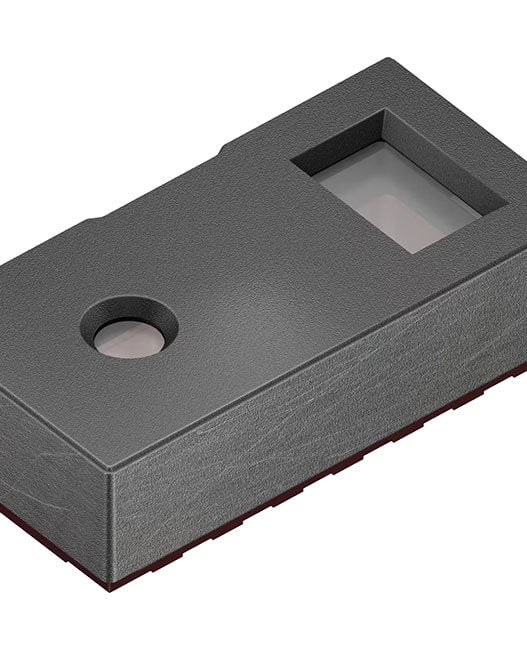





Smart wearables are ubiquitous in modern daily life. Sensors are a critical component of smart wearables and a vast array of other smart devices. These have tiny mechanical parts that move as a result of a specific stimulus and this movement is identified to form an electrical signal.
MEMS (Micro-Electro-Mechanical Systems) technology is fundamental in the design and development of high functioning sensors. With traditional MEMS sensors there are some significant challenges, but innovations in MEMS are in motion that will counter these issues, enabling further advances in sensors that are needed for the new generation of smart wearables.
Traditional MEMS sensors
The design of traditional MEMS sensors requires bespoke processes. The production of traditional MEMS involves specialised companies and fabs. Traditional MEMS manufacturing is also known to deliver lower yields than standard semiconductor manufacturing. This all means that costs are high, increasing quantities is difficult, and bringing a new MEMS sensor successfully to market can take considerable time. Even little variations in fabrication can lead to differences in performance or possible device failure. These constraints are major concerns for developers working on the next era of smart wearables which demand far more complex and compact sensors, with multiple sensing elements embedded in a single package to help enhance functionality. Modern sensors also need to be power-efficient and robust, so they are suitable for battery-powered smart devices and wearables like health monitors.
Advances with MEMS sensors
Following a recent surge in the smart wearables and sensors sectors there has been a renewed focus on addressing the limitations with MEMS. Nanusens has taken a unique approach to creating MEMS, using the metal layers within a CMOS chip. This removes the old requirements for specialised processes and fabs, making it possible to access the great economies of scale that giant CMOS fabs provide. As the Nanusens process takes place within the CMOS chip the structures are not microscopic in size, but nanoscopic. Traditional MEMS structures have feature sizes of one micron or larger while the Nanusens NEMS (Nano Electro Mechanical Systems) structures have features of 0.3 microns or less – a 100x area reduction. Consequently, the power consumption of each sensor is now significantly cut and different kinds of sensors can be built within the chip at the same time to create multi-sensor solutions with space for batteries and enhanced features.
The Nanusens NEMS also delivers better performance because of very small parasitic capacitances. Wire bonding or placing the traditional MEMS structure on top of a CMOS wafer leads to a parasitic capacitance of around a picofarad. The Nanusens MEMS-in-CMOS method reduces this to around ten femtofarads or less, which is a significant signal to noise ratio improvement.
Moreover, Nanusens has designed a novel way to measure the capacitance of its nanosensors using a digital circuit rather than the traditional analog one, so that the sensor designs and digital circuit can be ported to smaller nodes as required to reduce power consumption and size even more, whilst still maintaining the excellent reliability essential for smart wearables.
A shift with sensor data processing
Another area of interest is in sensor data processing. There is a shift under way where instead of sending sensor data blindly to the AI processing centre, there is more focus on processing sensor data locally before sending it to the Cloud. There are several reasons for this. One is that in many scenarios, sensors will capture data that most of the time is actually nothing. Imagine for instance a smart microphone, where sometimes nothing will happen. What is the point in sending noise (silence) to the Cloud? It will just waste communication bandwidth and computing power in the Cloud. This could be easily processed locally, at the point where the microphone is located. Only when somebody is talking or there is some sound that needs to be analysed will it be sent to the Cloud for processing at the AI centre. Edge processors are digital or AI processors that are optimised for these functions. Therefore, these have reduced power computing capability, are optimised for low power consumption, and are located together with the sensors. The term AIoT (Artificial Intelligence of Things) is used to describe this: sensors + Edge processor.
Nanusens can improve on this by building the Edge processor monolithically with the sensors into the same CMOS die. This reduces size and power consumption. Another reason why local sensor data processing is desirable is in the case of health monitoring devices, when processed results are sent to the Cloud without full patient details, in order to preserve the privacy of the user.
The future of smart wearables
The next generation of smart wearable devices will require greater functionality in a smaller footprint. Therefore, the need for more complex and compact sensors is clear. It is widely acknowledged that novel MEMS technology and sensors will play an increasingly crucial part in the future of smart wearables.

By Dr. Josep Montanyà i Silvestre, CEO, Nanusens
This article originally appeared in the January’26 magazine issue of Electronic Specifier Design – see ES’s Magazine Archives for more featured publications.