
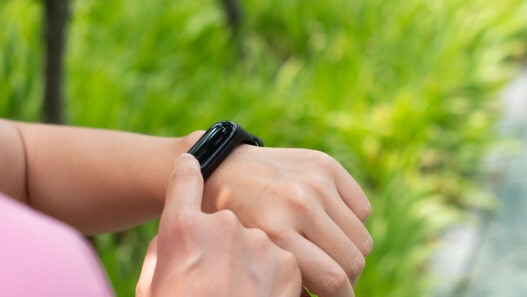


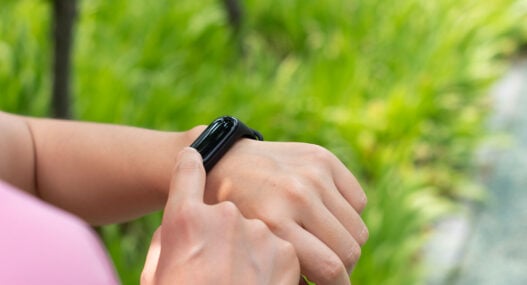
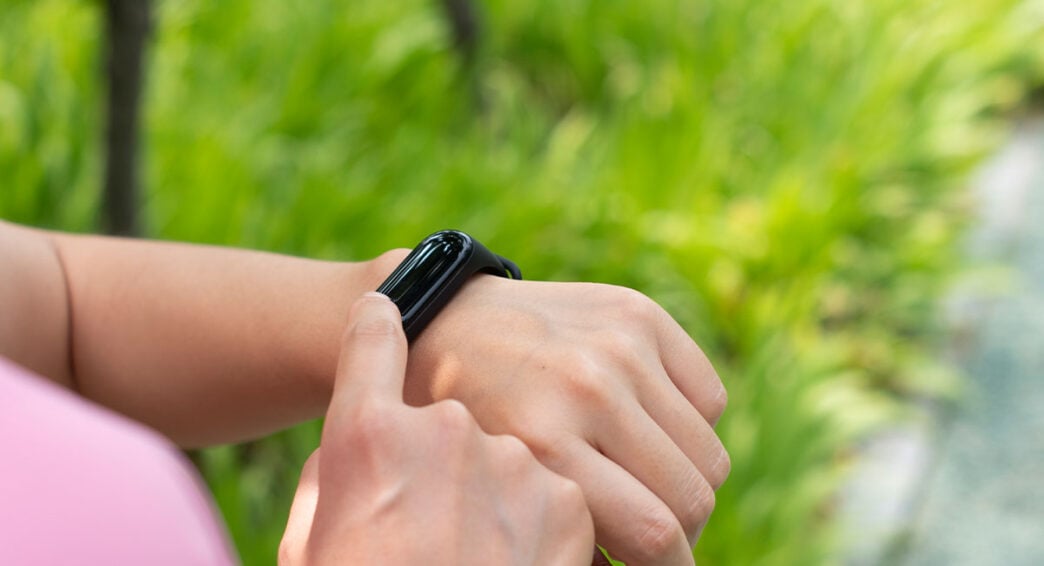
Smartwatches have rapidly evolved from simple fitness trackers to more sophisticated health monitoring tools. Their capabilities extend far beyond counting steps or tracking heart rate, with functions such as oxygen saturation level and sleep pattern tracking now relatively commonplace. Additionally, advanced functions such as ECG (heart rhythm) and EEG (brain functionality testing) sensing are already offered in some watches, with research suggesting these KPIs could not only help detect illnesses, including brain cancer, but also identify dangerous behaviour such as driving while drowsy.
Functionality is only set to increase, for example at embedded world last year there was even a sensor on display that promised to enable blood-alcohol level testing via a smartwatch.
Of course, the drive to improve biometric monitoring has been accelerated by the COVID pandemic and a key metric that can act as a forewarning of illness is body temperature. In addition, body temperature measurements via wearables have been shown to help in preventative treatment across a wide range of conditions, for example the prevention of foot ulcers in diabetes patients.
However, accurately measuring body temperature in wearable devices like smartwatches poses several unique challenges. This article examines some of the primary sources of error and design difficulties and explores how sensor technology can help overcome these obstacles.
Why measure body temperature – and how?
Body temperature is one of the most direct indicators of a person’s physiological state. Fever is often the first sign of a bacteriological or viral infection, with measurable changes observable days before the first reported cold or flu symptoms are otherwise noticed.
For athletes, monitoring body temperature can provide insights into overexertion or dehydration. And for everyday users, temperature data can also assist in detecting irregularities in the body’s circadian rhythms or hormonal changes.
In addition, temperature can provide much-needed context to other readings from the smartwatch to better understand the importance of unusual readings, as well as being used in fitness watches to alter training plans to avoid extreme conditions, or to alert the athlete should body temperature rise too much.
However, body temperature is not straightforward to measure in wearables. While the human body’s normal temperature range offers little variation, even the tiniest of fluctuations can be significant, and therefore sensor resolution is vital. Below we see three of the key challenges faced by designers.
- Environmental interference
Wearable devices are often exposed to environmental variables that can significantly impact temperature readings. A smartwatch sits on the wrist, where ambient air temperature, sunlight, and even wind can all alter the surface temperature of the skin, leading to incorrect readings.
- Dynamic conditions
Temperature measurement in wearables is complicated by human activity as well as natural variation. Exercise increases the body’s temperature, improving vasodilation and heat loss, while sweat also affects readings by cooling the skin and creating a moisture and/or salt barrier between the sensor and the skin. Sensors must adapt to these conditions and distinguish real physiological changes, which requires advanced algorithms and robust data processing.
Similarly, conditions such as Raynaud’s constrict the blood vessels in affected individuals, which can make it harder to measure their temperature reliably.
- Sensor placement and heat dissipation
The heat generated by a smartwatch’s battery or processor can elevate local skin temperature near the sensor and skew readings. Sensor placement must therefore be carefully considered and for thermal management strategies to be employed to ensure that device heat does not impact the sensor’s ability to provide accurate measurements.
An additional factor to complicate this further is personal preferences in how a person wears the device – with some choosing a loose, and others a tight strap – and this must be factored in if accuracy is to be maintained.
Selecting a sensor – four key design considerations
- Precision and sensitivity
The sensor must offer high levels of precision. Precision should ideally reach ±0.5°C or better, as even small deviations in temperature could signify important health changes. The sensor must function over a broad temperature range to provide reliable readings across different environmental conditions, such as outdoor temperatures or physical activities that may impact skin temperature.
- Ultra-low power consumption
Low power consumption is essential for any sensor integrated into a wearable device. Since wearables typically have limited battery life, sensors must prioritise energy efficiency while maintaining performance.
For example, the Apple Watch 10 (46mm) battery has a 327mAh Li-ion cell, while the Garmin Forerunner 245’s is 170mAh. These are small capacity units yet need to function for up to 36 hours (Apple) and a week (Garmin) in their low-power modes from just a single charge.
- Compact form factor
In wearables, space is at a premium, so the temperature sensor needs to have a compact form factor. A small package size will allow for easy integration into the sleek and compact designs of smartwatches and fitness trackers without adding unnecessary bulk or complexity.
If we take a look at a teardown of the 46mm Apple 10 smartwatch (measures 46 x 39 x 9.7mm), we can see a 64-bit dual-core processor with 4-core Neural Engine. In addition to this is the battery itself, multiple accelerometers, a gyroscope, the heart rate monitor, barometer, altimeter, compass, body temperature sensor, water temperature monitor, and depth gauge. Additionally, there’s cellular connectivity (LTE, UMTS), positioning (GPS, GLONASS, GALILEO, QZSS, BDS), Wi-Fi, and Bluetooth. And then there’s capacitive touch/haptic control, wireless charging hardware, NFC, and the IP6X protective seals.
As such, size is everything and every square millimetre on the PCB must be justified.
- A simple communication interface
The sensor should include an easy-to-integrate communication protocol, such as I2C, to simplify its connection with the device’s main processor. This enables real-time data transfer and analysis, allowing designers to focus on optimising the device’s algorithms and other critical functions and eliminate the challenges of complex sensor integration and compatibility issues.
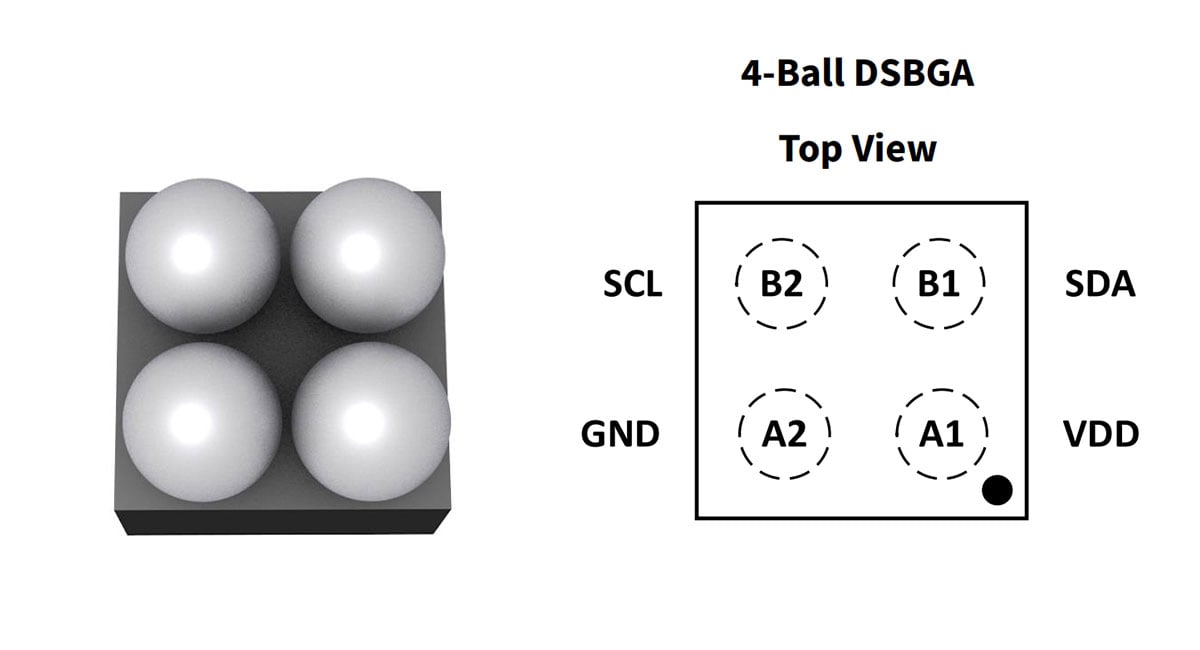
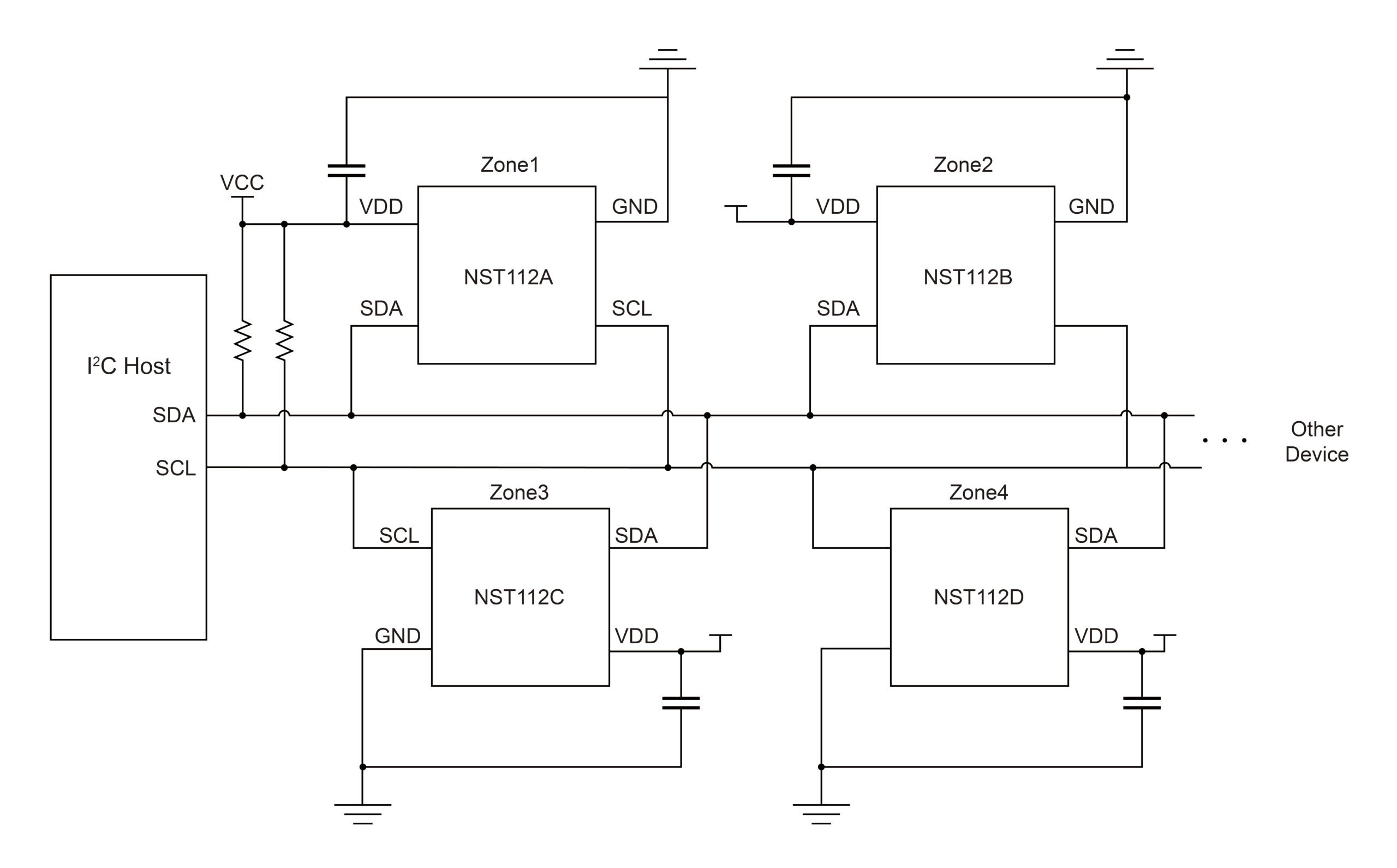
As an example of recent advances in temperature sensors for wearable devices, the NST112x is a low-power, high-precision digital temperature sensor designed for wearable applications, including smartwatches. It offers I2C and SMBus compatibility, with support for up to four devices on a single bus.
The sensor delivers an accuracy of up to ±0.1°C, without calibration. Its 12-bit ADC provides a resolution of 0.0625°C. It is available in a compact DABGA package that measure 0.75 × 0.75mm, making it ideal for space-constrained designs.
Incorporating more accurate and reliable sensors into wearable devices can thus help users monitor their health more effectively and enable better management of their wellbeing.

By Vental Mao, Technical Marketing Manager, Novosense
This article originally appeared in the January’26 magazine issue of Electronic Specifier Design – see ES’s Magazine Archives for more featured publications.