




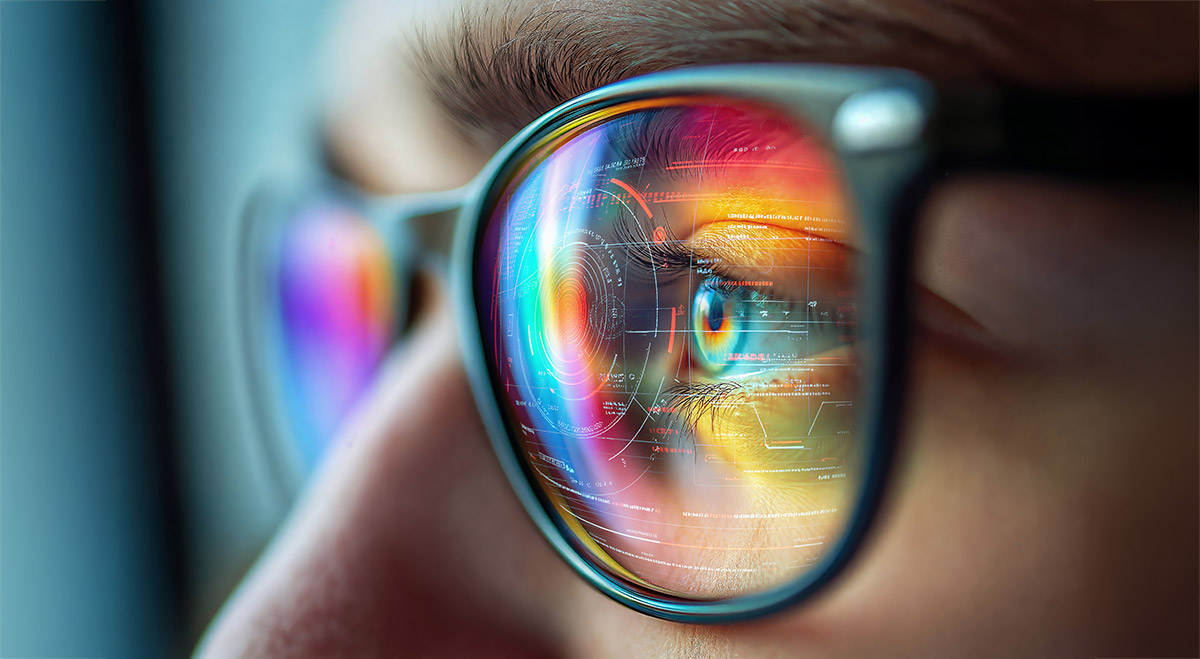
Meta has unveiled its latest iteration of smart glasses at its annual developer conference, Meta Connect. The glasses that caused quite a stir are its second generation of smart Ray-Ban’s which are powered by the company’s own AI, paired with a “neutral” wristband, and have a built-in screen.
The technology
The glasses
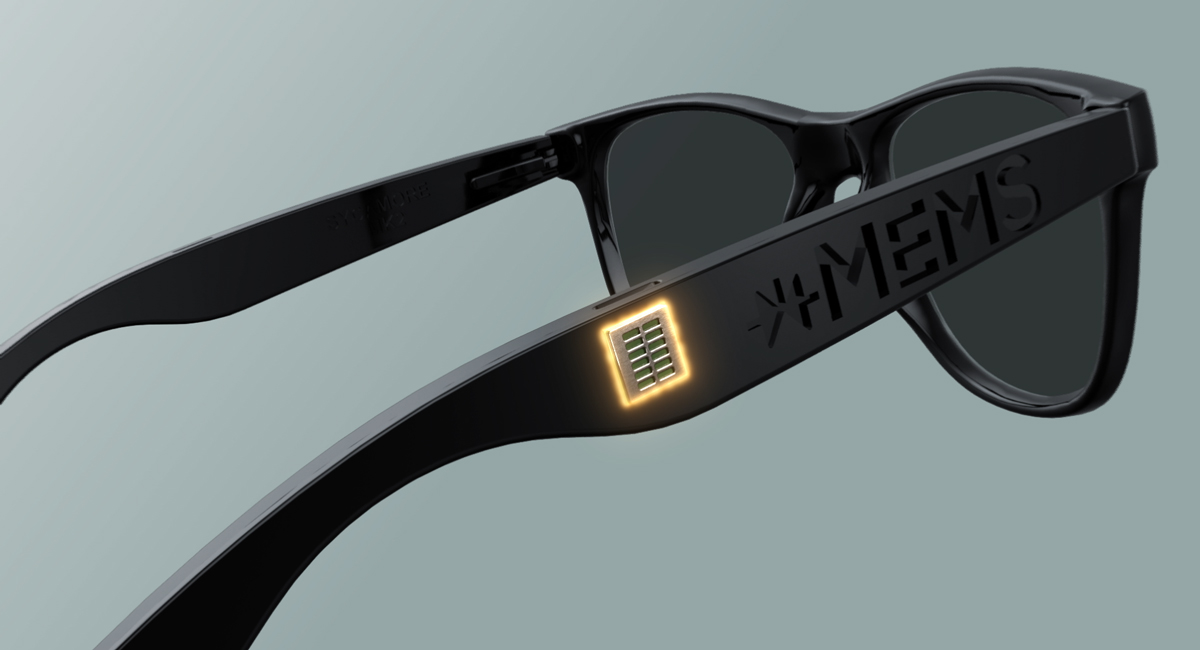
Meta has announced that the smart Ray-Bans feature a 600 x 600p full-colour display screen in the right lens. This screen enables the wearer to view messages, images and videos, notifications, text and visual answers to queries. So, for example, you could ask the AI a question and receive an instant answer. Or you could have turn on display captions whilst having a conversation. It also includes a 12-megapixel camera.
The wristband
The wristband uses Electromyography (EMG) technology to measure the electrical activity of muscles and sends a signal back to the Meta Ray-Ban display features. By using subtle gestures and haptic feedback, the wearer can read messages, answer calls, use Meta’s AI, and more, all without the use of a phone.
Alongside this, Meta also announced its new screen-free model smart glasses, including an updated version of its standard smart Ray-Bans, plus a new offering that has been designed under the Oakley brand – the Oakley Vanguard glasses being aimed more at the sports market.
The smart Ray-Bans come with a $799 price tag, which includes the wristband, and they are expected to go on sale on the 30th September 2025.
The Oakley Vanguards are priced at $499 and will be available from the 21st October 2025.
All of the devices feature: Meta AI assistant, cameras, hands-free control, and livestreaming to Meta-owned platforms such as Facebook and Instagram.
According to reports, a key driver in Meta’s smart accessories, is pushing its own AI
Things are looking up
The point in these glasses, according to Meta, is to stop people looking down at their phones. I’m all for people actually looking up as I see more tops of heads than I care to. However, just because people are looking up, does it mean that they’re listening or paying attention?
See, the truth about multitasking is that we can’t do it. The human brain can only manage one cognitive task at a time. If it must handle two, it actually just switches rapidly between them, which means it usually takes longer to complete either task.
The NeuroLeadership Institute concurs: “the term [multitasking] itself is a misnomer. The brain is actually incapable of completing more than one cognitive task at a time.”
Is it time to switch off?
Prolonged screen time isn’t healthy. The benefit of seeing someone use a phone is that you can tell if it’s too much – and perhaps suggest they take a break. With glasses, however, how will you know if someone is listening to you or reading an email? And since the brain can’t multitask, what purpose do these glasses serve?
But maybe it’s more than that.
Meta plans to launch Orion in 2027. Orion is a prototype smart glasses device aiming to provide a fully immersive AR experience with a holographic display, an EMG wristband to detect subtle wrist signals, sensors for eye and head tracking, and an external drive for advanced computing. Could the Ray-Ban glasses be one rung on the ladder towards Orion?
Zuckerberg invested heavily in the Metaverse – so much so that the company is now called Meta. But the reality failed to live up to the hype for many reasons ranging from aesthetics and expense to more pressing concerns, such as not feeling safe in this virtual world
In my opinion, I see Meta smart glasses as an attempt to close the gap between AR and Metaverse integration.
I hear repeatedly that data is key to advancing technology – so how much data will Meta have access to if these glasses take off? According to Reuters, IDC forecasts that global shipments of AR/VR headsets and display-lens smart glasses will increase by 39.2% in 2025 to 4.3 million units and Meta are leading that charge thanks to its range of Ray-Ban glasses.
And let’s not forget that Meta has said it would develop what it called “superintelligence” – AI technology that can out-think human beings.
Call me cynical, but I believe that AI should be use for good. As a tool, or a way to build relationships, but it should complement life, not take over it.
Humans are amazing and our brains are capable of so much. I’ve said this before, and I will say it again – that just because we can do something, doesn’t mean that we should.