





Traditionally, developers have been forced to drive test scenarios as a standalone process outside the reach of their overall development tool chain. Any findings would then have to be manually connected back into development processes. TBmanager’s solution creates access to otherwise isolated test teams with an integrated test management platform.
Central to TBmanager’s management capabilities is its mapping between requirements, code and test. Once mapping is established, code changes can be seen within TBmanager and suspect links, such as unmapped or removed source, can be corrected and code retested. This increased transparency and linkage dramatically pinpoints suspect code, enabling it to be quickly corrected and retested.
TBmanager’s improved automation along with its increased integration into the LDRA tool suite significantly reduces the amount of time required to do code and quality review, rerun unit tests and execute system-level testing for code coverage. New standard-specific templates efficiently outline standard requirements, creating check lists and generating tasks needed for standard fulfilment.
If projects lack requirements, TBmanager quick-starts the transition to requirements-driven development, creating low-level requirements identifiers that can be linked to high-level requirements. Such a solution significantly boosts automation and ease of use, while ensuring top-down coverage of the software lifecycle.
“Companies face increased pressure to improve the quality of their software whether to meet new certification standards, reduce liability or decrease maintenance costs,” confirmed Ian Hennell, LDRA Operations Director. “With this integration, TBmanager breaks down traditional barriers to automating test processes, linking test execution and data directly into all analysis findings from requirements through to verification. By replacing onerous manual task management, TBmanager offers significant time savings, helping developers quickly pinpoint and solve software design and coding problems.”
Thanks to filters and graphical improvements, developers can intuitively drive the execution and collection of results, easily navigating the vast amount of requirement-related information. In addition, TBmanager confirms adherence to coding standards and quality metrics, unit testing, project objective checklists—all essential for exposing gaps in requirement traceability, code coverage or standards compliance. Such integration ties together all phases of the testing process, providing a robust audit trail for internal quality control or certification.
TBmanager’s test management and traceability capabilities are built on the LDRA tool suite, a software testing platform that is rigorous and qualifiable. Companies who initially embrace testing to improve processes can easily transition into compliance development as new standards are introduced, speeding the introduction and transition of standard-compliant products.
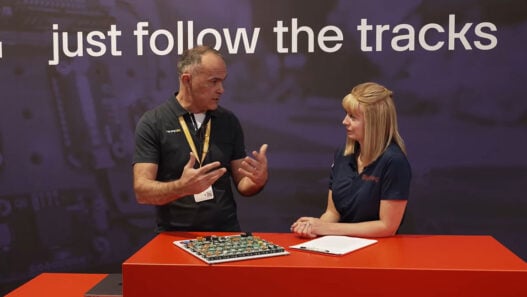
TBmanager will be demonstrated at Embedded World, Nürnberg, Germany from 1-3 March in LDRA’s booth: 10-316. Attendees will see how verification tasks can be executed from TBmanager and findings integrated into a company’s overall testing strategy to ensure complete code coverage, requirements traceability and standards compliance.