



Screening and security equipment has become a part of everyday public life, whether that equipment is visible or behind the scenes. Demand is rising for these critical and increasingly more sophisticated systems due to heightened interest in public safety measures.
The need for robust screening and security equipment is paramount to protect people, assets, and infrastructure. Many solutions of this type utilise imaging technology, which likely means they have electromagnetic interference (EMI) shielding requirements to ensure operations continue at an optimal level without error. The correct choice of EMI shielding solution based on environmental conditions, shielding requirements, manufacturability and device lifespan should therefore be of critical concern to system design engineers.
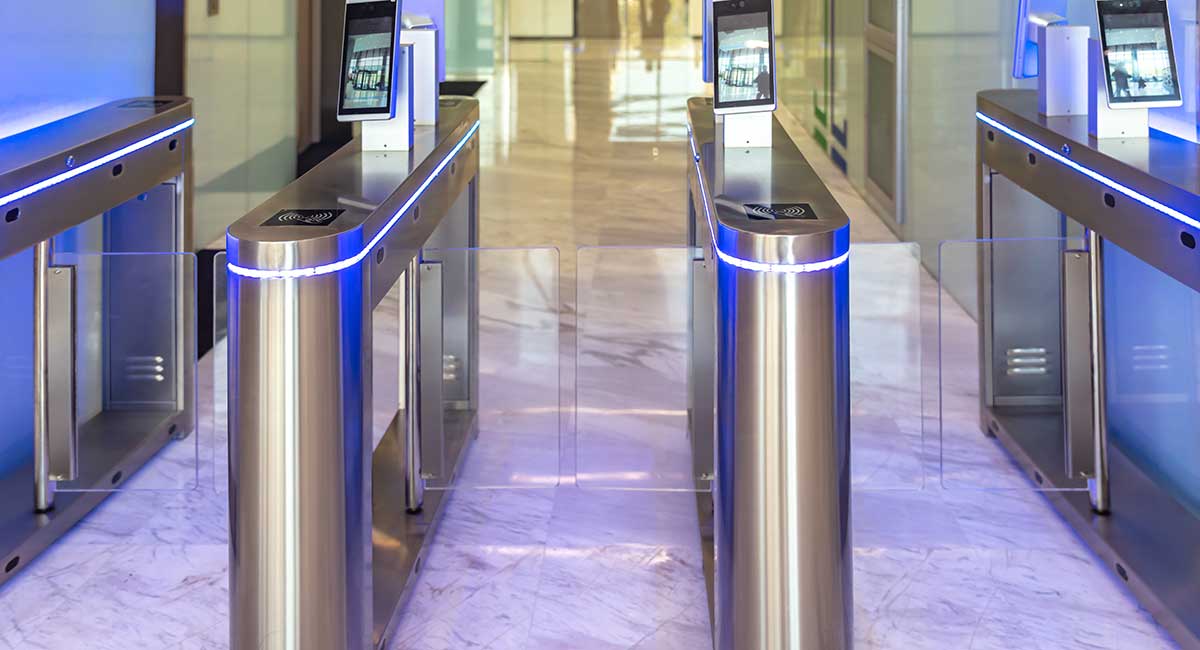
Boarding a flight, visiting a museum, entering a festival, attending a court case: all these activities typically involve security screenings. The facilitating technology plays an important role in public safety and wellbeing by scanning IDs, baggage, packages, and people.
But applications for screening and security systems extend far beyond the public eye. A case in point is C4ISR (Command, Control, Communications, Computers, Intelligence, Surveillance and Reconnaissance), a critical military concept that encompasses the systems and processes used for gathering, processing and disseminating information to support decision-making in military operations. C4ISR operations rely heavily on scanning technology for advanced threat detection and inspection/detection screening.
Then there is logistics, where shipping services, courier services and package transportation utilise screening equipment to ensure safe delivery and routing while monitoring for illicit substances.
Further uses of this increasingly prevalent equipment can be found in biometric applications – such as palm scanners, eye scanners, and the hardware utilised in facial recognition systems. Examples of non-security screening applications include mass spectrometry, laser spectroscopy and photoionisation tools to facilitate drug testing/discovery, food contamination detection, pesticide residue analysis, isotope ratio determination, chemical detection, protein identification and carbon dating. Moreover, sophisticated medical imaging machinery such as MRI scanners help doctors identify abnormalities such as cancers for thorough diagnoses and targeted treatments.

Ensuring safety and health
Whatever the application, the task of this equipment is largely the same: to detect foreign agents or objects accurately. It is crucial that these complex systems are able to perform optimally and reliably in the interests of safety and health.
EMI shielding solutions have a critical role to play. Design engineers can improve the safety and performance of screening and security devices with EMI gaskets, shielding honeycomb air ventilation panels, cable shielding products, grounding solutions, shielding laminates or metal foil tapes – depending on application requirements.
EMI is unwanted noise or interference within or around an electrical device that can interfere with a system’s performance. The consequences of EMI can include degraded performance, where impaired functionality leads to false alarms and inaccurate results in security detectors. Another issue is data loss and corruption, where EMI can compromise communication and lead to faulty data transmission and unreliable information storage. System failures and security breaches are further potential problems. It is therefore vital to mitigate this interference in applications as sensitive and precisely calibrated as screening technology.
Engineers must also keep in mind that EMI emissions and susceptibility are highly regulated by various authorities worldwide. These regulations aim to ensure that electronic devices do not cause harmful interference to other devices and can operate properly when exposed to EMI from other sources. Proper EMI shielding therefore contributes to the reliability and consistency of high-precision imaging devices.
System and component level shielding
Many types of EMI shielding solutions can help ensure screening and security devices operate optimally and comply with regulatory standards. System level solutions include conductive elastomer gaskets and conductive coatings that shield a housing or the seam of an enclosure, while component level solutions comprise board-level shielding, stamped metal components, and injection moulded plastics for shielding individual electronic components or cavities on a circuit board.
In all cases, design engineers must consider the different components that will require shielding, as it will often be necessary to adopt an assortment of products to provide complete protection. Key here is partnering with a reputable, experienced, and knowledgeable supplier of EMI shielding products proven to perform in these challenging operating environments. Common solutions for screening and security equipment include electrically conductive elastomer gaskets, fabric-over-foam shielding gaskets and shielding paints.

Electrically conductive elastomer gaskets, which typically find use in the sealing of gaps at enclosure interfaces, are an excellent choice for corrosion resistance, environmental sealing, and cost-effective EMI shielding. Various conductive fillers are designed to ensure galvanic compatibility while providing low contact resistance between mating surfaces. These elastomeric gaskets are available as moulded sheets or die-cut parts, which allow for greater part complexity and detail, or extruded into strips and either offered as cord stock at length or spliced (fused) to form a continuous seal.
Fabric-over-foam shielding gaskets are suitable for both EMI shielding and electrical grounding. Comprising a conductive fabric wrapped over non-conductive low-density foam, these EMI shielding gaskets typically come in strip form and a variety of standard and custom profiles. They are ideal for indoor applications such as screening and security equipment – effectively any application that requires low compression force but still needs high conductivity and shielding attenuation. Another type of the same gasket sees silver-plated fibres knitted into low-density foam. Products of this type come in sheets for die-cutting into custom shapes.
Another option open to designers of screening and security equipment is EMI shielding paint, the application of which can protect components inside systems with non-conductive housings. An example would be the application of a conductive coating on a plastic substrate. The plastic substrate was chosen for physical properties such as light weight and durability but would not provide EMI shielding unless otherwise painted with a conductive coating. These paints establish a conductive layer on the applied surface, disrupting EMI through reflection or absorption, subsequently reducing or eliminating the amount of radiation penetrating the barrier. Conductive paints and coatings facilitate durable, reliable and high-performance EMI shielding, while also supporting design flexibility by providing a shielding solution for many substrate materials and electronic enclosure sizes.
Expert technology partner
Reliable EMI shielding is crucial to ensure screening technology works correctly and delivers on its mandate. Parker Chomerics offers a broad portfolio of tested EMI shielding products for screening and security applications around the world. With high-performing applications protected by effective and proven EMI shielding solutions, society is one step closer to maximising the security and health benefits these devices offer.
About the author:
Ben Nudelman, Global Market Manager, Parker Chomerics