






Passive infrared (PIR) sensors are experiencing sustained growth in 2026. This is driven largely by the expansion of smart home technology, building automation, and energy-conscious design.
Once thought of as simple motion detectors, PIR sensors are becoming more capable and digitally enabled components within connected systems.
According to DiMarket’s report: ‘PIR Sensors Market Overview: Trends and Strategic Forecasts 2026–2034’, the global PIR sensor market is projected to grow at a compound annual growth rate of 8% between 2026 and 2033, reaching an estimated value of $2.8 billion by 2033. The report attributes this growth to the adoption of smart home technologies, the continued deployment of security systems, and increasing demand for energy-efficient lighting solutions. It also highlights a growing preference for digital PIR sensors over analogue variants, citing improvements in accuracy, configurability, and system-level integration.
What is a PIR sensor?
The origins of PIR sensors date back to the 1960s, when they were used for infrared research for military and industrial applications. Over time, advances in materials, signal processing, and manufacturing transformed PIR sensors from large, analog devices that were prone to false triggers into compact, low-cost, and reliable components suitable for mass-market deployment.
A PIR sensor is a stationary motion detection device that identifies movement by sensing changes in infrared radiation within its field of view. Humans and many objects emit infrared energy as heat, and when a warm body moves across the sensor’s detection zones, the change in thermal energy is converted into an electrical signal. This signal can then be used to trigger an action, like, for example, activating a light, sounding an alarm, or notifying a connected system. PIR sensors are most commonly used in security systems and automatic lighting.
Unlike active sensors, such as ultrasonic or microwave devices, PIR sensors do not emit energy to detect motion. Instead, they remain passive, monitoring ambient infrared radiation, which contributes to their low power consumption and suitability for battery-operated devices.
How PIR sensors detect motion
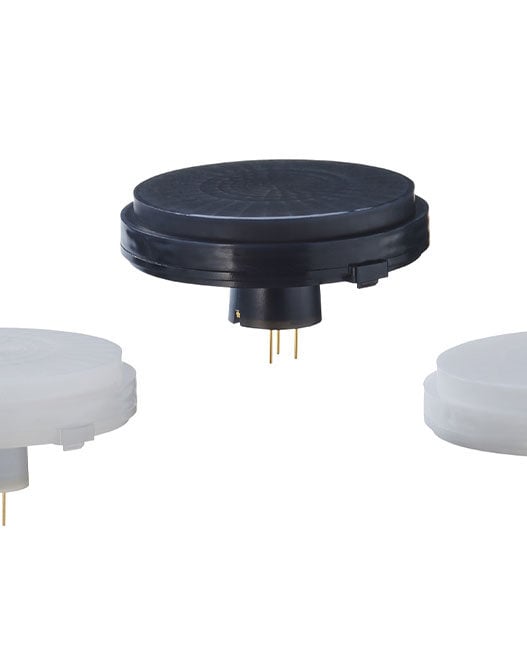
Modern PIR sensors typically use a pyroelectric element combined with a Fresnel lens. The lens divides the sensor’s field of view into multiple zones so it can pick up any rapid changes in temperature when a warm object moves between these areas. When motion is detected, the differential heat pattern generates a voltage change across the sensing element. If this change exceeds a predefined threshold, the sensor registers motion.
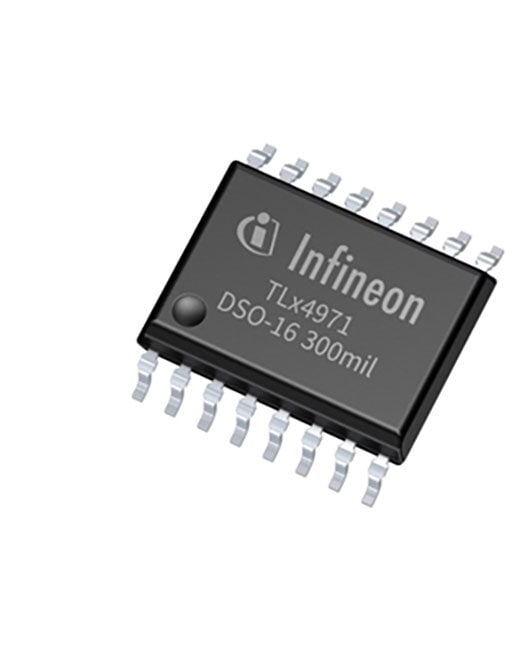
Digital PIR sensors build on this principle by incorporating on-chip signal processing. This allows for better filtering of background noise, compensation for gradual temperature changes, and more consistent performance across varying environmental conditions. As a result, digital devices are better equipped to reduce false positives caused by sunlight, airflow, or heating systems.
Evolving alongside smart homes and automation
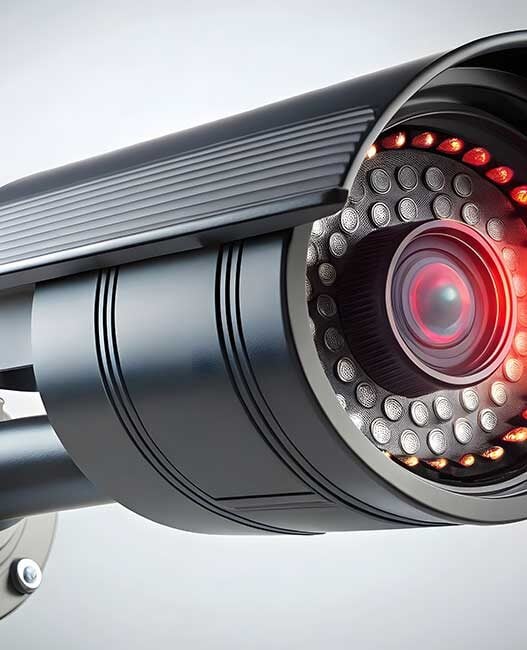
Rather than acting as standalone triggers, PIR sensors are increasingly being integrated into broader Internet of Things ecosystems, where motion data can be combined with inputs from other sensors, Cloud platforms, and Edge-based processing. In smart lighting systems, PIR sensors are now used to support occupancy-based control strategies which adjust lighting levels dynamically and help to reduce energy consumption. In residential security, they are being paired with cameras, access control systems, and home hubs to enable more context-aware responses.
Enhanced PIR configurability means that system designers can fine-tune sensitivity, detection patterns, and timing parameters through software, rather than relying on fixed analog circuitry. Some devices now include basic on-device intelligence which enables local decision-making, reducing latency and limiting the need for constant data transmission.
Sustained relevance in a connected world
Despite an evolving technological landscape, PIR sensors have held strong in motion detection due to their balance of cost, reliability, and energy efficiency – so much so that as buildings become smarter and more automated, the role of PIR sensors is expanding rather than diminishing.