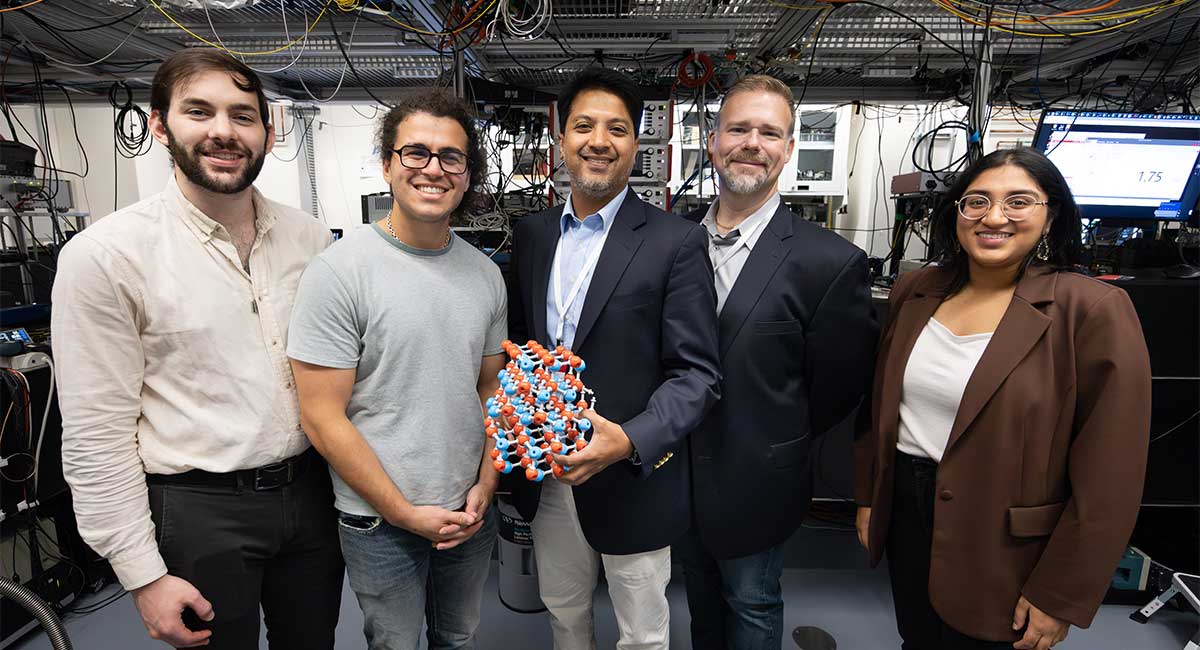




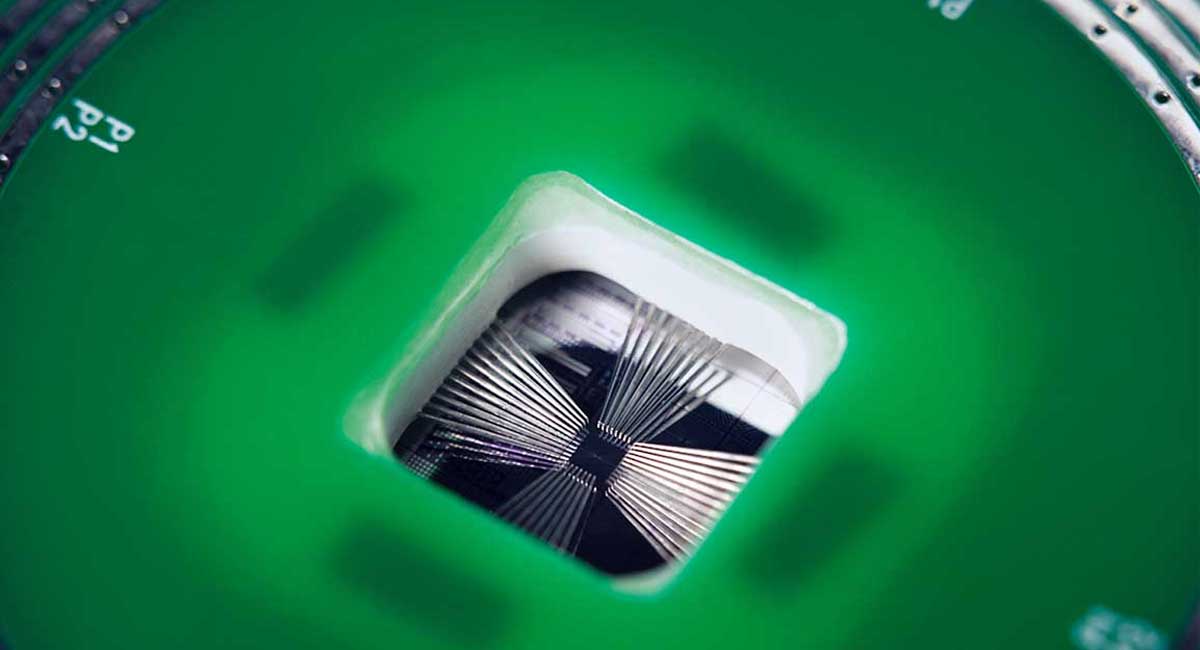
Finnish semiconductor start-up SemiQon and the VTT Technical Research Centre of Finland have won first prize in the “Impact Expected” category of the European Association of Research and Technology Organisations (EARTO) awards for their cryogenic CMOS chip technology, which promises major advances in quantum computing and space applications.
The award, presented in Brussels on 14th October, recognises a pioneering chip innovation that allows advanced complementary metal-oxide semiconductor (CMOS) functionalities to operate efficiently at cryogenic temperatures. The development is expected to unlock new potential for quantum computing and low-power space systems.
“Cryogenic electronics may seem niche today, but they will soon become mainstream, driven by quantum computing and aerospace,” said Himadri Majumdar, Chief Executive of SemiQon. “We’re honoured to receive this recognition, which highlights both the promise of our technology and the global impact we aim to achieve.”
According to Tauno Vähä-Heikkilä, Vice-President for Microelectronics and Quantum Technology at VTT, the award reflects the broader societal and industrial importance of the innovation. “Cryo-CMOS offers an opportunity to renew industries and drive growth. This recognition also underlines the vital role of research and technology organisations in strengthening Europe’s competitiveness and resilience,” he said.
SemiQon’s cryogenic CMOS chips offer significantly improved energy efficiency compared with conventional semiconductor technology, avoiding the heat dissipation issues that have limited CMOS deployment at low temperatures. For space applications, the chips consume between 50% and 90% less power. In quantum computing, they could reduce the cost and size of readout infrastructure by up to 30% in the near term and by more than tenfold in the long term.
By removing the need for separate cooling systems, the chips could make data centres and supercomputers more sustainable, potentially saving USD 20–30 billion annually in global cooling costs.
The technology was originally developed at VTT before SemiQon was spun off in 2023 to commercialise cryogenic CMOS solutions. The chips are produced in European pilot line foundries, including Micronova, the Nordic region’s largest semiconductor R&D facility, with future production planned at VTT’s forthcoming Kvanttinova hub in Espoo, Finland.
Cryogenic CMOS technology operates below -270°C and is essential for quantum computers and space electronics. The global market, estimated at more than EUR 3 billion, is expected to exceed EUR 10 billion by 2030. SemiQon claims its manufacturing costs are over 50% lower than competitors’.
SemiQon has secured several funding rounds since its spin-off, including a EUR 2.5 million grant and up to EUR 15 million in equity funding from the European Innovation Council earlier this year.
Beyond its technological and economic potential, the innovation supports Europe’s ambition for greater strategic autonomy in critical technologies. “Transforming research into companies like SemiQon strengthens Europe’s competitiveness and resilience,” said Vähä-Heikkilä.
SemiQon’s mission is to advance scalable, energy-efficient quantum processors, leveraging decades of semiconductor expertise. Its cryo-optimised CMOS platform underpins a range of quantum and space technologies and is seen as a key enabler of future breakthroughs in energy-efficient electronics and environmental monitoring.