Keysight advances Quantum Engineering with new simulation

Keysight advances Quantum Engineering with new simulation Keysight advances Quantum Engineering with new simulation

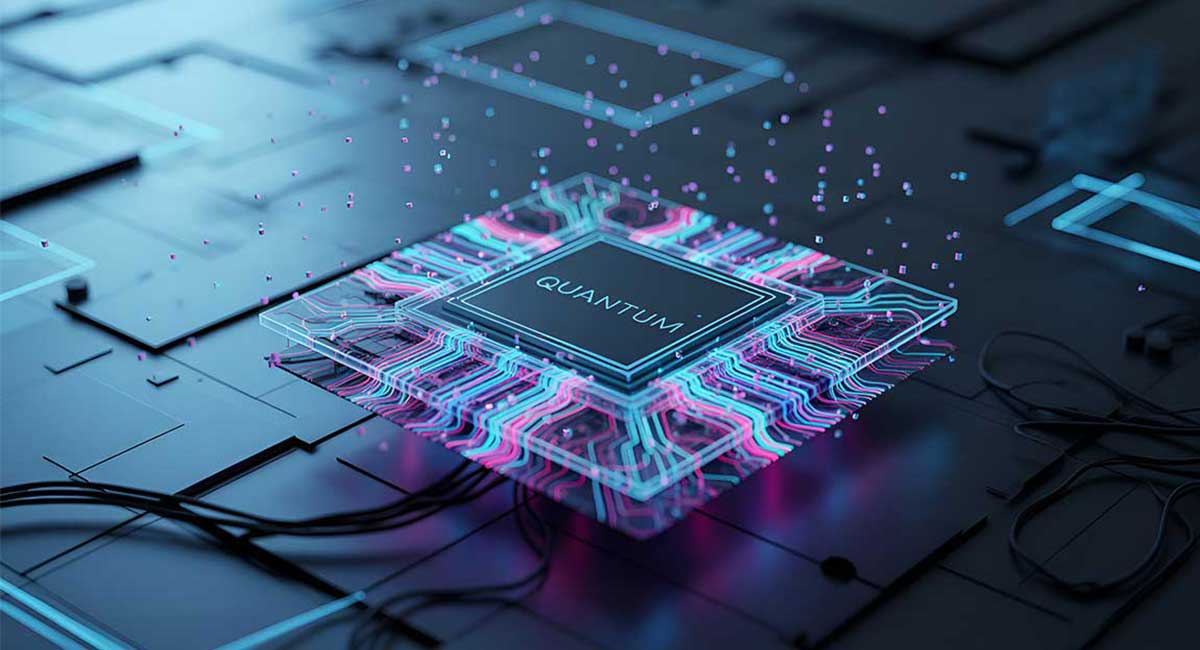
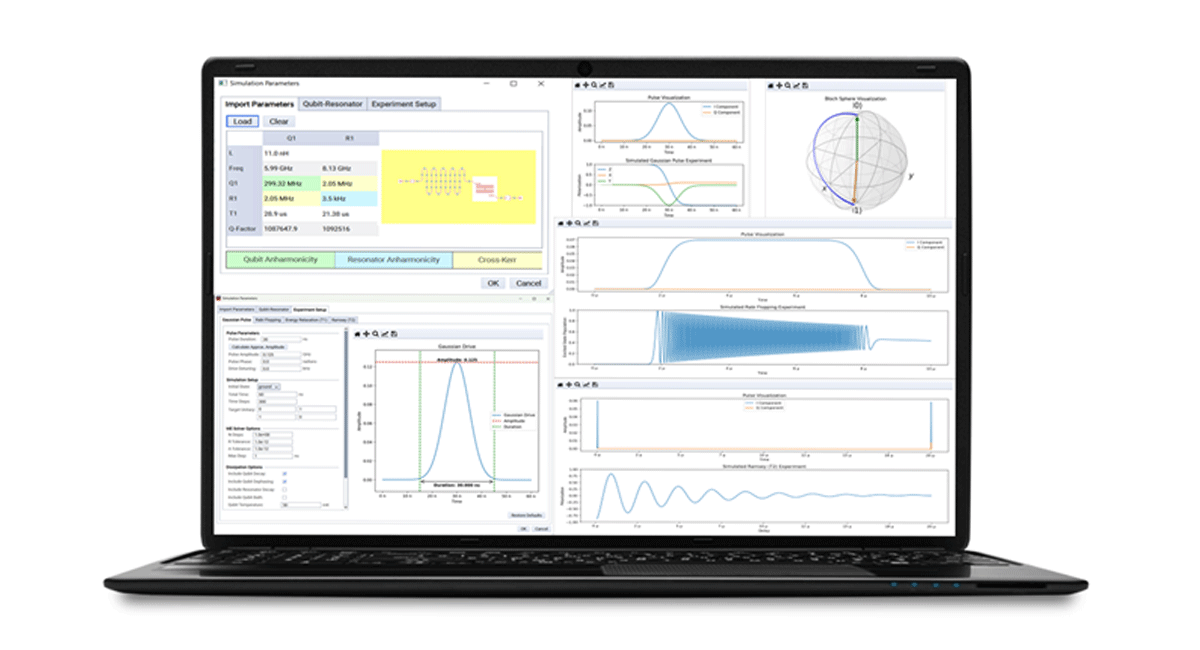
Keysight Technologies, Inc. announced the release of Quantum System Analysis, a breakthrough Electronic Design Automation (EDA) solution that enables quantum engineers to simulate and optimise quantum systems at the system level. This new capability marks a significant expansion of Keysight’s Quantum EDA portfolio, which includes Quantum Layout, QuantumPro EM, and Quantum Circuit Simulation. This announcement comes at a pivotal moment for the field, especially following the 2025 Nobel Prize in Physics, which recognised advances in superconducting quantum circuits – a core area of focus for Keysight’s new solution.

System-level quantum analysis has long been a challenge due to the complexity of integrating diverse physical domains – electromagnetic, circuit, and quantum dynamics – into a unified simulation environment. Traditional approaches often rely on fragmented tools and repeated cryogenic experiments, which are both time-consuming and costly. Keysight’s Quantum System Analysis bridges this gap by providing a cohesive platform that enables early validation of quantum system designs, reducing development cycles and improving design confidence.

Quantum System Analysis empowers researchers to simulate the quantum workflow, from initial design stages to system-level experiments, reducing reliance on costly cryogenic testing and accelerating time-to-validation. This integrated approach supports simulations of quantum experiments and includes tools to optimise dilution fridge input lines for thermal noise and qubit temperature estimation.

Quantum System Analysis introduces two transformative features:

  • Time Dynamics Simulator: Models the time evolution of quantum systems using Hamiltonians derived from electromagnetic or circuit simulations. This enables accurate simulation of quantum experiments such as Rabi and Ramsey pulsing, helping researchers understand qubit behaviour over time.
  • Dilution Fridge Input Line Designer: Allows precise modelling of cryostat input lines to qubits, enabling thermal noise analysis and effective qubit temperature estimation. By simulating the fridge’s input architecture, engineers can minimise thermal photon leakage and improve system fidelity.

Chris Mueth, Senior Director for New Markets at Keysight, said: “Quantum System Analysis marks the completion of a truly unified quantum design workflow, seamlessly connecting electromagnetic and circuit-level modelling with comprehensive system-level simulation. By bridging these domains, it eliminates the need for fragmented toolchains and repeated cryogenic testing, enabling faster innovation and greater confidence in quantum system development.”

Mohamed Hassan, Quantum Solutions Planning Lead at Keysight, said: “Quantum System Analysis is a leap forward in accelerating quantum innovation. By shifting left with simulation, we reduce the need for repeated cryogenic experiments and empower researchers to validate system-level designs earlier in the development cycle.”

Quantum System Analysis is available as part of Keysight’s Advanced Design System (ADS) 2026 platform and complements existing quantum EDA solutions. It supports superconducting qubit platforms and is extensible to other modalities such as spin qubits, making it a versatile choice for quantum R&D teams.

Keep Up to Date with the Most Important News

By pressing the Subscribe button, you confirm that you have read and are agreeing to our Privacy Policy and Terms of Use
Previous Post
Next-generation light sensors based on emerging materials

Next-generation light sensors based on emerging materials

Next Post
Rio de Janeiro announcement from The City of Rio de Janeiro and X, The Moonshot Factory, Taara announced a trailblasing new partnership to deploy the world’s first mesh network of high-speed wireless optical links to deliver fast, abundant and secure connectivity to schools, hospitals and city offices in Rio. Our goal is to bridge connectivity gaps across the city and provide fast, affordable connectivity to critical services like schools, hospitals, government centres, and in disaster response situations. In the same way traditional fibre uses light to carry data through cables in the ground, Taara uses narrow, invisible beams of light to transmit information at speeds as high as 20 gigabits per second, up to distances of 20 kilometres per link. Taara connects into existing fibre networks and bridges the gap where fibre and other technologies can’t reach. Instead of waiting months or years to dig up the earth and lay new fibre cables, Taara’s links can be established within hours. In Rio de Janeiro, Taara will install 20+ links to deliver service to communities where connectivity is spotty or unreliable. The links will create an invisible mesh network over parts of the city that will serve as a single responsive system – connecting community institutions like schools and hospitals and helping facilitate emergency response. A new approach for urban connectivity in Rio Although Brazil ranks among the world’s five largest internet economies, connectivity remains spotty – more than half of the population uses smartphones to get online, and existing cellular infrastructure varies by community. In Rio, some of the most stubborn, hard-to-connect areas are also the city’s most populated. Built of brick, concrete, and steel rooftops through a labyrinthine tangle of narrow streets and uneven terrain, it’s nearly impossible to connect these communities via traditional broadband fibre. Taara’s links, which can be mounted flexibly on rooftops, towers, and poles, are well suited to these challenging terrains and combine the reliability and speed of fibre infrastructure with the flexibility of wireless technologies. To date, Taara has successfully delivered reliable, abundant internet to people in more than 20 countries. This includes providing access in dense urban communities in India and Africa, delivering fast affordable connectivity to island nations in the Pacific and the Caribbean after natural disasters, and beaming connectivity over rivers, sea straits, and other places where laying fibre is too impractical or costly. Taara is honoured to be supporting Rio’s AI City vision and its mission to transform the region into a global innovation hub. We hope Taara’s first mesh network in Rio can serve as a blueprint for urban connectivity and inspire a more connected, intelligent, and inclusive world.

Connecting Rio with the world’s first optical mesh network