





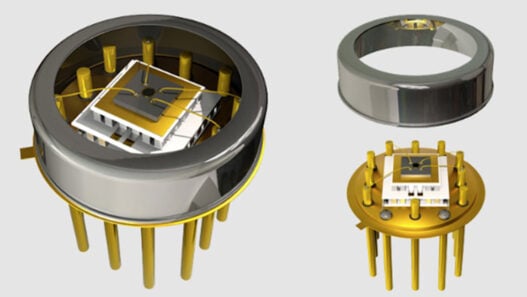
Moreover, near-field wireless power that’s already used to power some implants that are very close to the surface, such as cochlear implants, doesn’t work for electronics that would be located deeper inside the body. The research team has now published in journal Scientific Reports on how they were able to create and wirelessy power an electronic device as it traversed through a pig’s GI tract.
Their technology relies on a midfield coupling transmission approach, one that uses higher frequencies than near-field technologies, successfully beaming enough energy from an external antenna to one inside the implant to power a number of sensors, some of which may include gas analyzers, thermometers, and heart rate meters.
Additionally, the beamed power is enough to energize implants that can release a drug cargo into its environment. Specifically, they were able to deliver 37.5 μW, 123 μW, and 173 μW of power to the implant, yet while keeping the level of radiation emitted below acceptable safety limits.