



Melexis has launched a silicon-based RC snubber that it claims will significantly improve the performance and reliability of silicon carbide power modules, as demand grows for efficient high-voltage systems in electric vehicles and industrial equipment.
Announced on 27th November in Tessenderlo-Ham, Belgium, the MLX91299 is designed to curb voltage spikes and oscillations that commonly affect SiC devices operating at fast switching speeds. These effects can generate leakage currents, heat, and electrical stress, threatening long-term reliability. According to Melexis, early measurements indicate that the device can cut switching losses by up to 50%, supporting higher system efficiency, improved thermal behaviour, and lower Bill of Materials costs.
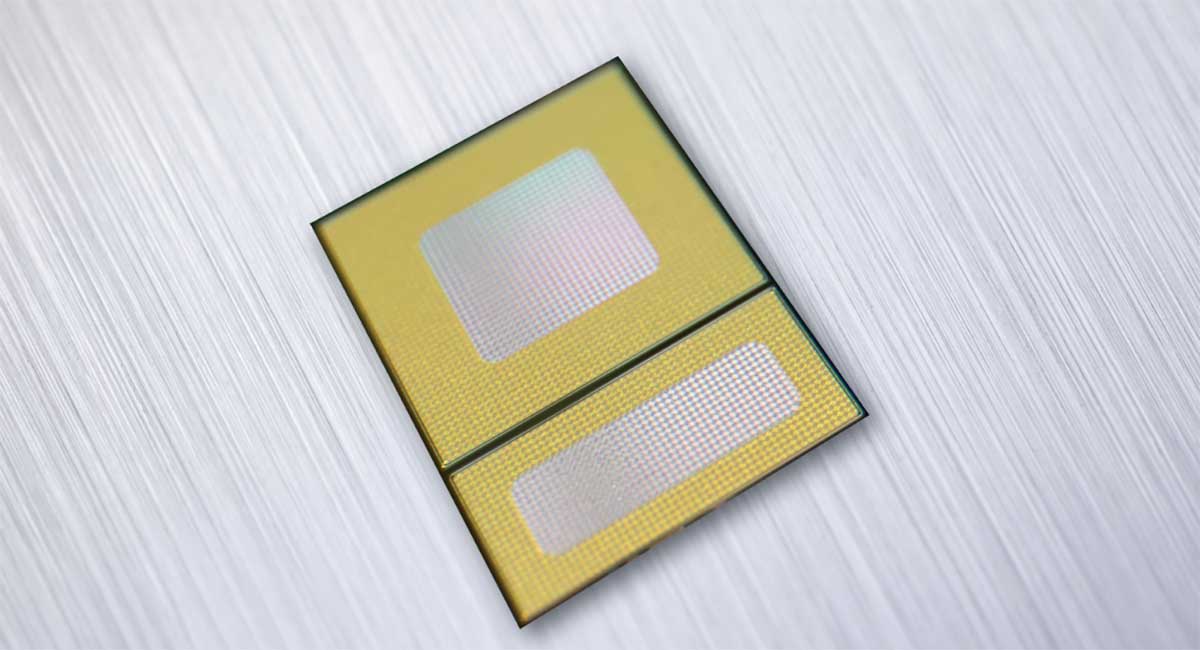
The snubber integrates a resistor and capacitor in a single compact silicon device. It is intended for seamless inclusion within high-voltage power modules, using materials and assembly approaches compatible with existing SiC layouts. Melexis said this reduces manufacturing complexity and ensures consistent performance across units.
The company added that the RC snubber helps stabilise wide-bandgap semiconductor behaviour by suppressing voltage transients, parasitic oscillations, and electromagnetic interference. Its backside metallisation supports both sintering and soldering, allowing it to share thermal dissipation paths with SiC components and maintain performance even at junction temperatures reaching 200 °C.
With a breakdown voltage above 1,500 V, the MLX91299 targets traction inverters, onboard chargers, DCDC converters, and other high-voltage automotive and industrial systems. By reducing heat dissipation requirements, Melexis said the component can either lower cooling and material needs or enable higher power density within the same thermal budget.
Billy Ye, Product Line Director at Melexis, said the launch “gives designers the freedom to innovate, optimise performance, and reduce costs”. He added that the device is the first in a broader range of protective components the company plans to introduce.
The MLX91299 has undergone early validation with selected customers, and samples are now available. The protective-device family is expected to broaden to serve a wider set of high-voltage applications.