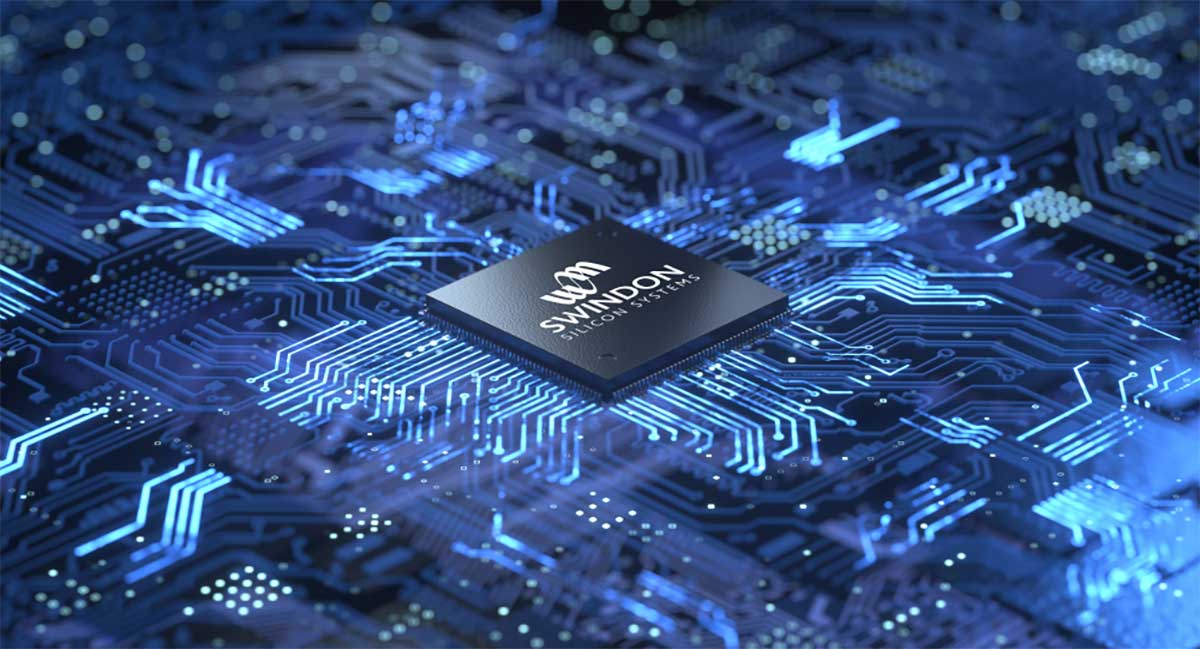





A team of engineers have unveiled a novel computer chip that relies on light rather than electricity to execute one of the most energy-demanding operations in artificial intelligence – image recognition and other pattern-finding tasks.
By harnessing light, the chip dramatically reduces the power required for these computations, achieving efficiency up to 10 or even 100 times greater than conventional chips performing the same calculations. This approach could ease the mounting pressure on power grids while enabling AI models and systems to operate at higher performance levels.
The machine learning process at the centre of this breakthrough, known as ‘convolution’, underpins how AI systems analyse images, videos, and even language. Current convolution operations demand substantial computing resources and processing time. The new chips, however, employ lasers and microscopic lenses integrated onto circuit boards to carry out convolutions more quickly and with significantly lower energy use.
In testing, the prototype successfully classified handwritten digits with roughly 98% accuracy, matching the performance of traditional chips.
“Performing a key machine learning computation at near zero energy is a leap forward for future AI systems,” said study leader Volker J. Sorger, Ph.D., the Rhines Endowed Professor in Semiconductor Photonics at the University of Florida. “This is critical to keep scaling up AI capabilities in years to come.”
“This is the first time anyone has put this type of optical computation on a chip and applied it to an AI neural network,” added Hangbo Yang, Ph.D., a research associate professor in Sorger’s group at UF and co-author of the study.
The project was carried out in collaboration with researchers at UF’s Florida Semiconductor Institute, the University of California, Los Angeles, and George Washington University.
The chip prototype incorporates two sets of miniature Fresnel lenses, manufactured using standard processes. These two-dimensional lenses, similar to those used in lighthouses, measure just a fraction of a human hair in width. On-chip, machine learning data, such as images, are converted into laser light and passed through the lenses before being returned to a digital format to complete the AI task.
This lens-based convolution system not only improves computational efficiency but also reduces processing time. The use of light offers further advantages: Sorger’s team designed the chip to handle multiple data streams simultaneously using lasers of different colours.
“We can have multiple wavelengths, or colours, of light passing through the lens at the same time,” Yang said. “That’s a key advantage of photonics.”
Some chip manufacturers, including NVIDIA, already incorporate optical components in other areas of their AI hardware, which could ease the integration of convolution lenses.
“In the near future, chip-based optics will become a key part of every AI chip we use daily,” said Sorger, who also serves as deputy director for strategic initiatives at the Florida Semiconductor Institute. “And optical AI computing is next.”