




By PhD Ing. Pablo E. Leibovich & Ing. Alberto I. Leibovich, ADOM Ingenieria
These devices are usually equipped with communication modules like Wi-Fi, Bluetooth, Zigbee, or cellular networks which enable seamless data exchange with other devices and/or centralised systems for different purposes. Devices such as smart thermostats adjusting temperature settings based on user preferences and environmental data, or humidity and temperature sensors used in farms with automatic irrigation systems are examples of how IoT devices are widely used today.
IoT devices are designed to collect data from their surroundings using various types of sensors and can either process the data locally or send it to cloud-based systems for analysis. The ability to interact with other IoT devices or platforms is key, allowing a cohesive smart ecosystem.
Particularly, most IoT devices are optimised for low power consumption to extend battery life and to reduce energy costs. These characteristics allow IoT technology-based devices to be used in different applications like smart homes (smart speakers, lights, doorbells, and thermostats enhance comfort and security while optimising energy usage), healthcare (wearable health monitors such as watches or wristbands track vital signs, providing real-time feedback to patients and/or healthcare providers), Industrial IoT (IoT sensors monitor machinery and production lines, enabling predictive maintenance and reducing downtime), transportation (connected vehicles use IoT devices for navigation, traffic management, and vehicle diagnostics), agriculture (smart irrigation systems use environmental data to optimise water usage, improving crop yields), retail (IoT enables inventory tracking and personalised shopping experiences through connected sensors and devices), etc.
Sensors are the backbone of IoT devices, capturing and providing usable data from the physical environment. Some commonly used IoT sensors include:
- Temperature sensors: monitor external environmental temperatures or internal device-specific temperatures, crucial in HVAC systems and industrial machinery
- Proximity sensors: detect the presence of objects or people, used in smart lighting and security systems
- Motion sensors: identify movement, commonly found in alarms and automated lighting systems
- Environmental sensors: measure humidity, air quality, or barometric pressure, assisting in things such as weather predictions and air quality management
- GPS sensors: provide location data, essential for navigation and asset tracking
- Biometric sensors: track health metrics like heart rate, blood pressure, or oxygen levels, widely used in wearable health devices
Battery consumption and power management in IoT devices
Managing battery consumption is a critical challenge in IoT devices, as many rely on compact power sources that limit operational longevity. To address this, engineers implement strategies such as low-power communication protocols like BLE and Zigbee, which significantly reduce transmission energy, and sleep modes that allow devices to conserve power when idle. Additionally, energy-efficient hardware design and energy harvesting methods, such as integrating solar panels, further extend device life by minimising reliance on traditional battery power.
Static and dynamic characteristics of SLG5100X LDOs
The Renesas SLG5100X series of devices feature high-performance Low Dropout (LDO) regulators. The low noise and high Power Supply Rejection Ratios (PSRR) featured in these LDOS make them ideal for sensitive devices, such as sensors and communications modules.
These LDOs have specific features and characteristics that make them useful for remote applications, where current consumption and power control are key factors:
- Power sequencer: the SLG5100X series includes a flexible power sequencer that controls the enabling and disabling of LDOs, with up to six resource enable steps. This enables the design to efficiently manage the power sequence, reducing unnecessary power consumption
- Current limiting: each of the LDOs in the SLG5100X series has a programmable current limit available in both LDO modes (LDO and Bypass). With current limitations, the current consumption can be managed effectively, not only to reduce consumption but also to prevent overcurrent situations that may damage the device
- Protection features: the SLG5100X devices also come with various protection features such as under-voltage lockout (UVLO), thermal shutdown, and configurable temperature alerts. These features help to maintain the stability of the power supply and protect the device from potential damage
More info about these features can be found in the AN-CM-377 Introduction to SLG5100x Protection Features.
Different types of LDOs are available in each SLG5100X device, each type with different characteristics and excelling in specific applications:
- High-performance LDOs (HP LDOs): HP LDOs are designed to minimise internal noise, which is crucial for applications requiring clean power. They typically have lower output noise and higher Power Supply Rejection Ratios (PSRR). These characteristics make them useful for meeting stringent power performance requirements, making them an excellent choice for advanced camera modules and other small multi-rail applications
- High-voltage LDOs (HV LDOs): HV LDOs are designed to handle higher input voltages and provide stable output voltages for various applications. They offer efficient power management to meet the demands of applications requiring higher input voltages and stable output voltages, making them ideal for a wide range of industrial and consumer electronics applications.
- Low-voltage LDOs (LV LDOs): LV LDOs are designed to provide stable power at lower input voltages, offering efficient power management for applications operating at lower voltages, ensuring reliable performance and minimal power consumption
A summary of input and output voltages, current consumption in different operating modes and dynamic performance is shown in Table 1.
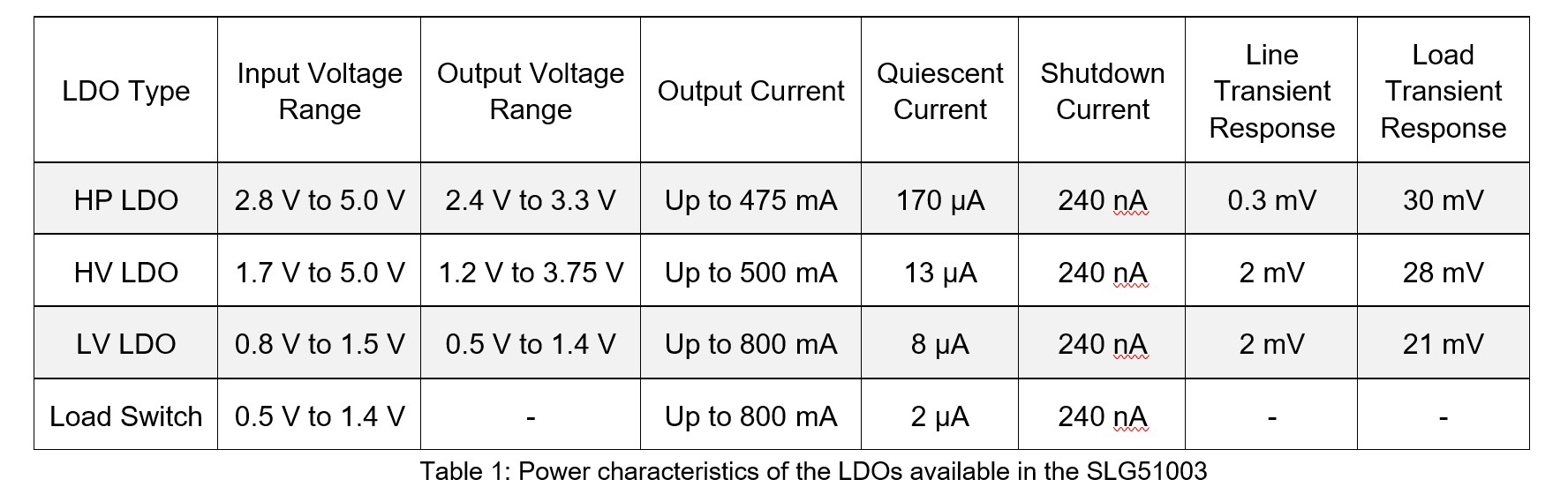
For LDOs operating in LDO mode, conditions for Quiescent Current are IOUT = 0 mA. For LV LDO operating in Load Switch mode, Quiescent Current is in OFF mode.
Line transient response refers to the SLG51003’s LDOs’ output response to sudden voltage changes at the input. It describes how a voltage drop of 100 mV below its typical operating level at the input is handled. Line voltage change is a high-speed transient event (within 1 µs) and with current output kept constant at high current levels (the value depends on the LDO type).
Load transient response refers to the SLG51003’s LDOs’ ability to maintain a stable output voltage when the load current changes rapidly. In this case, it is evaluated as the output voltage’s load current (IOUT) increases from 1 mA to high level currents (depending on the LDO type) within 1 μs.
Analysis of power consumption in typical IoT sensors and communication modules
Power consumption is a critical factor in the design and operation of electronic devices, particularly those that rely on battery power as is the case with IoT devices. Understanding the power requirements for different components makes it easier to optimise the overall energy efficiency and to analyse the advantages of using the integrated LDOs in the Renesas SLG5100X series of devices.
Sensors
Sensors are essential components in a wide range of applications, including environmental monitoring, health tracking, and industrial automation. A sensor’s power consumption varies significantly based on its type and operating mode, Active Mode (fully operational mode) and Sleep Mode (low-power operational mode).
In the following, a general analysis of several types of sensors are studied. Consequently, the common characteristics for each type of sensor (obtained from research on different sensor models’ specifications) are presented.
Temperature sensors
Both analog and digital output temperature sensors exist, meant to be used in a large applications portfolio which includes industrial applications, general purpose applications, and clinical-grade applications. Making a general comparison seems unreasonable, but there are some common characteristics that can still be considered to ensure reliable operation in most sensors:
– Supply voltage range: temperature sensors typically operate within a supply voltage range of 2.7 to 5.5V, with some low-power models designed to function at voltages as low as 1.8V
– Active mode consumption: in active mode, temperature sensors continuously monitor and report temperature readings. The power consumption in this mode typically ranges in the hundreds of µA
– Sleep mode consumption: when not actively measuring, temperature sensors enter a low-power sleep mode, with power consumption dropping to around 10µA
Pressure sensors
Pressure sensors can exist under several formats and measurement methods depending on the application and technology. They are usually less sensitive than temperature sensors, and their shape and technology will vary with the application type. There are board mount sensors designed for air pressure measurement, sensors for industrial applications including liquids and gas pressure measurement, and sensors used in medical applications.
– Supply voltage range: pressure sensors usually operate between 3.0 and 5.5V, although some low-power designs can function at voltages as low as 1.8V
– Active mode consumption: pressure sensors consume more power in active mode, with values ranging typically in hundreds of µA. This mode is used when continuous pressure monitoring is required
– Sleep mode consumption: in sleep mode, power consumption is reduced to tens of µA, conserving energy when sensors are not in use
Humidity sensors
The variety on technologies and formats of these types of sensors are defined by different characteristics and requirements. However, general specifications can be obtained by broadening the requirements of different sensor ICs.
– Supply voltage range: most humidity sensors operate within a range of 2.0 to 5.5V, with some ultra-low-power variants designed for operation as low as 1.8V
– Active mode consumption: humidity sensors typically consume less than 100 µA in active mode, where they continuously measure and report humidity levels
– Sleep mode consumption: when inactive, these sensors consume a lower tens of µA in sleep mode
Accelerometers
Accelerometers, which measure acceleration and movement, are less varied in terms of power requirements, due to the use of common technologies. They are usually MEMS sensors, with different designs depending on the application they are intended to be used for.
– Supply voltage range: most accelerometers operate within a range of 2.0 to 3.6V, with some low-power variants supporting operation down to 1.8V
– Active mode consumption: accelerometers consume current in the mA range while in active mode
– Sleep mode consumption: in sleep mode, power consumption is significantly reduced to tens of µA
Proximity sensors
In the case of proximity sensors, the measurement method is the key factor in determining the supply voltage and power consumption. The most common measurement methods include inductive, capacitive, and optical measurement, with optical measurement having the lowest power consumption.
– Supply voltage range: proximity sensors typically operate within a range of 2.5 to 5.5V, with some models optimised for low-power operation at voltages as low as 1.8V
– Active mode consumption: proximity sensors, which detect the presence of nearby objects, have a consume power in hundreds of µA range while in active mode
– Sleep mode consumption: in sleep mode, the power consumption typically stays below 100µA
Summary of sensors compared to SLG5100X LDOs
Table 2 summarises the parameters described previously compared to the LDOs used in the SLG5100X devices and their compliance with the analysed sensors’ requirements. The parameters mentioned correspond to the performance that can be obtained from the LDOs integrated in the SLG5100X series of PMICs (specifically those in the SLG51003), while the parameters mentioned for the sensors correspond to the worst-case scenario.
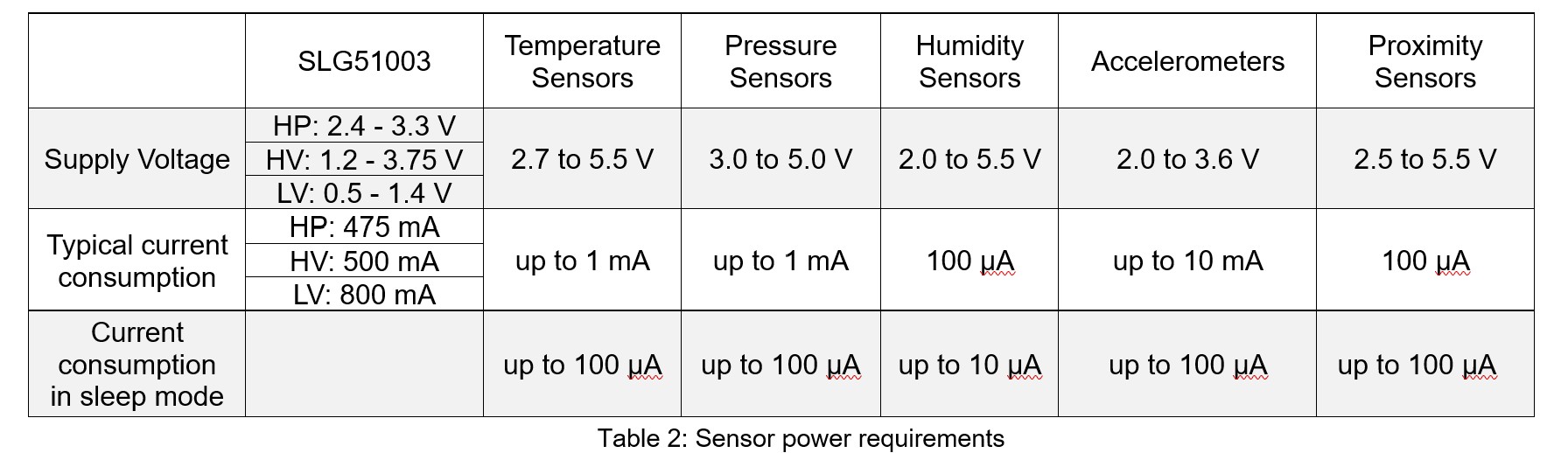
As can be seen from the table, SLG5100X integrated LDOs are compatible with the power requirements for different sensors used in common IoT applications.
Communications modules
In the case of communication modules, the rapidly evolving paradigm of the IoT, makes the selection of the right communication module a crucial step for ensuring efficient and reliable connectivity. Among the most popular communication technologies are Bluetooth, Wi-Fi, LoRa, and Zigbee technologies. Each of these technologies has unique characteristics that make them suitable for different applications.
The following is a list of some criteria that are widely used to assist in choosing communication technology first, and then the specific module:
- Range: determine the required communication range. LoRa is suitable for long-range applications, while Bluetooth and Zigbee are better for short-range communication
- Data rate: assess the data rate needs of your application. Wi-Fi offers high data rates, making it ideal for data-intensive applications
- Power consumption: consider the power requirements. Bluetooth and Zigbee are known for their low power consumption, making them suitable for battery-operated devices
- Network topology: evaluate the network structure. Zigbee’s mesh networking is beneficial for applications needing robust and scalable networks
- Cost: factor in the cost of modules and their integration into your devices
As the IoT industry continues to evolve, emerging standards and communication methods are being shaped by several key technological and societal trends. The growing need for data security and privacy is driving the adoption of robust encryption and secure communication protocols to safeguard sensitive information. At the same time, the integration of AI into IoT systems is enhancing real-time data analysis and decision-making, enabling smarter and more adaptive devices. The rise of edge computing is another crucial shift – by processing data closer to the source, especially in high-data-rate modules like those using Wi-Fi, systems can significantly reduce latency and ease bandwidth demands. Finally, the push for sustainability is fuelling interest in low-power technologies such as LoRa and Zigbee, helping developers create energy-efficient solutions that reduce environmental impact without compromising functionality.
Wi-Fi communication modules
Wi-Fi communication modules are widely used in devices that require wireless connectivity. The power consumption of these modules varies based on their operational mode.
– Supply voltage range: Wi-Fi modules typically operate at power supply voltages of 3.3 or 5V. Some modules may support a wider range, such as 2.7 to 3.6V
– Active mode consumption: in active mode, Wi-Fi modules consume the most power, typically ranging from 100 mA to 300 mA. This mode is used during data transmission and reception
– Idle mode consumption: when the module is not actively transmitting or receiving data but is ready to wake up, the power consumption is lower, ranging from 10 to 50 mA
– Sleep mode consumption: in sleep mode, the Wi-Fi module enters a low-power state, with power consumption significantly reduced to between 1 and 5mA. This mode is used to conserve energy when the module is not needed
Bluetooth communication modules
Bluetooth communication modules are known for their energy efficiency, especially in low-power applications. Their power consumption also varies based on the operational mode.
– Supply voltage range: these modules operate with power supply voltage of 3.3 or 5V
– Active mode consumption: in active mode, where the module is actively transmitting and receiving data, the power consumption ranges from 30 to 100mA
– Idle mode consumption: in idle mode, the module is not actively communicating but is ready to connect. Power consumption in this mode ranges from 1 to 10 mA
– Sleep mode consumption: Bluetooth modules consume very little power in sleep mode, with values typically between 0.1 and 1µA. This mode is used to maximize battery life when the module is not in use
LoRa modules
LoRa (Long Range) modules are widely used in IoT applications due to their ability to provide long-range communication with low power consumption.
– Supply voltage range: these modules typically operate within a voltage range of 2.1 to 3.6V, with 3.3V being the most common operating voltage, which is ideal for battery-powered applications
– Active mode consumption: in the case of active data transmission and reception, the power consumption is typically around 40 mA
– Sleep mode consumption: LoRa modules usually include a sleep mode which helps to reduce power consumption by several orders of magnitude for battery-powered devices. Current consumption in this case typically varies between 1 and 5 µA
ZigBee modules
ZigBee is a popular wireless communication protocol in IoT applications due to its low power consumption and mesh networking capabilities.
– Supply voltage range: these modules are typically designed to operate within a voltage range of 2.1 to 3.6V
– Active mode consumption: for active data transmission and reception, the power consumption is typically around 45mA
– Idle mode consumption: in idle mode, the module is ready to establish communication when needed but not actively transmitting. Power consumption in this state typically ranges from 1 to 10mA
– Sleep mode consumption: as with previous modules, ZigBee modules also include a sleep mode for low power consumption. Current consumption in this case varies typically between 2 and 10µA
Summary of communication modules compared to SLG5100X LDOs
Table 3 summarises the parameters described previously compared to the LDOs used in the SLG5100X devices and their compliance with the analysed communication modules’ requirements. The parameters mentioned correspond to the performance that can be obtained from the LDOs integrated in the SLG5100X series of PMICs (specifically those in the SLG51003), while the parameters mentioned for the communication modules correspond to the worst-case scenario.
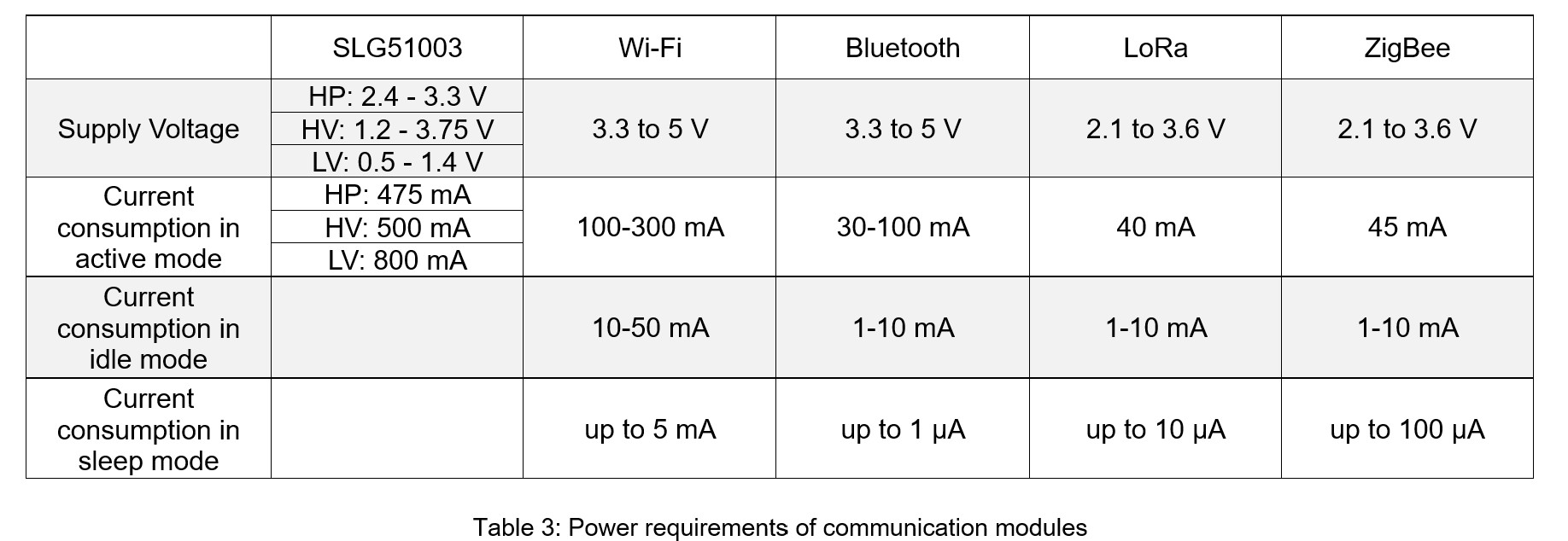
As shown in the table, SLG5100X integrated LDOs are compatible with the power requirements for different communication modules used in IoT applications. Also, it can be clearly concluded that power consumption of sensors and communication modules is a crucial consideration for designing energy-efficient systems. Sensors typically have lower power consumption, especially in sleep mode, while communication modules consume more power.
Implementation and configuration of an IoT power control system using SLG5100X PMICs
Different application notes are available analysing the capabilities of SLG5100X PMICs. It is recommended to review the application notes AN-CM-356 SLG51000, SLG51001 and SLG51002 Power Sequencer and AN-CM-357 Power Profile for Advanced Sensor Applications for more information.
In summary, a typical IoT system is based on a communications module (such as Wi-Fi, Bluetooth, LoRa, or Zigbee), a central control unit (a microcontroller), and peripherals to implement the user desired actions. These systems are battery powered, so power consumption control is a key factor that must be considered during implementation.
In Figure 1, a generalised block diagram of an IoT application powered by a SLG5100X PMIC is shown.
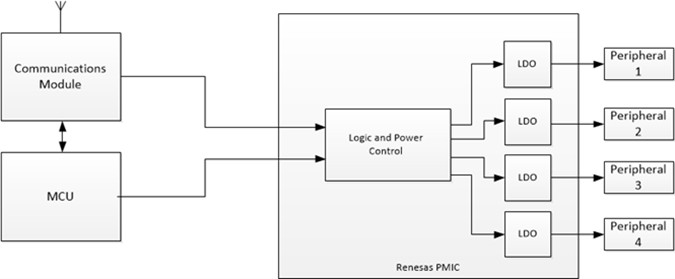
Figure 1. Conceptual diagram of an IoT system powered by a SLG5100X PMIC
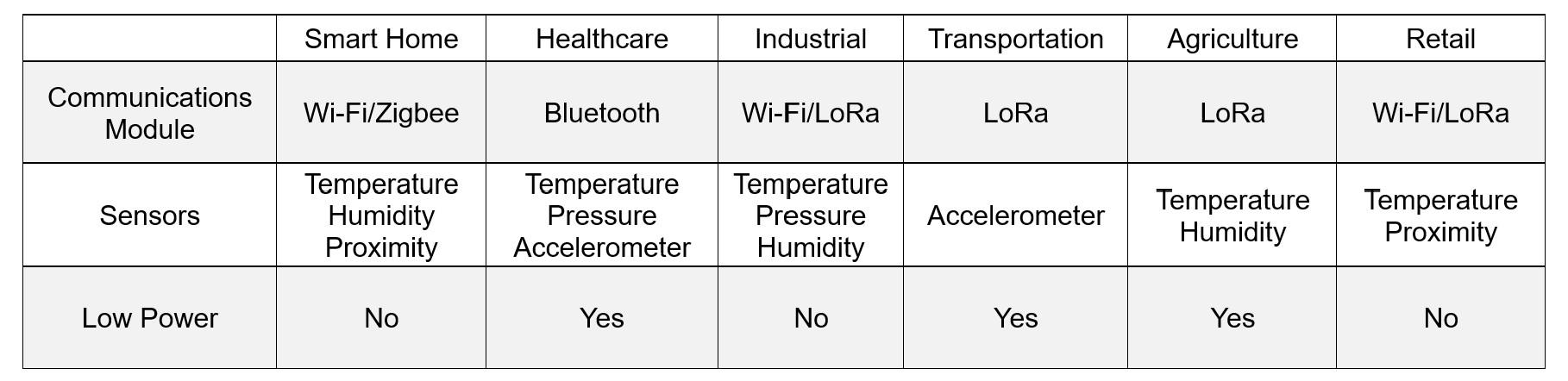
Communications modules and peripherals will vary depending on the application. Table 4 shows the typical components that may be used as building blocks in most common IoT applications (as shown in Figure 1).
Conclusion
This article features a complete analysis of IoT system power requirements. Not only does it include the typical sensors used in such IoT applications, but also the communications modules that are commonly found in these systems.
Those requirements are compared with the power characteristics of the LDOs embedded in the Renesas SLG5100X series of ICs and demonstrate the compatibility and applicability of those integrated circuits in these types of IoT systems and include analysis of their basic parameters, such as operating voltage levels and current consumption.
The comparisons made in this white paper describe how the power features of Renesas PMICs can be applied, being useful not only in terms of power supply, power consumption, and power control but also in terms of the actual size of the entire control system, which is smaller than many other implementations and designs where Renesas PMICs are not used.