




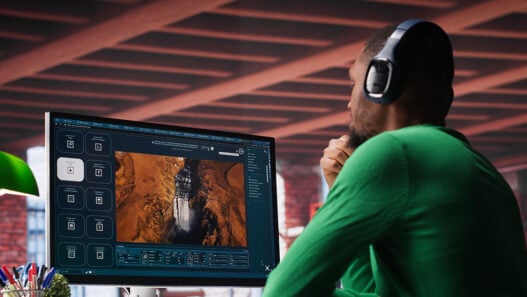
The overlay uses three layer glass/film/glass technology and has a life-span of 4 million touches, which is four times the typical lifespan of a standard polyester film resistive touchscreen. From a cost perspective, this resistive technology is generally 50% lower than its capacitive equivalent. The circuitry in resistive touchscreen technology provides designers with greater flexibility of component and controller location within their product, which is an important consideration given the trend for more compact devices. Additionally, resistive touch screen technology is not vulnerable to electrical noise issues that can be experienced with projected capacitive touchscreen technology.
“Resistive glass/film/glass touchscreen technology can be used in a wide range of applications,” said Clive Dickinson, Business Manager for Optoelectronic products. “It’s cost effective, very robust and easy to interface with. Today there are many environments that require the use of gloves in the workplace; examples of these are laboratories, medical establishments and harsh environments. Resistive touchscreen technology is ideal for these environments as it can work via a gloved hand or stylus. Capacitive technology is not an option in these applications. We are already working on a diverse range of customer projects using this technology.”