



In 2024, the CSconnected cluster contributed £434 million to the UK economy, offering salaries more than twice the Welsh average, and exports over 90% of its output worldwide. It is a globally significant success story, and one increasingly shaped by women.
This International Day of Women and Girls in Science, CSconnected is shining a spotlight on the changing face of the compound semiconductor sector in South Wales, and the women proving that diversity is not a “nice to have”, but a competitive advantage.
A workforce that’s changing
Behind the cluster’s economic impact is a workforce undergoing real transformation. Today, women now make up 29% of the wider semiconductor industry workforce, up five percentage points since 2019. In a sector historically dominated by men, this represents meaningful progress.
That figure compares favourably with other advanced technology sectors:
- Artificial intelligence: women make up around 22% of the workforce, with fewer than 14% in senior roles
- Quantum technologies: fewer than 2% of applicants are female, and around 80% of companies have no women in senior positions
Sources: WeAreTechWomen / Lorien (2024); Interface (2024); BCS (2025); Physics World (2023)
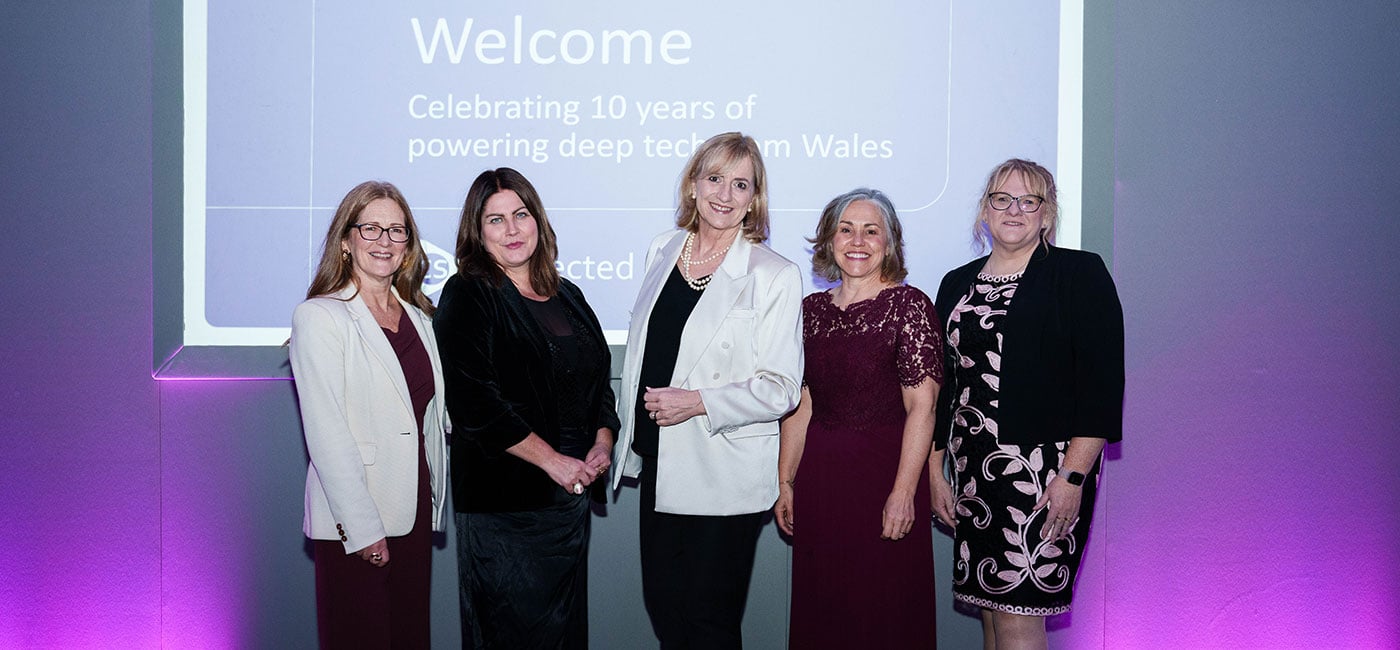
Importantly, the South Wales compound semiconductor cluster also stands out for its visible female leadership. Women are leading global manufacturing businesses, scaling high-growth startups, running major research programmes and shaping the strategic direction of the ecosystem itself.
There’s still more to do
While progress is real, equal female representation is still lacking, and the challenge does not start or end with recruitment.
By the age of 14 or 15, many young people have already made decisions that shape their confidence and subject choices in STEM. At that point, it is often too late to influence participation meaningfully.
That’s why CSconnected is investing in long‑term, end‑to‑end skills development, including:
- Early‑years STEM engagement and school outreach
- Apprenticeships and technical training pathways
- Postgraduate research and industry placements
- Leadership development and progression routes
The aim is not simply to bring more people into the sector, but to retain talent, support progression, and build sustainable careers in a historically male-dominated industry.
Demand for compound semiconductor skills is growing rapidly. Meeting that demand at scale will require the widest possible talent pool – and that means unlocking the full potential of women and girls.
Women changing the face of compound semiconductors
Across the South Wales cluster, women are already shaping the future of the industry. Here are just a few of the leaders driving that change.
Jutta Meier, Chief Executive Officer and Chief Financial Officer, IQE
Meier brings more than 25 years of senior leadership experience in the global semiconductor industry. She joined IQE in January 2024 from Intel Corporation, where she was Senior Finance Director at Intel Foundry Services, supporting the company’s foundry business transformation.
Previously, Jutta served as Vice President of Finance at GlobalFoundries and held multiple senior roles at Advanced Micro Devices (AMD). She holds an MBA from Technische Universität Dresden and now leads one of the world’s most important compound semiconductor manufacturers from South Wales.
Julie Fazackerley, Chief Executive Officer, MicroLink Devices
With over 25 years’ experience across aerospace, defence, and advanced manufacturing, Fazackerley leads MicroLink Devices through a period of rapid growth.
After beginning her career in the UK Civil Service and moving into senior leadership roles at BAE Systems, Fazackerley played a pivotal role in the PHASA‑35 high‑altitude solar aircraft programme, working closely with MicroLink’s pioneering solar technology.
Fazackerley is also a passionate advocate for early STEM engagement, particularly for women and girls, to create more accessible and inclusive routes into science and technology careers.
Susan Gormley, CEO, Kubos Semiconductors
Dr Gormley is currently CEO at Kubos Semiconductors, an early-stage SME developing innovative semiconductor material for visible wavelength microLEDs. Gormley holds a 1st Class BEng in Electronic and Electronic Engineering from Warwick University and a PhD in Semiconductor Physics from Cardiff University, and has over 35 years of experience in the compound semiconductor industry.
Reflecting on her personal journey, Dr Gormley says: “In the late 1980’s I was just one of three females studying Electrical and Electronic Engineering at Warwick University, and the majority of my career has been spent in male-dominated environments. I’m encouraged to see female representation increasing in the sector, but there is still much to do. At Kubos we are proud to champion diversity in the workplace, and on International Day of Women and Girls in Science, I applaud the contributions women are making to the semiconductor industry and encourage others to explore opportunities in this critical sector.”
Hazel Hung, Business Development Manager, CSconnected
Hung holds a Master’s degree in physics from Imperial College London and a PhD in non‑linear laser optics from the University of Southampton’s Optoelectronics Research Centre.
With over 15 years’ experience across academia and industry, Hung has worked in R&D, sales and business development in the photonics sector. She played a key role in growing Covesion from startup to a global quantum technologies manufacturer.
Since joining CSconnected in 2024, Hung has focused on supply‑chain development, cluster growth and building national and global connections to strengthen South Wales’ compound semiconductor ecosystem.
Caroline O’Brien, Chief Executive Officer
Appointed CEO in September 2025, O’Brien brings more than 30 years of experience across the technology sector, spanning VC-backed businesses and multinational organisations.
Previously CEO of Kubos Semiconductors for over six years, O’Brien has held senior commercial and executive roles focused on the development and commercialisation of new technologies. She holds a BEng in Electronic and Electrical Engineering and an MBA from the University of Bath, and now plays a key role in shaping the strategic direction of the UK’s compound semiconductor landscape.
A competitive advantage
The success of South Wales’ compound semiconductor cluster shows that diversity is not just about fairness – it’s about performance, resilience and growth.
This International Day of Women and Girls in Science, CSconnected celebrates the women already leading the sector, while renewing its commitment to building a pipeline of future talent.