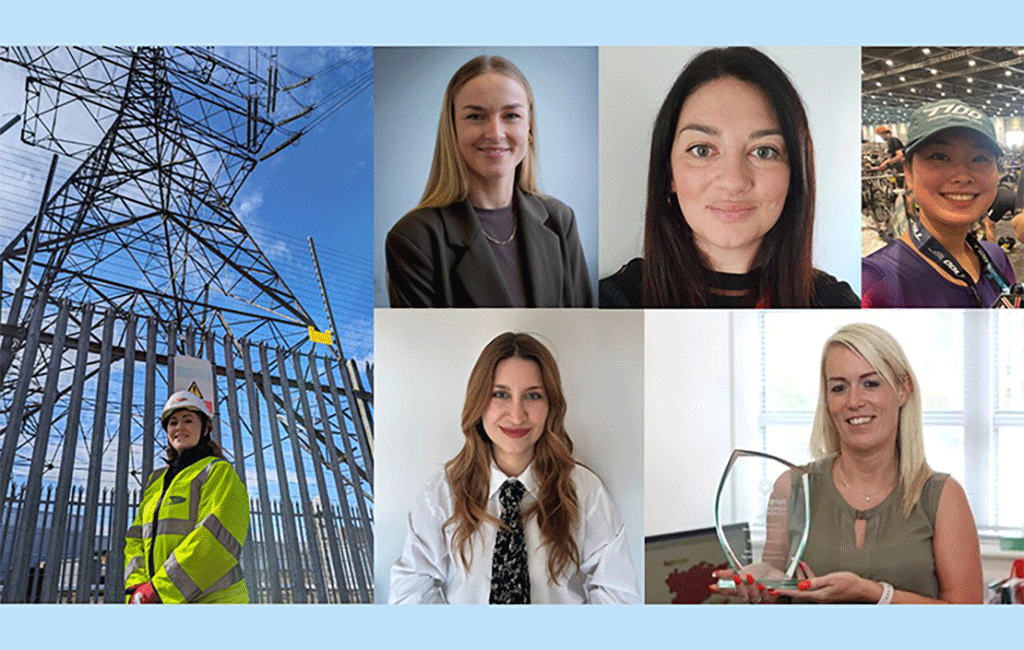







The webinar featured four thought-leaders in the tech space: Michelle McDaid, Founder, The Leading Place, Mateja Lampe Rupnik, CEO, Red Pitaya, Sarah Mlundira, Head of Technical, Sentric Safety Group, and Beatriz Soriano, Sales Director, Texas Instruments.
The discussion began by exploring how participants first became aware of language bias. Beatrice shared an early experience with a female manager who was perceived differently from male managers despite using identical leadership approaches. Mateja reflected on historical workplace interactions, noting significant changes in professional communication over time. Michelle highlighted how she was frequently told to be more “confident,” later realising this was a systemic issue affecting many women.
Sarah discussed her experiences in male-dominated fields, where language often excluded her, such as consistently hearing phrases like “Guys, let’s go” that didn’t feel inclusive. The panellists unanimously agreed that language plays a crucial role in workplace dynamics and can significantly impact professional experiences.
A key theme was the narrow communication expectations for women. Beatrice noted women often face a challenging dichotomy – being perceived as either “too soft” or “too hard” with little middle ground. Michelle emphasised that confidence doesn’t mean replicating male communication styles but being authentic and true to oneself.
The conversation highlighted the importance of diverse perspectives in professional environments. Mateja stressed that innovation thrives when different voices are heard, and organisations benefit from inclusive communication. The panellists agreed that gender equality isn’t about women versus men, but about creating environments where everyone can contribute meaningfully.
Practical strategies for addressing language bias were discussed. The group recommended approaches like:
- Being curious when encountering potentially biased language
- Asking clarifying questions
- Creating safe spaces for communication
- Providing multiple channels for people to express themselves
The panellists also addressed how to support younger engineers, particularly women. They emphasised the critical role of parents, educators, and workplace leaders in challenging gender stereotypes. Michelle highlighted the importance of sharing stories of women in technology, referencing pioneers like Steve Shirley who created flexible working environments decades ago.
Allyship emerged as a crucial concept. Sarah described it as cautiously choosing to include others and challenge stereotypes. Beatrice suggested male colleagues have a responsibility to amplify minority voices, while Mateja emphasised the need for women to support each other rather than creating additional pressure.
The discussion also explored communication beyond gender, touching on inclusivity for introverts and the importance of creating psychological safety in workplaces. Michelle recommended providing various communication channels and giving people time to formulate thoughts.
Practical advice for individuals included:
- Educating themselves about workplace biases
- Speaking up when witnessing inappropriate language
- Approaching potential bias with curiosity
- Being courageous in professional settings
Language was examined critically, with Michelle pointing out how many technical terms derive from military metaphors like “deploy,” “execution,” and “battleground.” The panellists suggested replacing such language with more collaborative, inclusive terminology.
A significant takeaway was that creating inclusive environments benefits everyone. The panellists argued that challenging gender stereotypes provides more freedom for all professionals, allowing individuals to pursue their passions without restrictive expectations.
The webinar concluded with powerful calls to action. Mateja quoted artist Georgia O’Keefe, encouraging women to be courageous and speak out. Sarah emphasised the importance of addressing bias in the moment, noting that future regret is often more painful than current discomfort.
Key recommendations for organisations included:
- Building diverse teams
- Providing communication training for leaders
- Creating multiple feedback channels
- Challenging unconscious biases
- Valuing different communication styles
The panellists represented diverse backgrounds and experiences, from semiconductor sales to technical leadership, providing a comprehensive view of gender communication in professional settings. Their collective message was clear: language matters, and small changes can create significant cultural shifts.
Watch the webinar on-demand below.
Electronics industry professionals are invited to share their experiences of inclusion, career progression, and workplace culture in a new survey launched by Electronic Specifier. To take part, please click here.