



What is IEEE? The Institute of Electrical and Electronics Engineers (IEEE), is a US-based, not-for-profit organisation that serves as a global community for technologists.
History of IEEE
IEEE’s roots can be traced back to 1884, when the American Institute of Electrical Engineers (AIEE), which was set up to promote the electrical engineering field. At the time, at the end of the nineteenth century, advancements in telegraphy, telephony and lighting meant it was a thriving area for new technologies. By the early 1880s, telegraph wires were over the US, Europe and the US were connected by underwater cables, and Thomas Edison’s Pearl Street Station was supplying power for incandescent lights in New York.
The AIEE initially focused on wire communications, light and power systems, and developing electrical standards in the US. Norvin Green, the president of Western Union, was the AIEE’s first president.
In 1912, the Institute of Radio Engineers (IRE) was established to concentrate on the then-newer field of radio technology. This followed Italian electrical engineer Guglielmo Marconi patenting his wireless telegraphy and creating radio: Marconi’s equipment was on board the Titanic when it sank.
By the 1930s, electronics had become a core part of both the AIEE and IRE’s interests, leading to an overlap in focus. The IRE merged with AIEE in 1963 to form the IEEE as we know it today and in 2012, it celebrated its 100th anniversary.
As of 2025, the IEEE has over 486,000 members across 190 countries.
Areas of interest
The IEEE’s areas of interest have evolved over time as it has reflected the evolution of technology. These have expanded to encompass areas such as micro- and nanotechnology, ultrasonics, bioengineering, robotics, electronic materials, and more.
IEEE has around 39 technical societies each dedicated to specific technical areas – including aerospace systems, communications, robotics, and biology engineering. Its predictions for top technology trends at the beginning of this year shows its continuous tracking of how technologies will impact upon our society in the years to come.
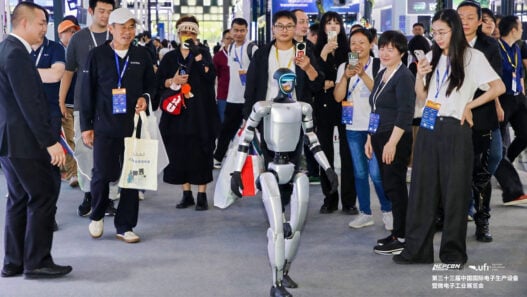
New forms of LLM deployment, expanding access to drones, commercial success of AI agents, AI-enhanced robotics, and the role of wearables for medical wellbeing were all cited as trends expected to impact the global engineering industry.
The IEEE Standards Association (IEEE SA), which came out of the IEEE’s dedicated Standards Committee and which was formally reorganised in 1998, actively develops global standards across these industries.
The emergence of AI and the pace at which it has grown has presented an interesting challenge for the IEEE SA, who have recognised the need to standardise AI ethics to ensure that the use of technology isn’t harmful. You only need to think about generative AI content and phishing to acknowledge how AI can be used in a nebulous way.
Its value as a member-driven organisation meant the question of standardising AI ethics was flagged in 2018, prior to the advent of AI chatbots like ChatGPT and Claude. This way of working means that emerging technologies are investigated in a proactive manner.
Conclusion
IEEE’s trajectory – from electricity and telegraphy to widespread communications and AI – reflects its mission to serve its global community of electrical and electronics engineers, as a trusted voice of engineering, computing, and technology, keeping pace with the technologies that redefine these industries.