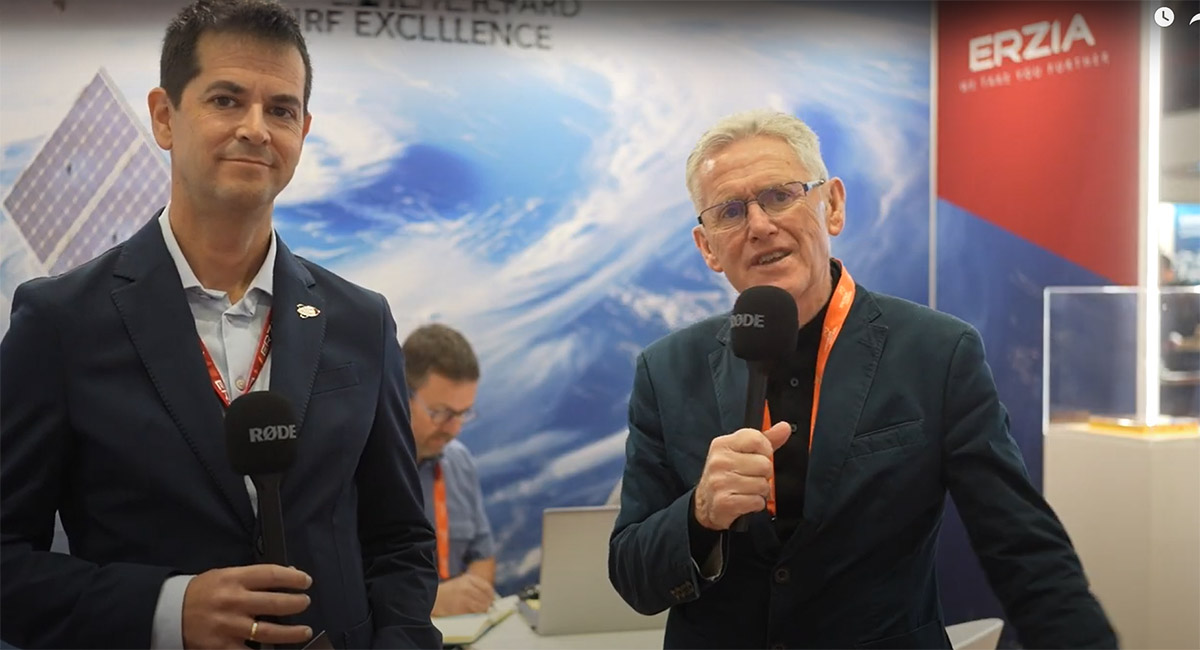






At European Microwave Week 2025, Electronic Specifier’s Editor, Mick Elliott speaks to Abbas Vosoogh, Technology Innovation Director from Gapwaves about how the company’s gap waveguide technology has evolved since its inception, the problems it solves, and other uses of gap waveguide technology.
During the conversation, Vosoogh discussed how Gapwaves’ waveguide technology has developed from academic research into a practical solution for cost-effective, high-performance transmission lines. The company focuses on reducing the traditional bulkiness and expense of waveguides, making them more suitable for applications such as radar, satellite communications, and telecommunications.
A key area of innovation is its multi-layer waveguide (MLW) approach, which uses established methods like chemical etching to create low-profile, affordable designs. This makes the technology particularly well suited to automotive radar, where compact form factor and high performance are critical.
Partnerships with chip manufacturers, including Infineon, Texas Instruments, and NXP, are aimed at ensuring compatibility with new chipsets and speeding up time-to-market for automotive and other applications. In the case of Infineon, Gapwaves is working on demonstrators to help car makers and tier-one suppliers adopt the technology more quickly.
Beyond antennas, the technology has potential in filters, duplexers, and packaging solutions. Gapwaves continues to work closely with universities worldwide to explore these wider applications, particularly at higher frequency bands such as the D-band around 100GHz. At these frequencies, fabrication tolerances become more challenging, and co-designing active and passive components is essential to maintaining performance.
Watch the video below to learn more.