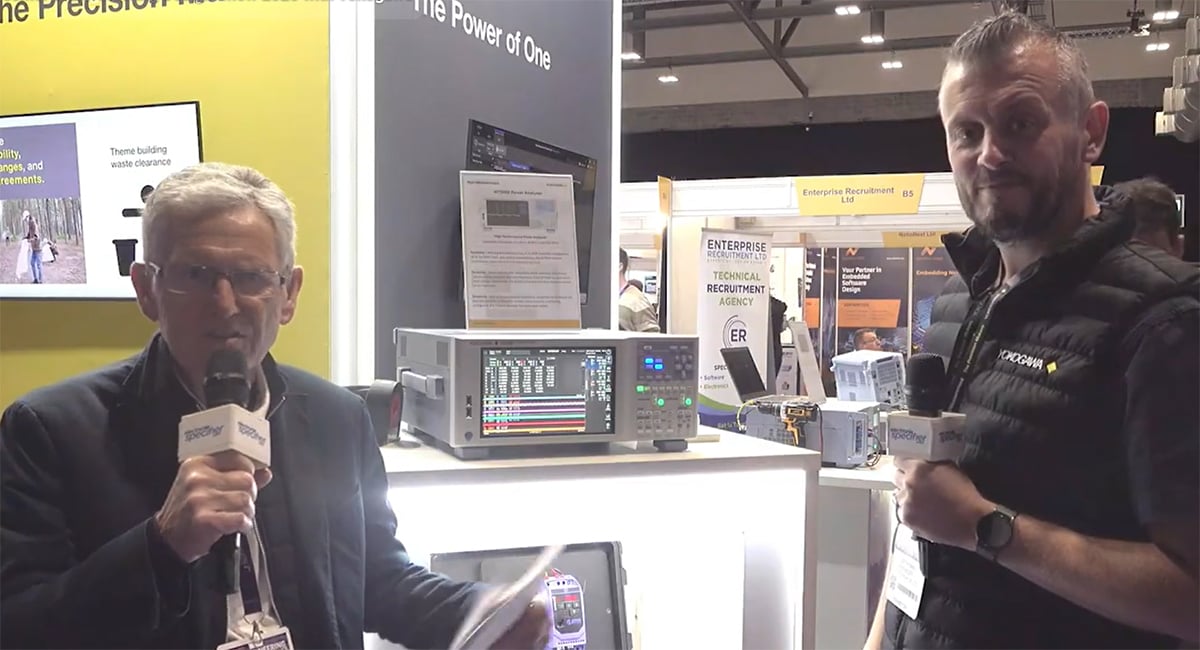






At Engineering Design Show 2025, Electronic Specifier‘s Editor, Mick Elliott, speaks to James Mackey, Technical Content Creator at Pico Technology, about its new Python package pyPicoSDK for simplified scope control.
The Pico SDK is a software development kit designed to streamline the use of Pico Technology’s oscilloscopes and related hardware for engineers across varying programming backgrounds. Mackey pointed out the SDK’s user-centric design and the technological advantages it offers to the engineering community.
Built with Python integration at its core, the Pico SDK acknowledges Python’s growing adoption among engineers, particularly those engaged in automated testing. Unlike traditional SDKs, the Pico SDK lowers the barrier to entry. It caters to engineers who may not identify as software developers but need to automate data acquisition, processing, and sharing in their workflows.
A key feature of the SDK is its simplicity and ease of setup. It includes a comprehensive set of example scripts, all available on Pico Technology’s GitHub repository. These examples are designed to be easily adapted, allowing engineers to tailor them to specific tasks quickly. Whether extracting data from a printed circuit board (PCB), processing measurements, or sharing results with colleagues, the SDK provides a clear path from setup to execution.
Mackey explained that the SDK’s philosophy focuses on saving engineers time. Previous solutions often relied on C drivers, which could be complex and daunting for new users. In contrast, the Pico SDK enables essential tasks to be completed with minimal code. For example, a block capture operation can be achieved in just 38 lines of Python, with detailed comments guiding users through each step. This approach accelerates development and makes the technology more accessible, including for those transitioning from platforms like LabVIEW or other proprietary environments.
Choosing Python as the primary interface language reflects industry trends. Its modularity and extensive library ecosystem make it an ideal tool for test engineers who need to analyse and process data flexibly. The SDK leverages these strengths, allowing seamless integration of Pico Technology hardware into existing Python-based workflows.
Since its release in early October, the Pico SDK has generated notable interest from the engineering community. Mackey notes that early adoption metrics indicate strong uptake, with multiple downloads and active use reported within weeks.
Watch more from the show here.