


Synaptics has launched a new generation of processors aimed at powering artificial intelligence at the Edge of networks, in a move designed to strengthen its position in the growing market for intelligent Internet of Things (IoT) devices.
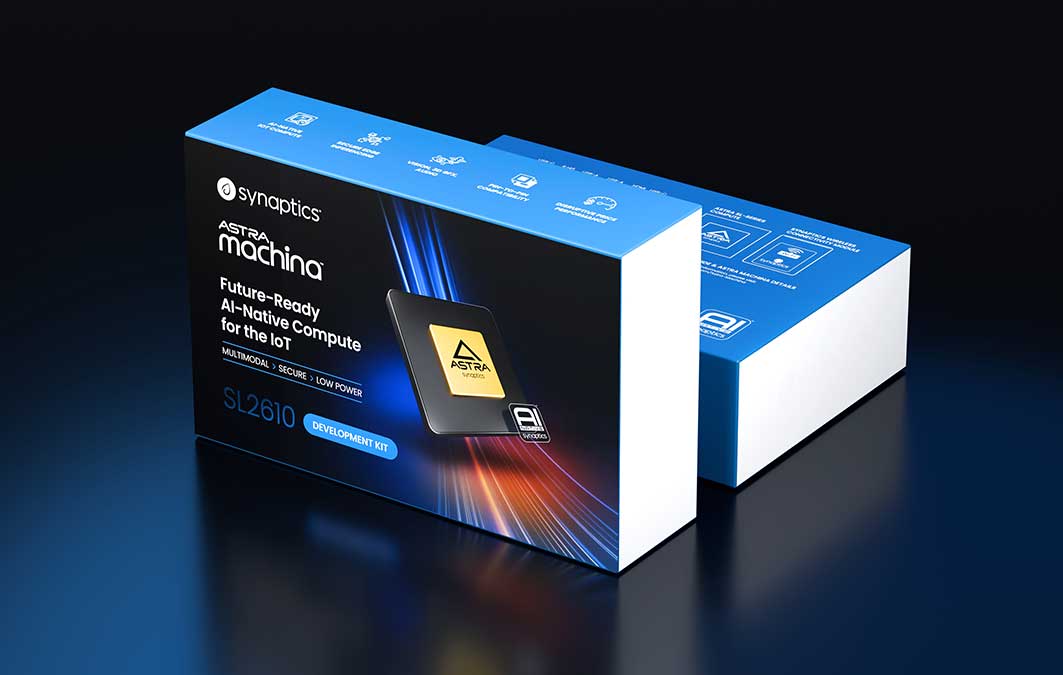
The US-based chip designer unveiled its Astra SL2600 series this week, positioning it as a high-performance yet power-efficient platform for the next wave of smart devices. The chips, which will debut with the SL2610 product line, are designed for applications ranging from home automation and healthcare devices to industrial robotics and retail systems.
The Astra SL2610 range incorporates five pin-to-pin compatible processor families, built to serve both low-power and high-performance use cases. It runs on Synaptics’ new Torq Edge AI platform, which combines RISC-V-based Coral NPUs developed with Google and Arm Cortex-A55 and Cortex-M52 CPUs. The processors integrate security features directly into the silicon, including immutable root-of-trust and hardware-based threat detection.
“With the Astra SL2610 product line, Synaptics is redefining what’s possible for Edge AI,” said Vikram Gupta, Senior Vice President and General Manager of Edge AI IoT Processors at Synaptics. “These processors deliver the architectural foundation for customers to design scalable, next-generation IoT solutions.”
The launch underscores Synaptics’ bid to become a key supplier of so-called “AI-native” silicon—chips designed to perform machine-learning tasks locally rather than in the cloud. Such systems are increasingly in demand as companies seek to reduce latency, improve privacy, and cut energy use in connected devices.
Google’s Vice President and Head of Google Research, Yossi Matias, said the collaboration between the two companies aims to “simplify development and unlock powerful new experiences” for developers working on Edge AI.
Industry analysts said the partnership between Synaptics and Google highlights the strategic importance of open-source ecosystems and multimodal AI—systems that combine vision, audio, and other data streams to interpret the physical world.
“As Edge AI adoption expands, multimodal capabilities are emerging as a way to enable more context-aware user experiences,” said Nina Turner, Research Director for Enabling Technologies and Semiconductors at IDC. “Open-source technologies will be an important factor in accelerating innovation and adoption.”
Several technology companies, including Cisco, Sonos, and Deutsche Telekom, were among Synaptics’ partners quoted in support of the new processors. Paul Williamson, Senior Vice President and General Manager of Arm’s IoT business, said the chips’ combination of compute efficiency, security, and performance “enables richer user experiences and unlocks new opportunities for intelligence at the Edge.”
Synaptics said samples of the Astra SL2610 chips are already in the hands of customers, with general availability expected in the second quarter of 2026.
The company, which is listed on Nasdaq, has positioned itself as a key player in the push to embed AI directly into everyday devices—from smart home systems to industrial equipment—reducing reliance on cloud-based processing.
Founded in 1986, Synaptics has a long history in touch and display technologies, but in recent years has pivoted towards AI-powered embedded computing and wireless connectivity. The Astra platform represents its latest effort to capture a share of the expanding Edge AI market, which analysts expect to grow sharply over the next decade as computing moves closer to where data is generated.