



Skills shortages in engineering have long been recognised and are impactful to many organisations in the manufacturing space. When it comes to design engineering, which is crucial to product development, businesses must think about ways around skills shortages to ensure they can thrive and innovate in a competitive arena.
To optimise design engineer resource, original equipment manufacturers (OEMS) with engineering design teams, as well as design companies, will often employ some form of Computer Aided Design (CAD) software. The role of design software mustn’t be underestimated in tackling skills shortages.
But with so many out there, finding the right solution with the features that work for multi-skill level teams can be tricky.
The right solutions should facilitate collaboration, maximise engineer time and boost innovation
In times of skills shortages, businesses must make their design resource work smarter and more efficiently. The last thing any company wants to do is put more pressure on already stretched resources with a complex solution that can be more onerous on training than it is helpful to the engineers using it. Senior design engineers might need sophisticated features, while junior team members may need more user-friendly, intuitive software that can help them design elements like Printed Circuit Boards (PCB) easily.
Choosing complex software as a one-size-fits-all approach can exacerbate the skills shortage issue, and the true potential of the more sophisticated software won’t actually be realised by the whole team. To keep costs down, some businesses opt for restricting access, so that only senior designers that need the high-level tools can use the solution. But that can impact collaboration across the team and create more inefficiencies in the PCB design process.
In these cases, it’s common to opt for a multi-solution approach. Finding compatible solutions that enable data sharing and effective collaboration is vital. A real-time view is a must in the design process, but not all solutions will integrate effectively. If files can’t be unified, errors can quickly creep in because of multiple versions of design files being circulated.
Software offering professional-grade design tools, that doesn’t break the bank and has high compatibility, is available. DesignSpark PCB is one that offers error-free PCB designs to get started with, as well as access to a comprehensive online database of PCB symbols and footprints. These kinds of user-friendly solutions also negate expensive and lengthy training investment so designers can hit the ground running.
Providers with extensive expertise can help ease challenges of skills shortages
The skills shortage issue is one that must be tackled collaboratively and is the responsibility of a variety of industry stakeholders – from industrial operators, suppliers and distributors to educational establishments at all levels.
RS DesignSpark has long been a champion of supporting the student design engineering community. It recently collaborated with long-standing RS partner, Mint-Tek – a Galway-based hardware prototyping company – to deliver the first PCB Design 101 session to electronic and electrical engineering students at the University of Galway.
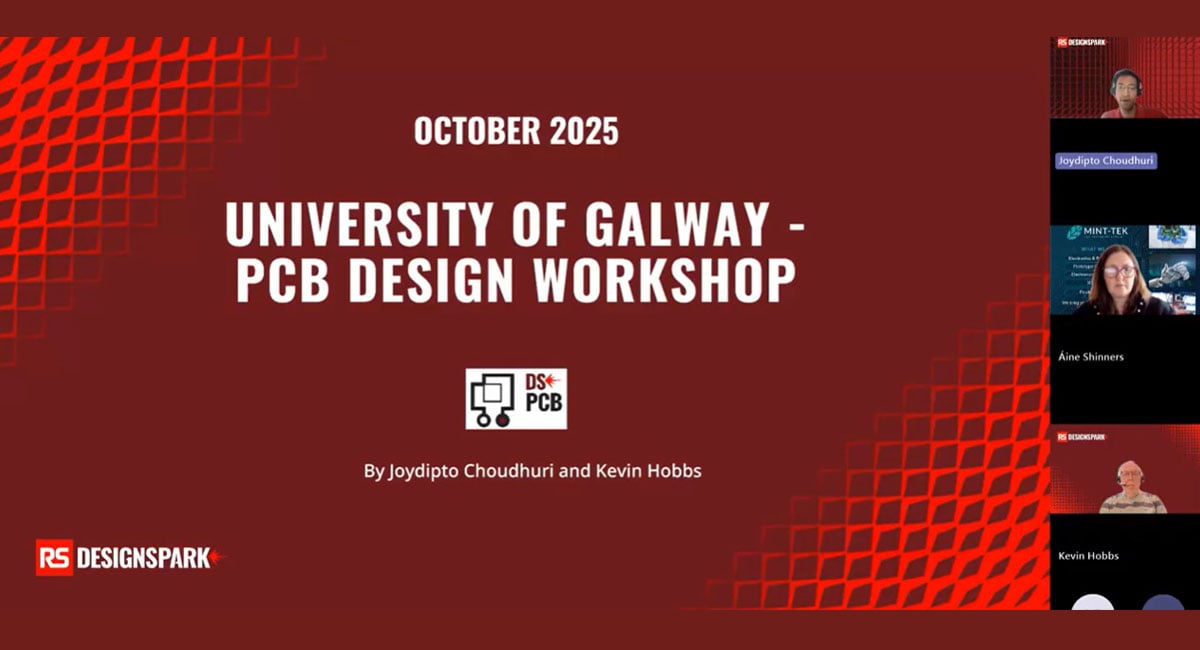
The initiative was driven by PhD students, and IEEE Student Branch committee members, Ethan Delaney and Timothy Hanley, who saw growing interest in PCB design and wanted to organise a workshop to promote its importance. RS engaged Mint-Tek on the idea and the company was keen to embrace this opportunity to support student learning, and proposed the workshop to be open to students across all year groups. A remote session was held, showcasing the capabilities of DesignSpark PCB V13, the latest version of the CAD software tool, sponsored by Würth Elektronik.
The workshop was led by a DesignSpark technical expert, who covered topics including downloading and setting up the software and exploring its key features, as well as converting a basic circuit sketch into a manufacturable PCB layout. Participants of the workshop were privy to practical tips from an experienced design engineer, like how to navigate the tool, open projects, and use key features effectively.
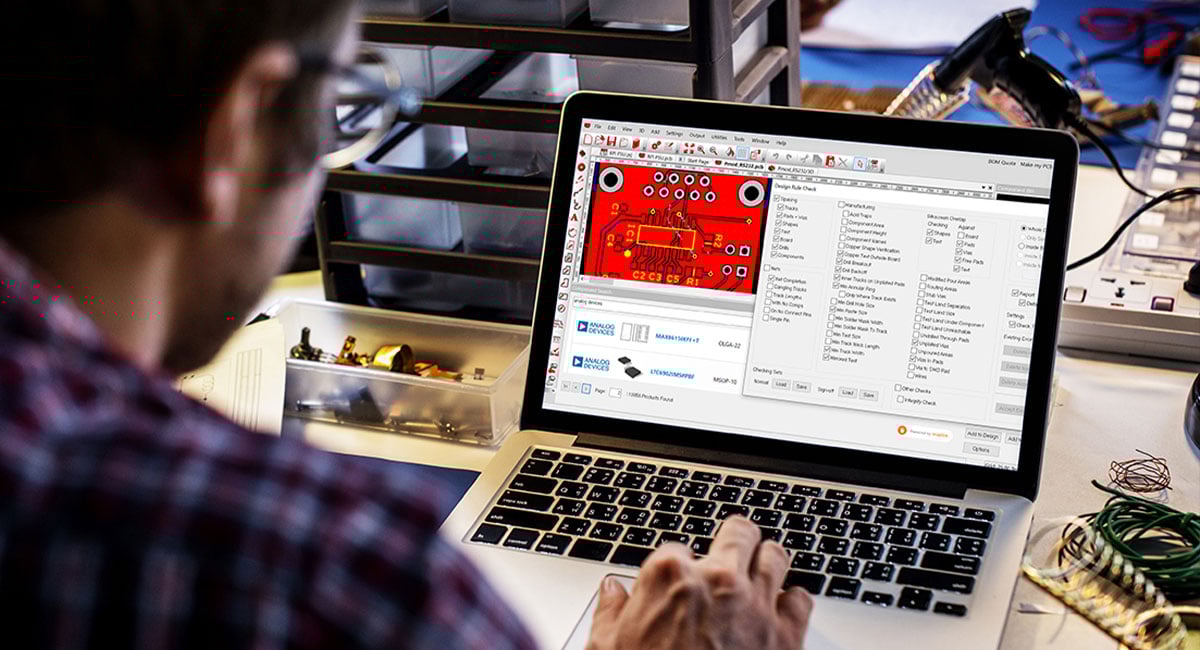
Insights were tailored to suit the varied experience levels of the audience, so the demonstration also covered progressing to more complex layouts. Showcasing directly to potential future software users, in this user-friendly way, was an impactful approach that was very well-received. The protagonist of the workshop himself, Ethan Delaney, said that he found the tool to be genuinely intuitive, and the workshop had given him the confidence to design a PCB.
Mint-Tek’s close ties with RS led to the addition of a feature within DesignSpark PCB that allows users to send completed designs directly to Mint-Tek for manufacturing quotes. A solutions provider with this kind of extensive expertise, coupled with supplier relationships to provide technical insight, is beneficial to both the student design engineering community and the industry in tackling the skills shortages. It’s a great example of how working with key suppliers in this way can support education, innovation, and inspire the next generation of engineers.
By Joydipto Choudhuri, Designtools Experience Manager, RS DesignSpark