



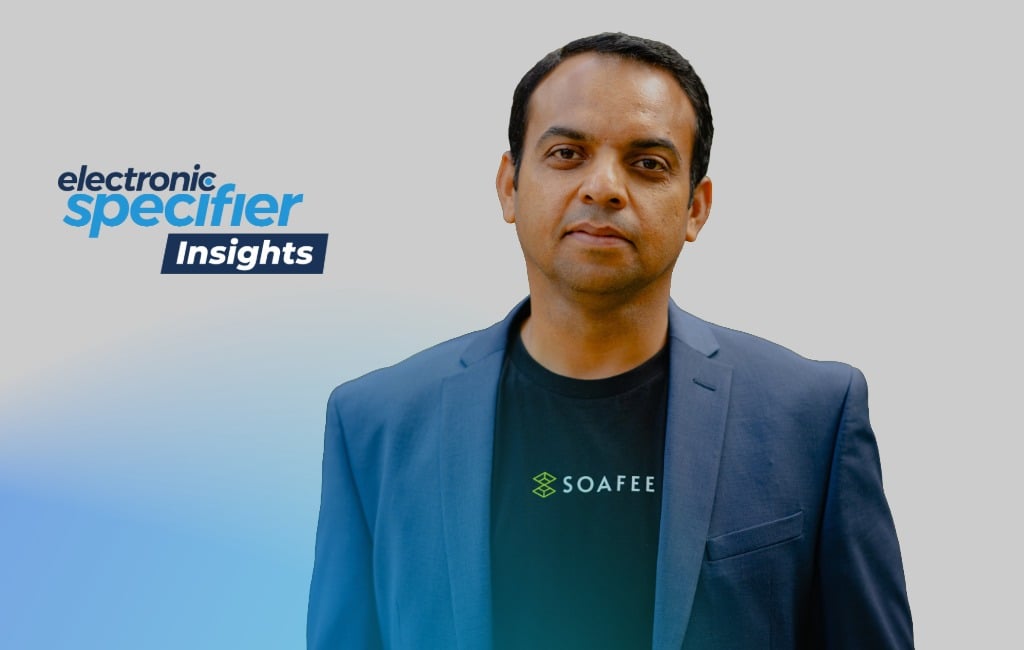
Paige West speaks with Suraj Gajendra, Vice President of Products & Software Solutions for Automotive, Arm about the growing importance of vehicle updateability in the era of software-defined vehicles (SDVs).
The conversation delves into the challenges, technological shifts, and future outlook for automotive compute platforms.
Gajendra begins by introducing his background, highlighting over two decades in the semiconductor and automotive industries, with significant experience at Intel and Arm. He emphasises the increasing significance of software in automotive innovation, noting that while hardware remains foundational, software is where much of the current value and differentiation occur.
The discussion centres on the concept of vehicle updateability, a defining feature of SDVs. Unlike traditional vehicles, which were limited to the features present at the time of sale, modern vehicles are expected to receive software updates and new functionalities throughout their lifecycle. This shift is driven by rapid advancements in AI, large language models, and Generative AI, which enable new user experiences, diagnostics, and control functions to be deployed post-sale. Gajendra stresses that achieving this vision requires collaboration across the entire ecosystem – including OEMs, tier-one suppliers, technology providers, software developers, and Cloud service providers – to build a robust, standards-based infrastructure that supports seamless Cloud-to-car updates.
Maintaining updatability in automotive platforms presents unique challenges. Vehicles have much longer lifespans than consumer electronics like smartphones, necessitating hardware that remains relevant and secure for years. Gajendra outlines the need for future-proof hardware with built-in safety, security, and real-time capabilities, as well as software that maintains backward and forward compatibility. He also highlights the critical importance of reliability and safety in automotive applications, where software failures can have life-threatening consequences. To address these challenges, the industry is increasingly leveraging virtual platforms and Cloud-based development environments, enabling software validation and testing well before hardware becomes available.
The conversation then explores the evolution of automotive compute platforms. Arm has been supplying automotive-grade hardware for decades, with recent generations focusing on enhanced safety, security, and real-time features. Gajendra describes how Arm has accelerated software development by launching virtual platforms in tandem with new hardware IP, allowing developers to begin work immediately and reducing time-to-market. Standardisation efforts, such as the SoFi consortium, further support a healthy software ecosystem.
A significant industry trend is the shift from distributed ECUs to centralised zonal architectures. Consolidating compute resources simplifies software management, enables over-the-air updates, and provides the headroom needed for future features. Gajendra explains that this architectural change, combined with robust Cloud-to-car infrastructure, is essential for realising the full potential of SDVs.
Looking ahead, Gajendra envisions continued progress in building robust SDV infrastructure, with the next wave of innovation driven by AI-defined vehicles and seamless integration between home and automotive digital assistants. He concludes by urging industry stakeholders to work together, build scalable standards-based architectures, and continue solving critical challenges to ensure vehicles remain relevant, secure, and innovative for years to come.
To hear more from Suraj Gajendra, you can listen to Electronic Specifier’s interview on Spotify or Apple podcasts.