



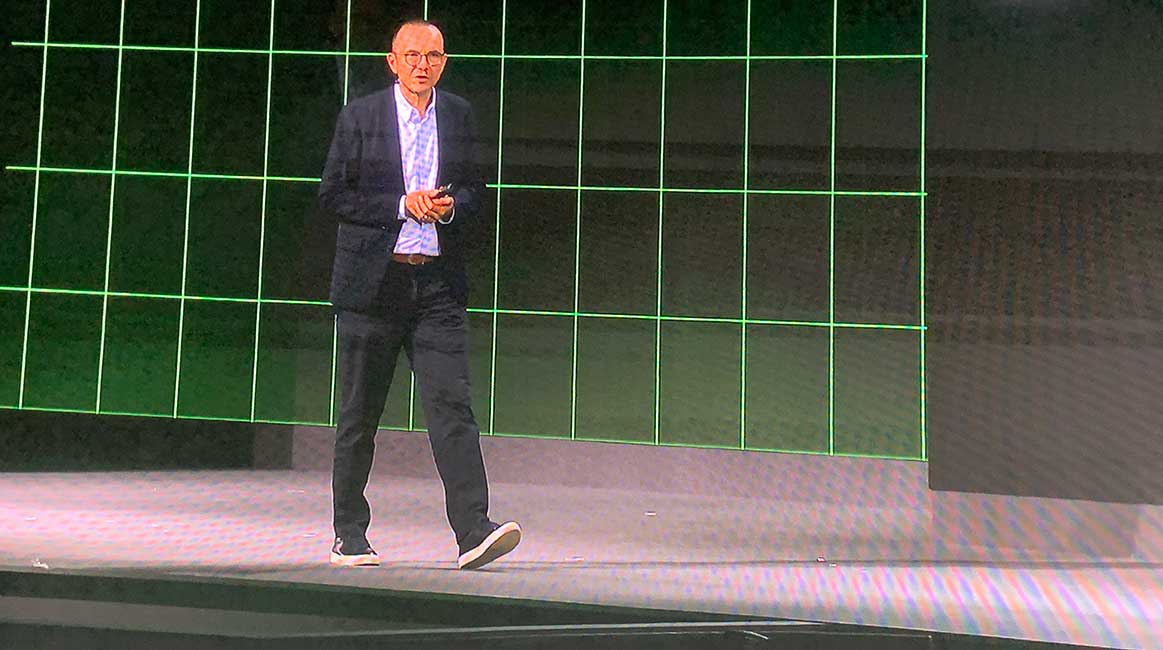
Olivier Blum, Chief Executive Officer of Schneider Electric, charted a bold course for the company’s next decade, tying climate ambition to the rapid uptake of electricity, digitalisation and artificial intelligence across industry, buildings and infrastructure in a key speech today.
Speaking at the Schneider Electric Innovation Summit in Copenhagen, Blum told an audience of partners, customers and industry peers that the twin megatrends of electrification and digital transformation are no longer future possibilities — they are happening now.
“The train has left the station,” he declared, noting that over 8,000 companies globally have committed to reducing their CO₂ emissions and accelerating their energy transitions.
Blum opened his address by framing the climate transition as an ecosystem opportunity. “We have a part in that journey,” he said, acknowledging the responsibility companies hold for both current and future generations. He reflected on the shift of focus from supply-side solutions – such as renewables – to the demand side, where “more electricity, more digital” holds the key to efficiency and climate outcomes.
On the supply side, he highlighted the favourable technology and business momentum in Denmark and the Nordic region, noting how wind and solar are “very competitive” and growing. He also raised a cautionary geopolitical note: volatile energy markets, amplified by recent conflicts, could drive future price instability and generation shortages — a challenge for both regions and industries.
Turning to demand, Blum emphasised the logic of electrification. Electricity, he argued, is the “most efficient type of energy in the world” when you consider generation to consumption and device integration. He pointed to uptake across transportation, homes and industry. While Europe may still debate the pace of change, China and other markets are “almost finished” the transition to electrified mobility, he asserted.
For Schneider Electric, the implications are profound. The France-based company, a specialist in energy management and automation, is already seeing transformation in its core business of electrical distribution. Blum described a world moving from solely AC power systems to hybrids of AC and DC, and ultimately to systems where AC and DC coexist seamlessly. “We don’t want to be disrupted — we want to disrupt our industry,” he said, explaining Schneider’s ambition to lead the sector through product innovation and ecosystem coordination.
But the shift is not just about electricity. Blum described the overlay of digital and AI as the “big difference” compared with ten years ago. He outlined how AI is now touching every product, device and connection, creating “tremendous opportunity … for efficiency”.
At the same time, he warned that supporting the next generation of chips and data-centre workloads will demand enormous infrastructure, with rack power moving from a few kilowatts to “100, but more importantly … up to one gigawatt” in future designs. Schneider is positioning itself to partner across the ecosystem — power, cooling, data centre design — to enable this shift.
Industry 4.0, he said, is now morphing into something even bigger: the intelligent, resilient, digitally connected industry, operating amid fragmented supply chains, sovereign-cloud concerns and localisation trends. He pointed to the rise of Cloud sovereignty and regional protectionism as drivers of a “more fragmented” global landscape, reinforcing the need for localised, adaptable solutions.